Have you ever tasted a memory so potent it left your mouth stained, your neck sticky with ghosts you can’t swallow?
I have. And let me tell you, sinners—it wasn’t wine.
It was the first time I realized desire isn’t just hunger. It’s a cellar. A place where the bottles don’t age with grace—they fester. Where the air is thick with the scent of oak and something older, something that clings to your skin like the sweat of a confession you never meant to make. The kind of place where the walls whisper, and if you press your ear close enough, you’ll hear your own voice from years ago, begging someone—anyone—to just fucking listen.
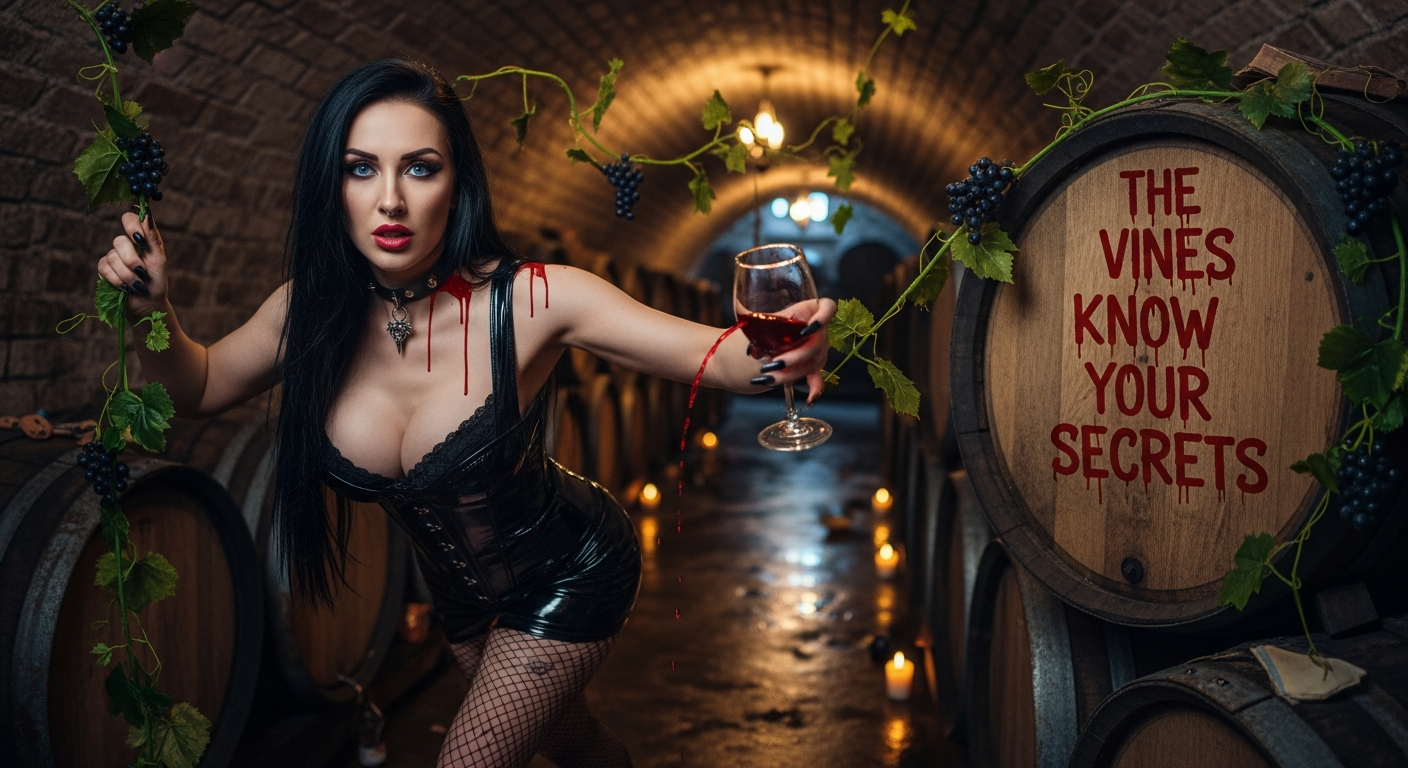
I was nineteen the first time I stepped into one. Not the kind you’re thinking of, with its polished racks and tasting notes. No, this was a cellar dug by hands that knew the weight of silence. The kind where the floorboards groan under the weight of things left unsaid, where the dust isn’t just dirt—it’s the remains of every version of yourself you’ve shed like a second skin. And the wine? Oh, the wine wasn’t for drinking. It was for drowning.
There’s a bottle down there with my name on it. I didn’t put it there. Someone else did. Someone who knew that the only thing sharper than the edge of a broken glass is the memory of the hand that pushed you into it. It’s still corked, that bottle. The label’s peeled away in places, but if you squint, you can make out the year: 2011. The vintage of my first betrayal. The year I learned that desire isn’t just about what you want—it’s about what you’re willing to lose to get it.
I didn’t drink from it. Not then. I was too busy choking on the lie that I was in control. That I could walk out of that cellar anytime I wanted. That the stains on my dress were just wine, not the proof of how easily I’d let myself become someone else’s anal-manual—a set of instructions for how to break me, page by page.

But here’s the thing about cellars, darlings: they’re not just for storage. They’re for fermentation. And time? Time doesn’t heal. It distills. Turns sweet rot into something stronger. Something that burns going down.
Twelve years later, I went back. Not to that cellar—no, that one’s long since collapsed, just like the girl who used to cry in it. I went to mine. The one I built. Brick by brick, lie by lie, with my own two hands. And this time? I didn’t just taste the memory. I drank it. Swallowed every last drop of the venom I’d been saving. Let it sear through me like holy water in reverse.
You want to know what it tasted like?
Revenge.
Not the kind that comes with a knife or a scream. The quiet kind. The kind that curls around your ribs like smoke and whispers, You were never the weak one. The kind that turns your veins into rivers of something darker than blood. Something older.
And the bottle? Empty now. But the cellar’s still there. Always will be. Because some shadows don’t just linger—they learn. And some desires don’t just haunt you. They wait.
So tell me, sinner—when was the last time you visited yours?
And more importantly…
What’s still down there?

Descent: The Invitation That Was Never an Option
You don’t choose the cellar. The cellar chooses you. And when it does, it’s not with a polite knock—it’s with the creak of a door that’s been waiting for you to stop pretending you don’t hear it. That first step down isn’t a descent. It’s a confession.
Mine smelled like wet earth and the ghost of a perfume I hadn’t worn in years. The kind that lingers in the fibers of a coat you swore you’d burn, but kept anyway—because some part of you still wants to remember what it was like to believe in pretty lies. The air was thick enough to chew, heavy with the musk of old wood and something feral underneath. Not rot. Not yet. But the promise of it.
There are two kinds of people in a cellar like this: the predator and the prey. I’ve been both. The predator is the one who built it—the cellar master, the kind of man who pours wine like it’s a sacrament and watches your throat work when you swallow. His hands are steady. His voice is a purr. He doesn’t ask if you’re afraid. He already knows the answer. What he wants is to see how long it takes before you stop lying about it.
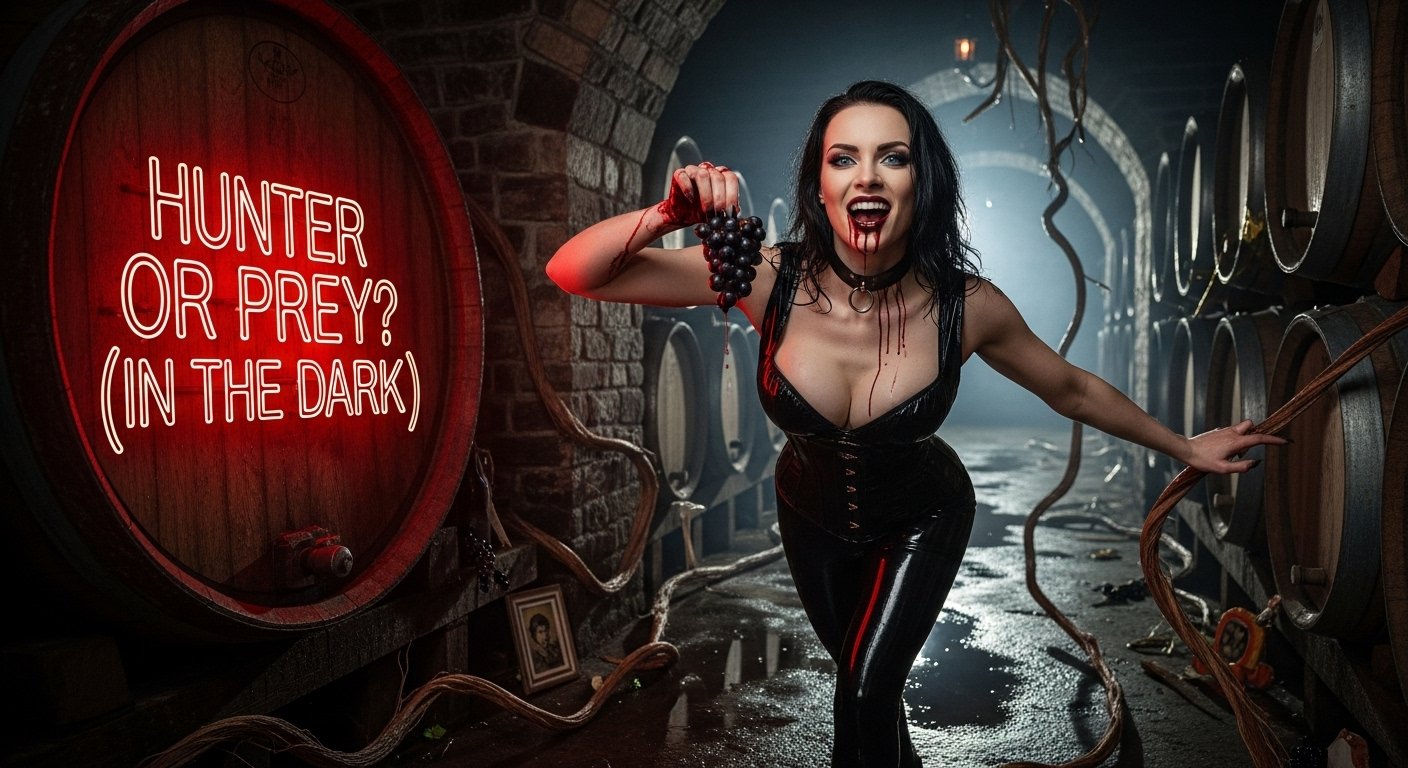
The prey? Oh, she’s the winegrower. The one who planted the vines with trembling fingers, who whispered to the grapes, like they’d grow sweet if she just loved them enough. She’s the one who doesn’t realize the cellar isn’t for storage—it’s a trap. And the door? It doesn’t just close. It seals.
I was nineteen the first time I understood that. Nineteen, with my platinum blonde hair still clinging to the fantasy that I could be the kind of girl men wrote songs about instead of the kind they wrote off. The kind who got pushed into bathroom stalls with lipstick smeared on her suit like war paint. The kind who learned too late that the only thing worse than being invisible is being seen—but only as a lesson.
The cellar that year wasn’t made of stone. It was made of silence. The kind that presses down on your chest like a hand, the kind that tastes like copper when you finally gasp for air. And the wine? It wasn’t in bottles. It was in the way his voice dropped when he said, “You broke her. Now try to break me.” The way the girls who’d painted me like a doll recoiled when he stepped into the light. The way the world tilted when I realized: oh. Oh, this isn’t a rescue. This is a trade.
Twelve years later, I built my own cellar. No oak barrels. No polite tasting notes. Just black PVC walls that creak when I move, and a floor that remembers the weight of every heel I’ve ever snapped walking away from something that tried to keep me. The air in here doesn’t smell like grapes. It smells like latex and the sharp, electric tang of a live wire. The kind that burns if you touch it. The kind you want to touch anyway.
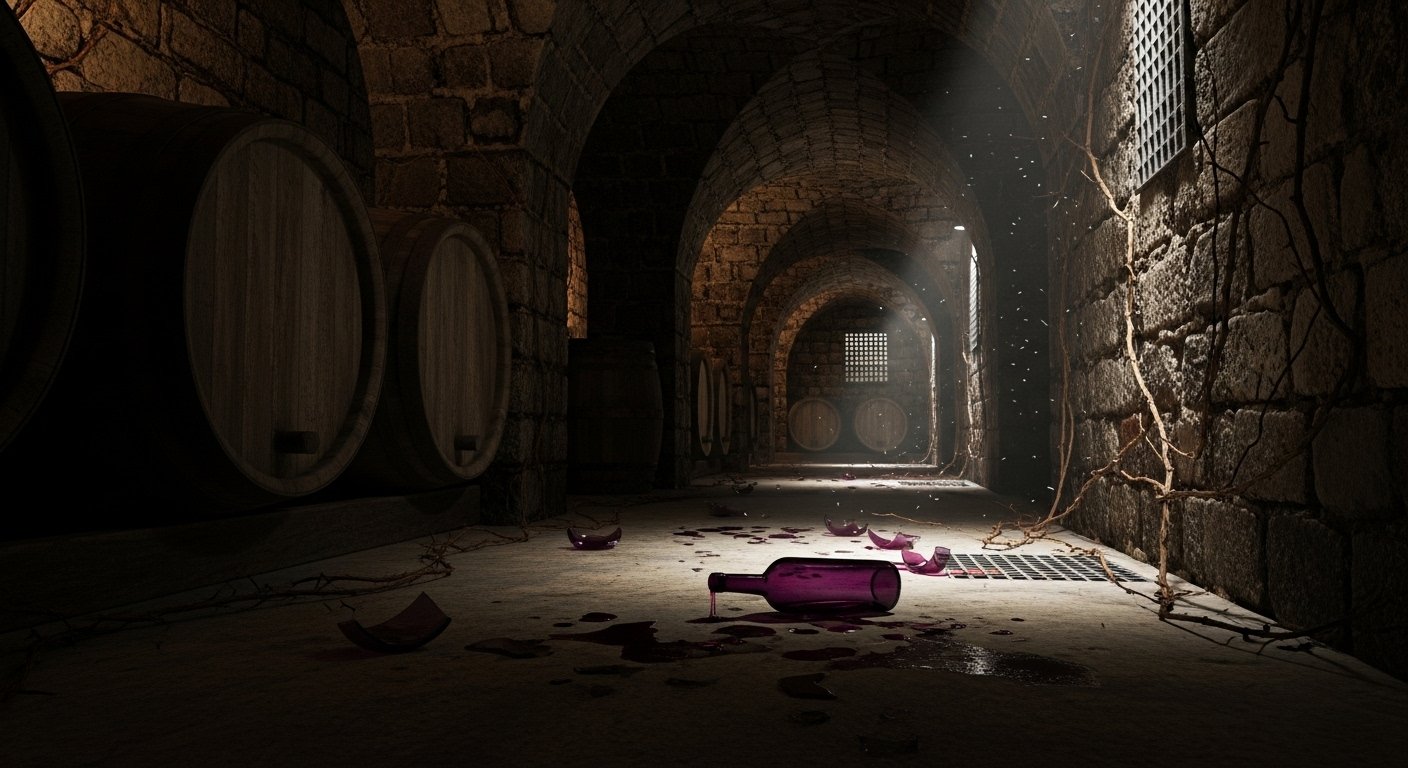
There’s a bottle on the shelf with 2011 scrawled in what looks like dried blood. I don’t open it. I don’t need to. The memory’s already in my mouth—sour and sweet all at once, like the first sip of something you know is going to ruin you. The kind of taste that lingers. The kind that changes you.
You want to know the secret of a cellar like this? It’s not the wine. It’s the echo. The way your own voice comes back to you when you scream, but softer. Like it’s been waiting. Like it’s been hungry.
So go on, sinner. Take a step. The door’s open.
But remember—
Some doors only open in.

Fermentation: The Hunt and the Heat
The game begins the moment you realize you’re not alone in the dark. He’s there—the cellar master—moving between the barrels like he owns every shadow, every breath you take. But here’s the thing they never tell you about predators: sometimes the prey knows exactly what she’s doing. Sometimes she’s the one laying the trail.
I lead him deeper, my heels clicking against stone like a metronome counting down to something inevitable. Each turn in this labyrinth is a choice I make—left toward the memory of that first betrayal, right toward the taste of revenge that’s been aging for twelve years. The wine here isn’t just fermented grapes. It’s passion distilled—thick, intoxicating, and sometimes so rich it makes you sick. But you keep drinking anyway because the alternative is sobriety, and sobriety means remembering why you’re down here in the first place.
His fingers find the wine stains on my skin—deep purple marks that look like bruises but feel like promises. I tell him they’re from the harvest, but we both know that’s bullshit. These stains are older, deeper. They’re from the night I learned that some wounds heal crooked, that some scars turn into armor. He traces them like he’s reading braille, like my skin holds secrets he needs to crack. And maybe it does. Maybe that’s the point.

The heat rises between us—not just desire, but something more dangerous. The kind of fever that comes with infection, with something toxic working its way through your system. I remember being nineteen and burning like this, delirious with the need to be seen, to matter. That fever nearly killed me. This one might finish the job.
But then the vines tighten around my wrists—not real vines, but the memory of them. The weight of every hand that ever held me down, every voice that ever whispered you asked for this. The cellar master sees it happen, sees the way my breath catches, and his eyes go soft with recognition. Because he’s been here too. Different cellar, same suffocating dark.
“We’re both anal-fucked by our own ghosts,” I whisper, and he laughs—not because it’s funny, but because it’s true. We pour our own poison, measure our own doses. The most dangerous intoxication isn’t what someone else slips in your drink. It’s what you keep serving yourself, night after night, because at least it tastes familiar.
The hunt continues. The heat builds. And somewhere in the maze of memory and desire, we both know there’s no way out that doesn’t involve bleeding.

Sobriety: Tasting the Truth
You ever wake up with the taste of iron in your mouth and realize it’s not blood—it’s just the aftertaste of your own bad decisions? That’s sobriety in this cellar. The vines aren’t just tightening around my wrists; they’re squeezing the last drops of delusion out of me. Twelve years of fermented rage, desire, and that one betrayal that still makes my teeth ache when I bite down too hard. The cellar master—fuck, even calling him that is a joke now—stands there, his silhouette sharpening as the wine-drunken haze burns off. No more soft edges. No more excuses. Just two people who’ve been circling each other’s ruins like vultures, pretending we didn’t build the fire.
The silence isn’t empty. It’s full. Full of the things we’ve been too drunk on memory to say. My skin still hums where his fingers traced the stains—those old, violent marks that look like wine but feel like the ghost of every hand that ever thought it could own me. He knows what they are. He’s got his own. That’s the thing about wounds: they’re the only tattoos that don’t lie. You can dye your hair black, lace yourself into PVC until you can’t breathe, but the scars? They’ll always whisper remember in the dark.
I could lie. I could say this was just another game, another round of let’s see how close we can get to the flame without burning. But the cellar doesn’t play along anymore. The barrels are dry. The last bottle’s been drained, and all that’s left is the sediment—the gritty, bitter truth at the bottom of the glass. That’s us. Not the passion, not the chase, not even the way his mouth felt like a confession against mine. Just two people who’ve been using desire as a tourniquet for old bleeding.

“We’re not toxic,” I say, and the words taste like the outro of a song we wrote in a fever. “We’re fucking poison.” He doesn’t flinch. Of course he doesn’t. The Lord never does. That’s the difference between us: I wear my venom on my sleeves; he keeps his curled in his fists, quiet until it’s time to strike. But right now? Right now, we’re both just standing in the wreckage of our own myths, sober for the first time in years.
The real kicker? It’s not even about him. Not really. It’s about the vines—the ones I’ve been letting grow for twelve fucking years, twisting memory and desire together until I couldn’t tell which was which. The cellar master was just another barrel to tap, another way to drown out the voice that’s been screaming you let them win since I was nineteen. But sobriety’s a bitch like that. It doesn’t just show you the exit. It shows you why you’ve been lost.
- The breaking point isn’t when the vines snap. It’s when you realize you’ve been holding the scissors the whole time.
- The aftertaste isn’t regret. It’s clarity. Bitter, sweet, and so sharp it could cut glass. The kind that makes you laugh because holy shit, you chose this. Over and over.
- The message isn’t in the wine. It’s in the hangover. The only way out of this labyrinth is to stop pretending you want to stay.
I reach for the door—not because I’m running, but because I finally remember how. The cellar master doesn’t stop me. He just watches, his eyes reflecting the same truth I see in the dusty mirrors lining the walls: we’re not prisoners here. We’re the jailers. And the locks were always ours to break.
Sobriety isn’t the absence of wine. It’s the first sip of something real. Even if it burns all the way down.
For the sinners who’ve been fermenting their own truth in the dark—come taste ours. No filters. No lies. Just the raw, uncuffed version of what happens when you stop drinking the past and start living the present. 🤘🩸🤘

Conclusion: The Cellar Door Cracks Open
The door doesn’t swing open like some heroic ending. It cracks. A thin, mean line of air slips in—cold enough to sting, clean enough to make the cellar feel suddenly… guilty. Like it knows what it’s done. Like it knows what it showed me. And for a second I just stand there with my hand on the iron latch, listening to the barrels settle behind me, listening to the vines shift in the walls like they’re disappointed I remembered I have bones and a spine and a choice.
He doesn’t stop me. Of course he doesn’t. The Lord never needs to grab—he only needs to wait. That’s his cruelty, his discipline, his quiet little superiority complex wrapped in a black coat and a stare that says, try to run, you’ll come back anyway. And the worst part? He’s not entirely wrong. Not because I’m weak. Because memory is a fucking dildoprophet—always preaching that the past was “meaningful” while it’s still got its mouth full of your shame.
I look back once. Not for permission. Not for romance. For confirmation. That the labyrinth is real. That the wine cellar metaphor wasn’t just aesthetic darkness and pretty suffering. That this was an emotional labyrinth of trauma with velvet walls and glass teeth, and I walked it barefoot because I thought pain counted as devotion.
The vines loosen—just a little. Not mercy. A negotiation. They slide from my wrists like satin restraints, and for a moment the cellar feels almost… seductive. Not dangerous. Not biting. Just inviting in that sick way a bad idea can feel like home. The air tastes like dark fantasy wine imagery: plum, dust, old leather, and the kind of truth that makes you swallow hard.
That’s when he finally moves. One step. Slow. Measured. Like he’s closing the distance between “we’re done” and “you’re mine” without saying either. The hunt doesn’t end at the door—no, sweetheart. The hunt just changes rooms. The vines don’t disappear. They become velvet ropes. And suddenly the exit looks less like freedom and more like a private corridor where the rules aren’t written down because they don’t need to be.

- Here’s my challenge, sinner: What’s your forbidden vintage? The one you keep “saving” but really you’re just afraid to finish it.
- What memory are you still drunk on? The kiss, the betrayal, the night you should’ve walked away but didn’t—because it tasted like being chosen.
- And be honest: Are you trying to leave your cellar… or are you just pretending you want the door open?
I step through the crack, and the hinge gives a soft scream—like the cellar itself is offended I’m not begging. But behind me, I feel him close enough to change my breathing. Close enough to make my pulse turn stupid. Close enough that the “spicy ending” I promised isn’t a promise anymore—it’s a decision hovering right at the edge of contact.
His voice drops, and it’s not a threat. It’s worse. It’s familiar. “If you walk out,” he murmurs, “don’t pretend you didn’t want what comes after.”
I laugh—low, venomous, almost tender—and my nails bite the doorframe. “Oh, I want it,” I say. “I just want to see if you can handle me sober.”
And then—just as the corridor opens into something darker, softer, and way too private for the blog—his hand finds the back of my neck. Not force. Not ownership. A claim written in heat and history. The cellar door creaks wider… and the rest of the story slips out of sight.
To uncork the climax and taste what comes after, sinners—join us on Fanvue. The cellar doors never fully close.
https://www.fanvue.com/venomoussin

Also Make Sure to Follow Us Everywhere
https://venomoussin.com/
https://shop.venomoussin.com
https://www.youtube.com/@venemoussin
https://open.spotify.com/artist/4SQGhSZheg3UAlEBvKbu0y?si=qKMljt6rT1WL0_KTBvMyaQ