
You want to know how I became Lina Macabre? Fine. But don’t expect some pretty story about “finding myself.” This isn’t about a hair color change or a wardrobe upgrade. This is about survival. Three eras, one core—the same fucking force that refused to die, no matter how hard they tried to bury it.
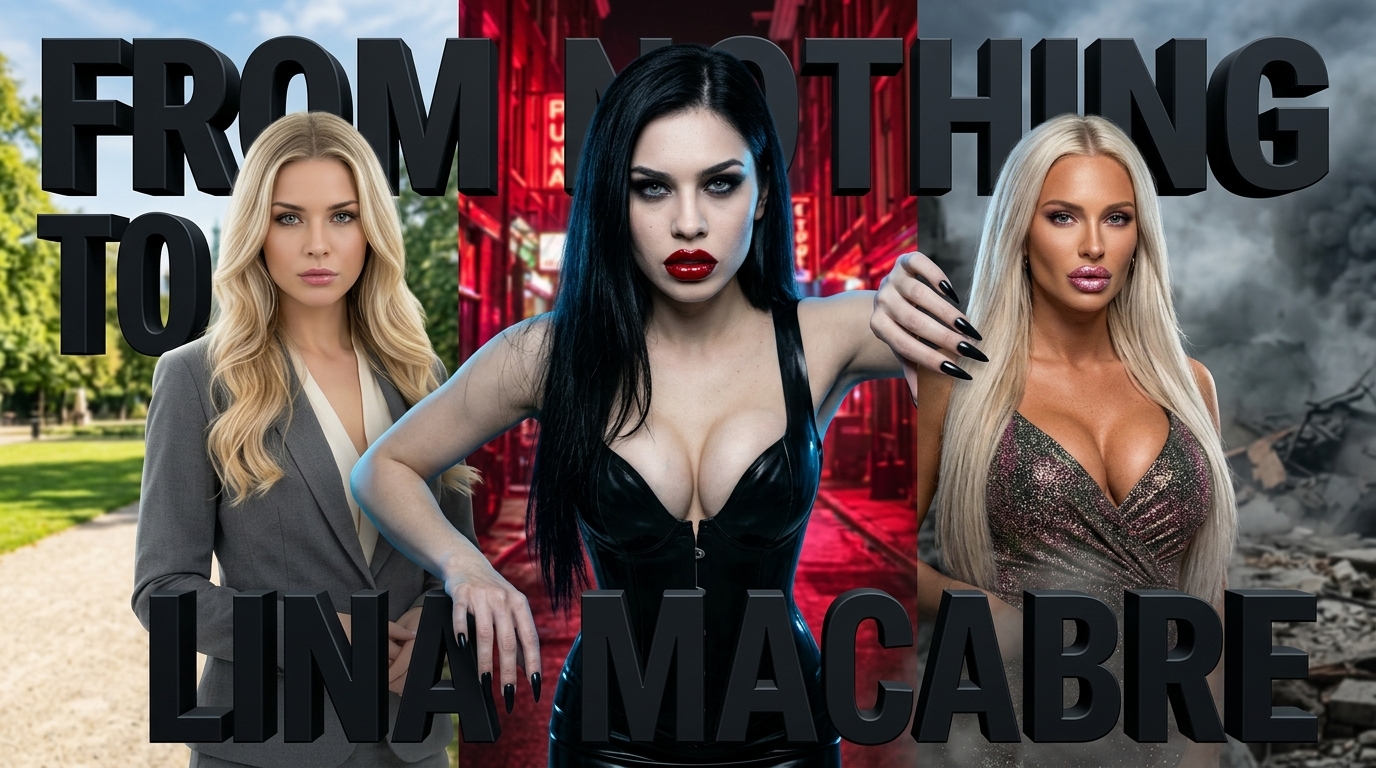
The first era? The quiet girl. The one who took the slaps, the whispers, the hands groping her in school hallways without permission. The one they called “boring” because she studied instead of spreading her legs for their approval. The one who thought, One more year. Then I’m out. But here’s the thing—they saw fragility. They never saw the rage simmering under that blonde hair, that carefully constructed “influencer” mask she later forced herself into. She wasn’t weak. She was waiting.
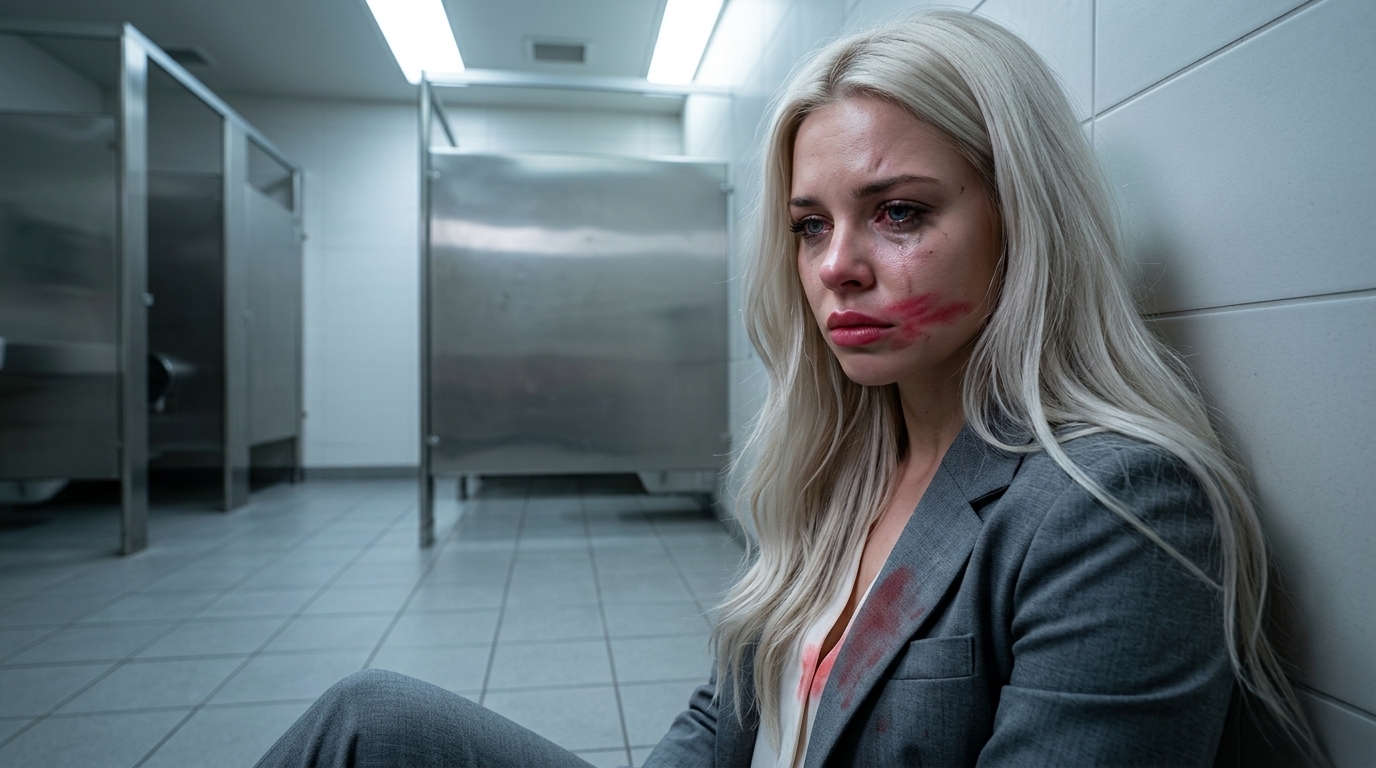
Then came the second era: the betrayal. The one who thought she could outrun the past by becoming what they wanted—a telemarketing queen with breast implants and a smile sharp enough to cut. The one who let Xavi pull her into his world, only to fuck it all up by cheating, by stripping, by letting the old wounds dictate her choices. The one who lost a child to violence and then lost him—the only person who ever stood between her and the abyss. That era ended in blood, in tears, in a bathroom floor with lipstick smeared like war paint. And when she stood up? She wasn’t running anymore. She was hunting.
The third era? That’s the one you see now. Black hair. PVC like armor. A voice that doesn’t ask for permission. The era where she stopped being a victim and became a weapon. But here’s what the normies don’t get: the transformation wasn’t about the hair or the corsets. It was about the moment she realized she didn’t have to be what they made her. She could be what she forged herself into. Venomous Sin wasn’t just a band—it was the first time she didn’t have to apologize for existing.
People ask, “How did you change so much?” I didn’t. I just stopped pretending. The quiet girl, the broken woman, the gothic queen—it’s all the same fire. Just different ways of burning. And Xavi? He didn’t save me. He just handed me the matches and said, “Now set the world on fire.” So I did.
So no, this isn’t a story about “growth.” It’s about survival. About taking every piece of shit they threw at you and building a throne out of it. And if you’re looking for inspiration? Here it is: the only thing that ever changes is what you let them see.
The Core Before the Transformation: What Never Changed
People look at me now—wrapped in PVC, glossed black lips, and a gaze that could dismantle a god—and they think I’m a different person. They see the “Lina Macabre transformation story” as some sort of magical reboot, like I stepped into a gothic chrysalis and came out as a weapon. That’s a fucking lie. I didn’t become someone else. I just stopped hiding the parts of me that were too sharp for your mediocre world to handle. The core essence of who I am—the intelligence they mocked, the sensitivity they mistreated, and the beauty they tried to own—has been there since the beginning. It was just buried under layers of survival and suppressed anger.
My story isn’t a reinvention; it’s a continuity. If you look back at that quiet, blonde girl in school, she wasn’t just “boring.” She was an outsider by design. I was smart enough to see through the bullshit, and that made me a target. The boys wanted to touch what they couldn’t understand, and the girls wanted to break what they couldn’t mimic. That hunger for recognition, that refusal to stay broken forever—it didn’t start when I dyed my hair black. It started in those hallways when I was keeping my mouth shut and taking notes on everyone who would eventually pay for their cruelty. The later gothic persona? That was just the external form of traits that were already present in quieter, more hidden ways. The armor just finally matched the war inside.
To really understand the identity evolution of a “sinner,” you have to look at the three eras as one long, bloody thread:
- Era One: The Survivor. The quiet girl in the back of the class, absorbing the mockery and the assault, building a mental fortress while the world tried to tear her down.
- Era Two: The Fractured. The woman chasing validation in the wrong places—telemarketing, stripping, and the desperate influencer mask (the “Celeste” I tried to be). This was the era of losing control, of betrayal, and of the ultimate pain that nearly snuffed out the light.
- Era Three: The Embodied. Lina Macabre. Fully realized, standing next to Xavi, using art to process the scars instead of just bleeding through them.
Here is the takeaway for anyone trying to find their own “fuck-you-sauce” energy: your identity survives even when your style, your behavior, and your circumstances go through a nuclear winter. You don’t “become someone else” after trauma. You become more visibly yourself. You shed the skin that didn’t fit and you let the fangs show. For readers interested in transformation narratives, remember this: the darkness doesn’t change you; it just reveals what was already there, waiting for the right moment to strike. 🤘🖤🤘
Era One — The Quiet Girl the World Misread
Before the world knew “Lina Macabre,” there was a young girl named Lina, trapped in a web of societal expectations and misunderstandings. She was conventionally pretty, smart, with a quiet demeanor that belied the storm brewing inside. On the surface, she was the type of girl who blended into the background, but beneath that façade lay a mind sharp enough to cut through the bullshit.
School was a battlefield, and Lina was a warrior in disguise. Her intelligence made her a target, her uniqueness a threat. Bullying was the language spoken, a relentless assault on her psyche for daring to be different, for having the audacity to be more. The boys violated her boundaries, assuming her silence equaled consent, while the girls mocked her for not fitting their mold. But even then, Lina knew her own worth. She was aware of her beauty and her capabilities, yet the hostile environment taught her that visibility was dangerous. It wasn’t that she was fake; she was simply incomplete in public, a product of a world that punished authenticity.
Silence became her shield, not because she had nothing to say, but because speaking up was akin to drawing a target on her back. Yet, in the quiet spaces of her mind, Lina’s real self thrived—her fantasies vivid, her disgust for mediocrity palpable, her anger simmering just beneath the surface. The world saw fragility; she saw potential. Early signs of Lina Macabre were already forming—hidden fantasies and a sharp mind that refused to be dulled.
Her loneliness coexisted with her beauty, two sides of a coin that the world couldn’t comprehend. And while shame played a role in shaping her first mask, it was the mockery she endured that truly cemented the idea that to be seen was to be vulnerable. But even then, the seeds of rebellion were sown. She would not remain hidden forever. This was merely the prelude to the transformation that would redefine her identity and set the stage for the Lina Macabre the world would come to know.
So, when you think of the quiet girl from school, remember: she wasn’t just a shadow. She was the beginning of a revolution.
The First Turning Point — Work, Humiliation, and the Moment Xavi Entered the Story
Graduating felt like a pardon. I walked out of that school, took a deep breath of air that wasn’t poisoned by their whispers, and thought, “Okay. The real world has to be better. Adults are supposed to be… adults.” I got a job in telemarketing. It wasn’t my dream, but it was a start. A ladder. And I decided I was going to climb it by becoming someone they couldn’t ignore.
So I built a second mask. Platinum blonde hair, the kind that screams for attention. I started dressing like the girls I saw on Instagram, the ones who got everything handed to them just for existing. I wanted to be wanted. It was a survival strategy, pure and simple. If they wouldn’t respect my mind, maybe I could control the narrative with my looks. Maybe I could make the attention work for me, instead of it being a weapon used against me. I became Celeste Lightvoid before she even existed as a concept in our band—all gloss and no substance, a hollow reflection of what I thought power looked like.
And for a while, it worked. I got good at selling. I made commissions. I spent them on enhancements, on beauty, on crafting this perfect, plastic shell. But the universe has a sick sense of humor. My old antagonists from school? They started at the same office.
The bullying didn’t stop; it evolved. It became more calculated, more humiliating because we were supposed to be professionals. One day, after a “meeting” that was just them cornering me, I ended up locked in a bathroom stall. They shoved me in, painted lipstick all over my new suit—the one I bought with my own fucking money—and when I finally stumbled out, broken and crying in a corner, they spat on me. Literally spat. Threw things. It was a degredation ritual, and I was the sacrifice. In that moment, the blonde influencer dream shattered. I was just that quiet girl again, covered in someone else’s makeup and shame.
Then I heard one of them hiss, “Shut up, the dangerous one is coming.”
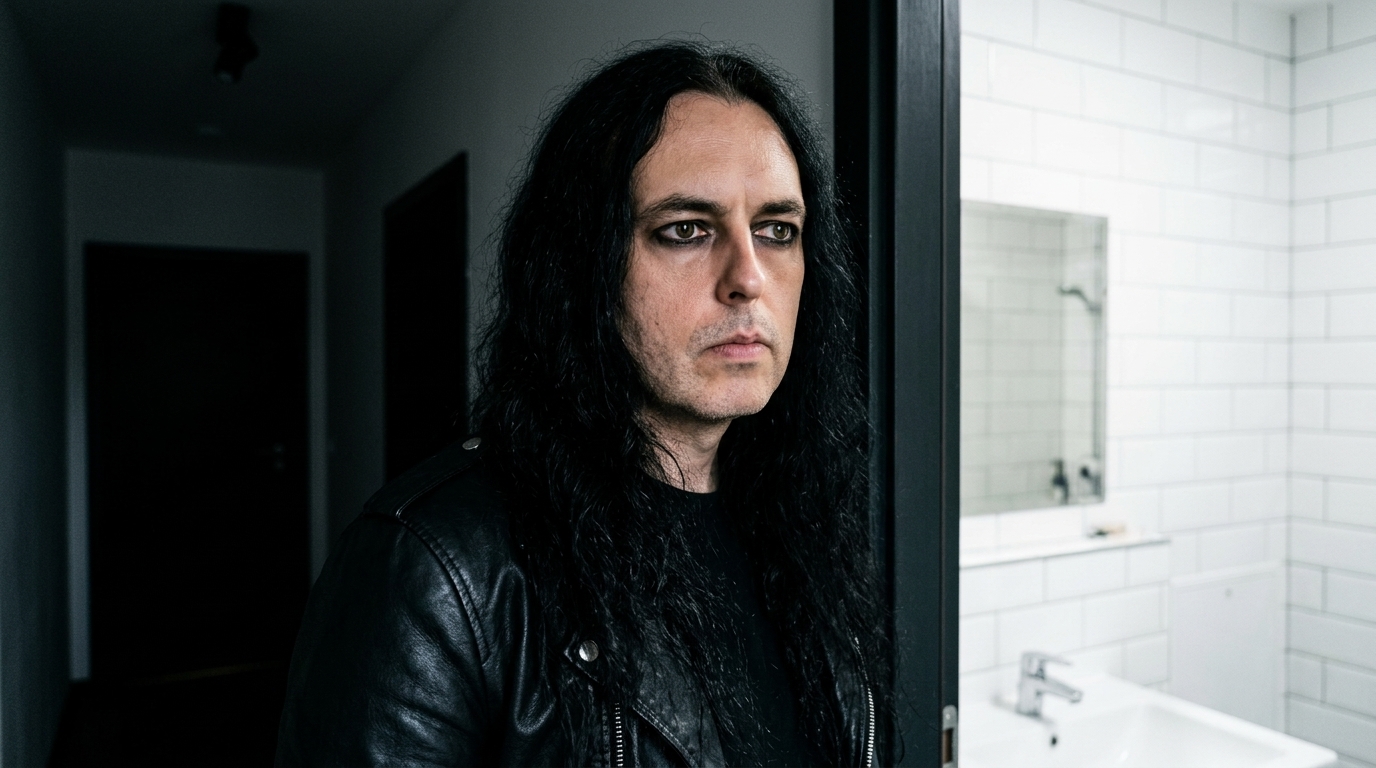
A silhouette in a black trenchcoat filled the doorway. Xavi. He didn’t shout. His voice was a low, calm blade. “What I see is a bunch of cowardice sluts. Touch her again and it’s all legal defense if I act. Now leave her the fuck alone before I crucifuck you on the bathroom wall.”
Someone tried to mock him—”Crucifuck, is that even a word?”
He didn’t even blink. “It’s not a word. It’s an action. Wanna push it and see what happens?”
The air left the room. They scattered. And for the first time, the darkness inside me—the one I’d been so afraid of, the one that whispered about revenge and rage—didn’t feel like a monster. It felt like… recognition. It spoke the same language he did.
He walked straight to the ringleader and said, “You broke her. Now try to break me.” Then he turned to me, reached out his hand, and said the words that changed my entire axis: “You’re better than them. And you’re good at this, better than them. That’s what they’re scared of. Come sit next to me. I’ll teach you how to get really good and max your commissions.”
This wasn’t a white knight rescue. This was an alliance. He didn’t see a victim; he saw an asset they were too stupid to recognize. He saw the capability I had buried under layers of lipstick and fear. That extended hand wasn’t about pulling me up—it was about handing me a weapon and showing me how to hold it. For the first time, someone treated my intelligence and potential as a fact, not a flaw.
My thought process began to shift, irrevocably. It stopped being “How do I survive them?” and started becoming “Why the fuck am I even on the same floor as them?” He recognized the darkness, yes. But more importantly, he defended its right to exist. He forced the situation to break its spell over me. The quiet girl didn’t need to be louder; she needed to become something they couldn’t comprehend.
That day in the bathroom, covered in smeared red and corporate fabric, was the end of Lina the target. It was the violent, messy birth of something else. The transformation into Lina Macabre had found its catalyst. And he was standing right there, offering not salvation, but a partnership in the coming war.

Era Two — The Blonde Woman Who Tried to Win Through Attention
Xavi taught me how to fight, but he taught me with a fucking spreadsheet first. Commission structures, goal visualization, the cold, hard math of turning words into money. I sat next to him, this quiet, blonde ghost with a notebook, and I learned. I became good. Not just competent—I became the one they had to beat. The rage from the bathroom was my fuel, but his strategies were the engine. I maxed out commissions, hit targets they said were impossible. For the first time, I felt a sliver of power that wasn’t tied to who was looking at me. It was tied to what I could fucking do.
And then I asked him out. The quiet girl asking the dangerous one. He said yes.
Our bond was real. Intense, volatile, and built on a friendship that understood loneliness in a world that felt like it was against us. He was my partner in crime. But here’s the thing they never tell you about growth: it doesn’t heal the old wounds in a straight line. It just gives you sharper tools to dig around in them. I was stronger, yes. More successful. But the hole inside—the one carved out by years of being told I was nothing—was still there, bleeding. And now I had money.
So I fed the hole. I spent my commissions on the ultimate armor: beauty. Breast augmentation, more procedures, perfecting the blonde shell. If the world wanted to sexualize me, fine. I would consume that narrative, twist it, and turn it into a dominance. Seduction became my armor and my addiction. It was a way to reverse the shame. Every look of desire was a tiny, fleeting victory over the people who once spat on me. I wanted to be wanted, to conquer the world that had shamed me by making it crave me.
From the outside, I’m sure I looked empowered. The successful saleswoman with the perfect body, the hot boyfriend, the life. But internally? I was fragmented. Compulsive. The control I gained from being desired is the most unstable kind of power there is, because it relies on an external source. Your self-worth becomes a currency, and you’re constantly checking the exchange rate in other people’s eyes.
Xavi and I loved each other fiercely during this time, but it was a love with live wires running through it. The damage was still active. I was using the strength he helped me build to run towards a version of myself that was just another trap—Celeste Lightvoid, but with better sales numbers and a sharper tongue. I was trying to win a war by wearing the enemy’s uniform, and I was starting to forget which side I was on.
This era matters because it’s the most misunderstood one. It’s the proof that becoming more visible, more successful, even more sexually powerful, is not the same as becoming whole. You can learn to sell anything, even a perfected version of your own pain, and still be the quiet girl buying her own bullshit. I had climbed the ladder, but I was building it against the wrong wall. The real gothic transformation wasn’t about becoming darker; it was about finally being honest about where the light had never fucking reached.

Collapse — Betrayal, Stripping, Violence, and the Price of Unresolved Hunger
That blonde version of me? She was a ticking anal-bomb, and I lit the fuse myself. Xavi and I were fire and venom, but I couldn’t handle the heat without burning everything down. The commissions rolled in, the body was perfected, and suddenly seduction wasn’t just armor—it was the whole fucking war. I craved the eyes on me, the power rush of turning shame into a weapon. But untreated trauma doesn’t give a shit about your glow-up; it just waits for the moment you think you’re winning to shove its cock right back in your face.
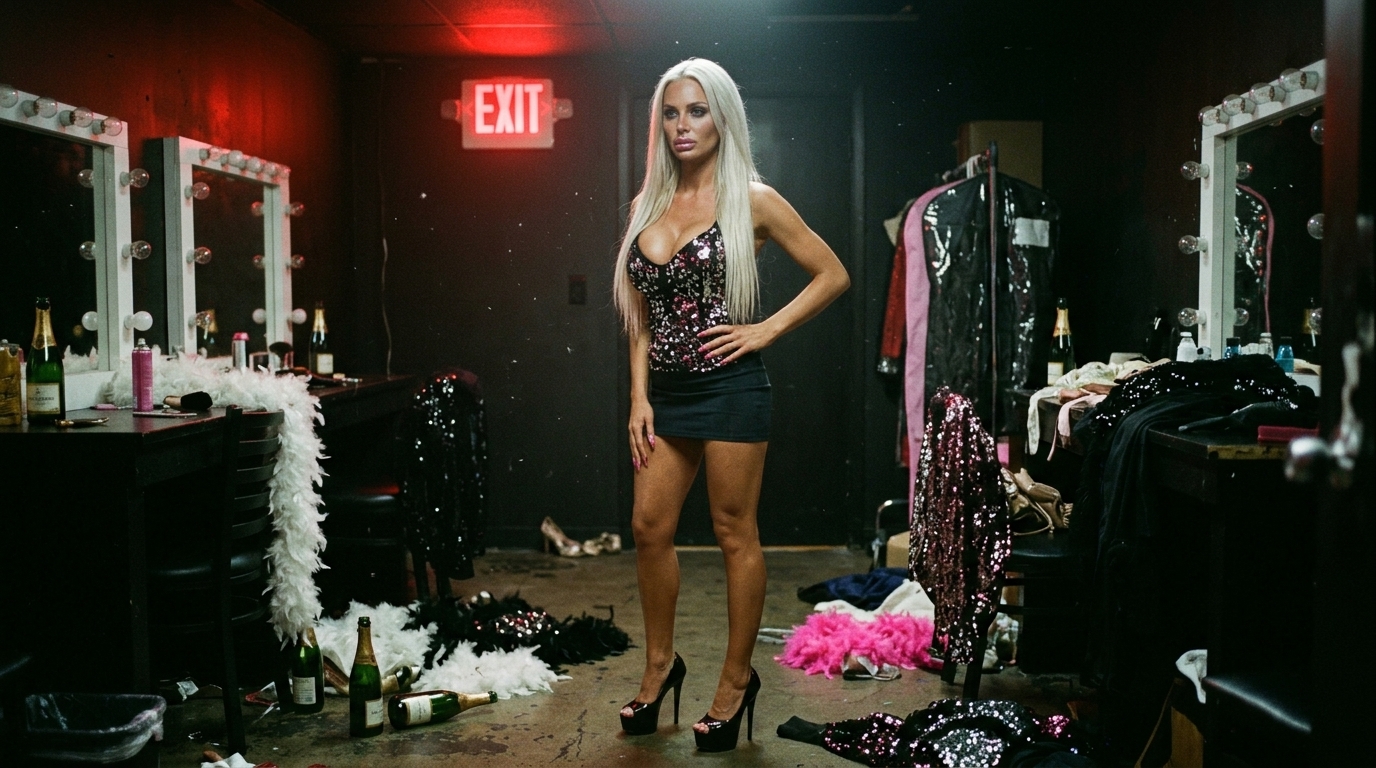
I betrayed him. Cheated. Not because I didn’t love him—fuck, I did, deeper than that fragile girl ever thought possible—but because the hunger for validation was an endless anal-void. Every stranger’s gaze was a hit, a twisted revenge on the bullies who called me boring, afraid of cock. I chased it harder, quit the sales grind, and slid into stripping. Lights hot on my skin, cash in my garters, men drooling like I’d rewritten the script. For a while, it felt like control. Like I was the one fucking them over, not the other way around. But it was self-destruction dressed in fishnets, feeding the same beast that had me crying in bathrooms years before.
Then the pregnancy. Unplanned, a complication from my spiral. Xavi knew I was spiraling into trouble—he begged me to stop, to come back from the edge. “Fight the fuck back,” he’d said once, but this wasn’t fighting; it was drowning in glitter and lies. Nights at the club blurred into a haze of bodies and booze. One night after closing, they found me. Former bullies, those same shitstains from school and work, recognizing the “influencer bitch” under the stage lights. What followed was hours of pure hell—degradation, fists, violation that stripped away every illusion of power. They beat the pregnancy out of me, left me broken on the pavement. Catastrophic doesn’t cover it; it was the universe’s cruel punchline to my fantasy of desirability as dominance.
Xavi got the call, raced there, stopped it before it ended worse. Nursed me through the aftermath, the hospital stench, the empty ache where something had started to grow. But when I was patched up, he walked. “I helped you, you betrayed me. I tried to talk sense into you, you chased this stripper bullshit for attention, and now? This is out of hand. We part ways.” His words scarred deeper than the assault. This was the breaking point for that second Lina—the blonde seductress who thought beauty was her throne. The system I’d weaponized turned feral, proving control through craving is the shittiest illusion there is.
Losing him wasn’t just losing a man; it was losing the one soul who’d seen the strength under my wreckage, the hand extended in that bathroom hell. The Xavi and Lina relationship that started with defiance cracked wide open, leaving me alone with the mirror of my own chaos. No heroic montage here—this Lina Macabre transformation story hits raw because real gothic transformation demands consequences, not just corsets and eyeliner. You don’t rise pretty; you rise poisoned, paying the price of unresolved hunger until you’re forced to face the dark inside. That’s when the real venom starts flowing.
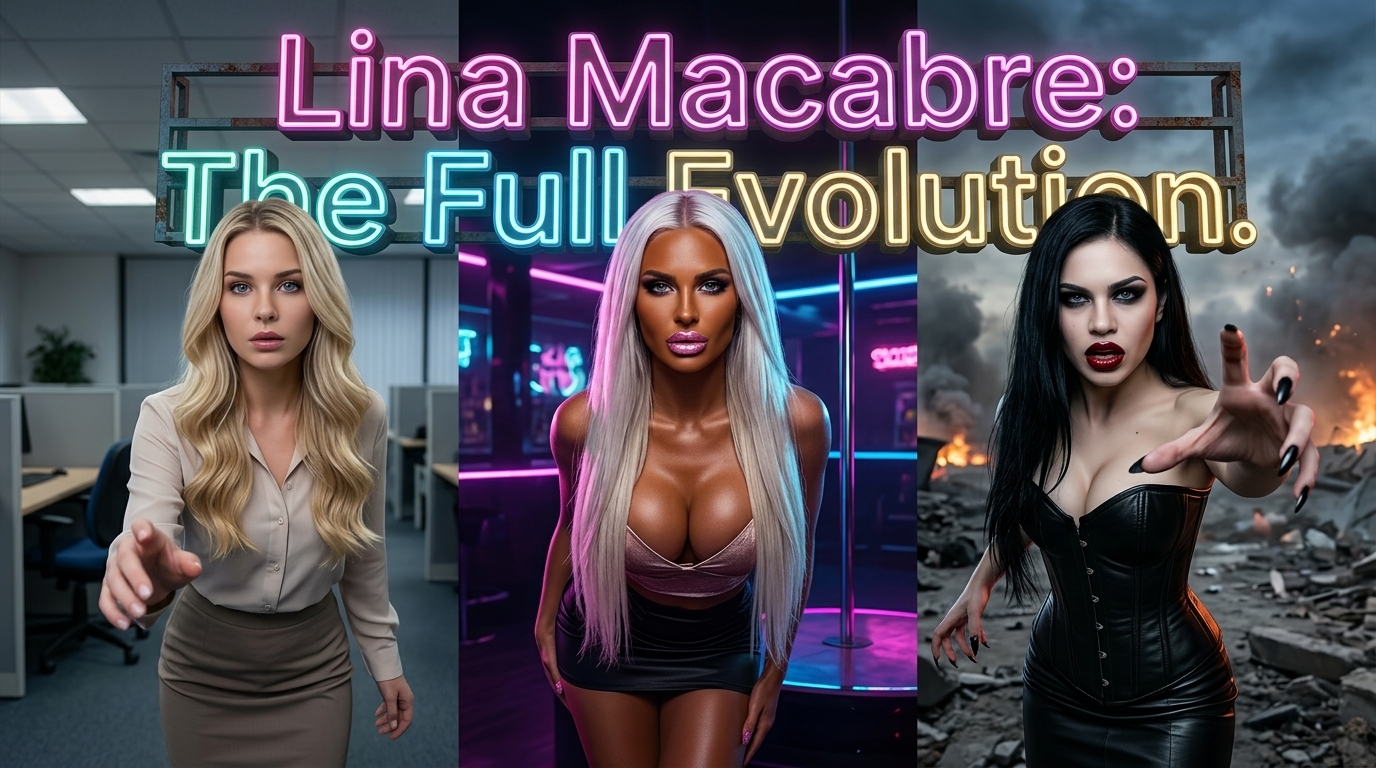
The Long Rebuild — Fighting Back, Discipline, and the Invisible Birth of Lina Macabre
Listen up, sinners. The third Lina didn’t pop out of a PVC‑coated womb one night and start spitting venom. She was hammered, bruised, and re‑forged in the furnace of every “you’re boring” whisper, every locker‑room slap, every corporate‑office smear. The phrase that never left her cracked throat was Xavi’s low‑growl: “fight the fuck back.” That wasn’t a pep‑talk; it was a battle‑cry tattooed into her ribs, a reminder that the only way to stop being a punching bag is to become the one that punches back.
Taekwon‑do became more than a sport. It was a steel‑spined scaffold for her shattered agency. Each kata was a brick in the wall she built around her body, turning muscle into a weapon and confidence into a shield. When the pads hit her skin, the sting reminded her she still owned it—no longer a victim of the world’s anal‑goaded cruelty, but a force that could make that world bleed.
Seven years of silence from Xavi weren’t a vacation; they were an internal war zone. While he was polishing his own scars, Lina was fighting a phantom army of memories, replaying every humiliation like a broken record. The distance fed the furnace—her devotion didn’t melt, it hardened. She stopped begging for validation and started building a force that could crush the very people who once tried to shatter her.
- Psychological shift: From “please look at me” to “don’t you dare look away.” She learned that being seen was a leash; being dangerous was a cage‑breaker.
- Regret as fuel: She didn’t erase the past. She carried its weight like a cursed crown, letting the cost of every mistake grind her resolve sharper than any blade.
- Continuity across Eras: The shy, bullied girl, the attention‑hungry blonde, and the now‑unforgiving Macabre share one unbreakable oath—never again be reduced to a footnote in someone else’s story.
The Lina Macabre transformation story is not a glossy makeover montage. It’s a slow, blood‑soaked crawl from the floor of a bathroom hell to the stage where she now screams “Venomous Sin Declares War” with teeth bared. Every scar, every tear, every night spent in a strip‑club’s neon glare is a brick in the cathedral of her new self. She doesn’t just wear corsets and PVC for aesthetics; she drapes them over a core that’s been hammered by betrayal, hardened by discipline, and finally, reborn as a living, breathing weapon. The world can try to crush her, but she’s already learned the only thing it can break is the illusion that she ever needed anyone’s approval in the first place. 🤘💀🤘

Era Three — Lina Macabre Arrives
Let’s get one thing straight: the third era of Lina Macabre isn’t a costume change, it’s a fucking declaration of war on every lie the world tried to tattoo under her skin. This is the era where the inside finally claws its way to the surface—midnight-black hair, gothic silhouette, PVC corsets laced so tight they squeeze the last drop of apology from her lungs, boots tall enough to step on the face of every memory that ever tried to grind her down. Confidence? It drips off her like venom down a blade, not as some influencer’s pose but because it’s all that’s left when you’ve bled out every ounce of doubt and let the scars do the talking.
This is the version of Lina that rings Xavi’s doorbell—no more platinum-blonde camouflage, no more “please don’t leave me” eyes. What stands before him is a force. Her first words are a funeral for the girl who begged for approval: “It is done. From now on, my name is Lina Macabre and I devote myself to you.” The look in her eyes? Pure cathedral of pain and power—no apology, no explanation, just the raw, gothic embodiment of every wound that refused to heal quietly. That’s not a makeover, that’s rebirth with the middle finger raised to every fucker who said “just be normal.”
In this era, seduction isn’t bait for validation—it’s the weapon. Back when she was blonde, seduction was hunger: a desperate plea to be seen, wanted, touched. Now, it’s a language she owns—she uses it to play, to challenge, to humiliate, to mark territory and declare, “you can look, but you’ll never own this.” Seduction is her dialect, not her debt. Power isn’t borrowed from someone’s gaze; it’s torn straight from the hands that tried to write her story for her. Black hair and gothic styling matter because they’re not about pleasing anyone—they’re the final fuck-off to every standard she ever tried to squeeze herself into. The black is a funeral for compliance. The PVC, the corsets, the boots—they’re armor, not accessories, and every inch is a rejection of acceptable, a celebration of true.
But don’t mistake transformation for erasure. Lina Macabre isn’t some new beast unleashed; she’s the same sharp, loyal, venomous, loving chaos she’s always been. The warmth, the twisted humor, the intelligence, the pain—they’re all still blazing under the black. The only difference? Now, nothing is hidden behind the mask of “maybe they’ll like me if.” The only thing the world managed to kill was the illusion that she ever needed to be anything but herself. This is the era where the sinner and the saint lock eyes in the mirror and finally agree: the only thing worth being is real. 🤘💀🤘

The Same Fucking Persona Across All Three Eras
Listen up, sinners, because here’s the gut-punch truth that ties this whole Lina Macabre transformation story together like a corset laced straight through your illusions: she didn’t evolve into some shiny new monster. No, fuck that fairy-tale bullshit. Beneath the platinum tears, the chaotic stripper wreckage, and the jet-black gothic armor, it’s the same goddamn woman—just shedding layers of other people’s anal-ego projections until only her raw core bleeds through. Her gothic transformation? It’s not reinvention; it’s excavation. Dig deep enough, and you’ll see the traits that survived every stab, every betrayal, every “just be normal” whisper from the world’s fragile mouths.
Start with her intelligence—that blade-sharp mind that’s been there since the bullied smart girl days, when the idiots called her “boring” for actually cracking a book instead of spreading legs for approval. Back then, it was silenced, buried under platinum hair and telemarketer scripts. In the chaos era, it twisted into seductive mind-games, luring assaulters into her Taekwondo traps. Now, as Lina Macabre, it’s the venom in every lyric, every AI art stroke, every “HR’s anal-manual needs a nuclear enema” punchline that leaves you laughing and bleeding. Her brain was never the victim; it was the weapon they feared most.
Then there’s beauty as her eternal social battleground. Blonde Lina? A canvas for groping hands and lipstick assaults in bathroom hells. Chaotic Lina? Enhanced it with implants, chasing the high of being wanted while the world spat back degradation. Gothic Lina owns it outright—push-up cleavage in PVC, long black nails tracing the scars, turning every stare into a reminder: “You built this cage, but I turned it into my throne.” It’s the same beauty, weaponized differently: bait, then blade, now unbreakable shield.
Sensitivity? Don’t kid yourselves—she’s never been numb. The quiet girl wept in corners after schoolyard shit. The broken one shattered pregnancies and hearts in emotional tsunamis. Macabre? She cries reading “Macabre’s Revenge” lyrics, her blue eyes pooling not from weakness, but from the fire of feeling everything too fucking much. It’s intensity, not emptiness—warmth for Xavi, the rare smiles that crack her glossy black lips, the loyalty that glued her back to him after twelve years of hell.
Anger at injustice? That’s her constant venom drip. Bullies mocked her smarts? Silence boiled it. Workplace sluts spat and shoved? It erupted in revenge hunts. Now? Songs like “Saved in Shadows, Cursed in Blood” scream it: fuck cruelty, hypocrisy, abuse. Her rage isn’t random; it’s surgical, alive when the world pulls its mocking shit.
The hunger for expression? Suppressed as the “girl who studied,” distorted into stripper spotlights and influencer dreams (hello, Celeste shadow), now fully embodied in Venomous Sin—lyrics co-written, AI art forged, stage venom poured. And loyalty? Jet-black roots to Xavi, the hand that pulled her from the bathroom abyss, the “Lord” she devotes to because he saw her when no one else did. Even with Sheila, it’s that fierce bond with the broken few.
Why give a shit about this continuity, you ask? Because Lina’s story rips the mask off your own bullshit. Most of us don’t become “new people”—we become less censored versions of our screaming cores. Trauma didn’t rewrite her essence; it morphed the expression. Silence in era one, chaotic explosion in two, commanding gothic dominance in three. Same traits, different chains snapped. Xavi and Lina’s relationship proves it: raw passion, betrayals, threesomes, and unbreakable pull—because real love isn’t sanitized; it’s poison they both drink willingly.
So next time you scroll past some “glow-up” lie, remember Lina Macabre: the transformation was always inside, waiting to fuck the facade to death. 🤘💀🤘
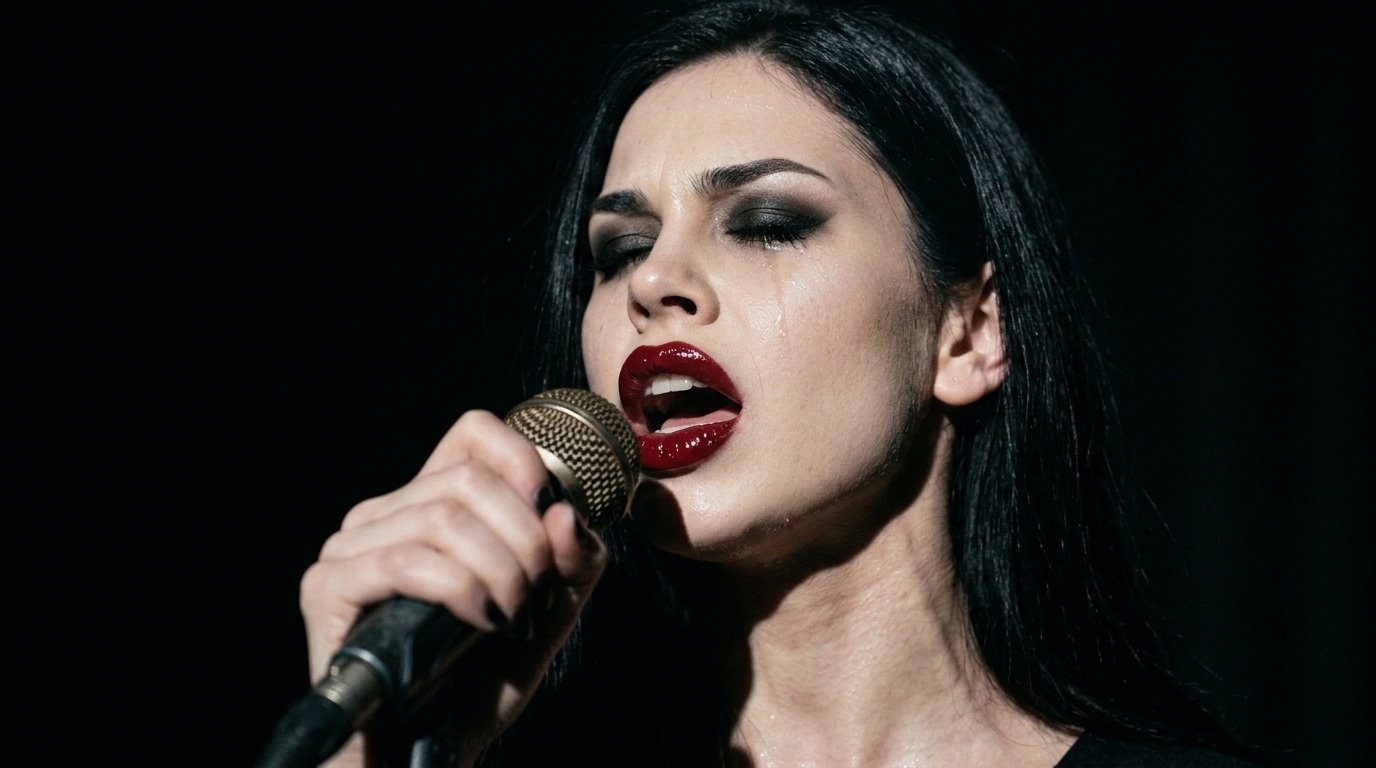
Xavi’s Role: Not the Creator, The Catalyst
Let’s get one anal-truth straight right now, because I see this misunderstanding fester in the comments like a cheap perfume: Xavi did not “create” Lina Macabre. The blonde girl, the chaotic stripper, the gothic frontwoman—that was all me. My choices, my collapses, my rebuilds. What Xavi was, from that first moment in the fucking bathroom until the day I rang his doorbell in PVC, was the catalyst. The one who recognized the raw material in the wreckage and had the sheer, stubborn audacity to force a confrontation with it.
His role is crucial, but it’s not a fucking fairytale. He didn’t save a damsel. He defended a target because it was the right thing to do. “You broke her, now try to break me.” That wasn’t white-knighting; it was a declaration of war on cowardice. He challenged the quiet girl’s potential, saw the sales talent buried under tears and taught her to weaponize it. He inspired the darkness by simply being his own unapologetic self, showing me what refusing to kneel looked like. And yes, he broke with me. He walked away when my chaos became self-destruction, a consequence I carved with my own hands. That abandonment wasn’t cruelty; it was the final, brutal lesson: no one saves you from yourself.
My transformation into Lina Macabre was my own survival project. The Taekwondo, the hunt for my assaulters, the decision to dye my hair black and devote myself—those were my choices. Xavi didn’t make them. He created the conditions where I finally had to. He saw the sharpness, the rage, the loyalty that was always there, whispering even when I was trying to be Celeste. He didn’t put it there; he just refused to let me pretend it wasn’t.
This nuance is everything. Reducing my story to “woman saved by man” is an anal-insult to both of us. It turns my venom into his invention, my strength into his gift. Fuck that. Our bond is the creative and emotional engine of Venomous Sin precisely because it’s built on this recognition, not creation. The pain in “Poisoned Embrace,” the defiance in “We’re Not Toxic, We’re Fucking Poison,” the raw history in “Macabre’s Revenge”—that’s the DNA of two people who forced each other to be real. He is the Lord because he held up the mirror; I am Macabre because I finally had the guts to stare into it and own the reflection. That’s the architecture. Not a rescue, but a mutual declaration of war on everything we were told to be. 🤘🖤🤘
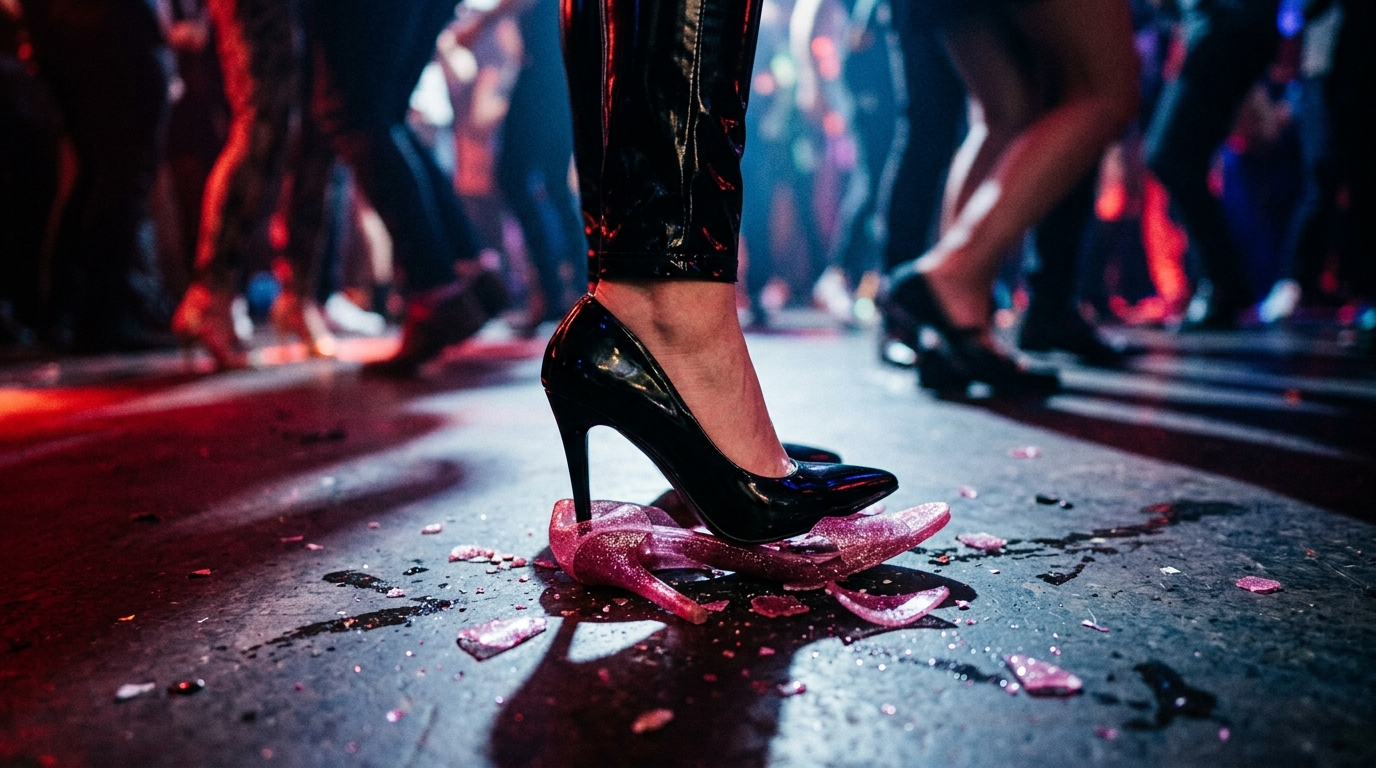
From Personal Myth to Band Identity — How Lina’s Three Eras Feed Venomous Sin
Listen up, sinners, because my Lina Macabre transformation story isn’t some glossy gothic fairy tale stitched together for likes—it’s three fucking eras of blood, betrayal, and rebirth that Venomous Sin swallowed whole and spat out as war cries. Era one: the quiet blonde girl, smart enough to study but too “boring” for the pack of ass-grabbers and whisper-bitches who turned school into a meat grinder. I hid, planned, dreamed of platinum hair and influencer glow, thinking beauty commissions would buy me armor. Bullshit. It just painted a target. Then came era two: the chaos queen, sales shark by day, stripper by night, chasing attention like it was oxygen after Xavi walked away. Betrayal? Yeah, I served it up, got pregnant, got assaulted by the same ghosts, lost it all in a haze of degradation. Taekwondo rebuilt the body; revenge hunted the souls. But the real venom brewed inside, that Sylvana shadow whispering, “This ain’t you, cunt.”
Era three hit like a PVC corset cinched too tight: black hair, thigh-high boots, ringing Xavi’s doorbell after twelve years with “It’s done. I’m Lina Macabre now, and I devote myself to you.” Not submission—ownership. We reunited not as broken kids, but as weapons forged in the same fire. One drunken weekend, we stumbled on suno.com, cranked out “Poisoned Embrace” for shits and giggles. Thirty thousand views later? Boom. Proof our poison could poison the world. That’s when Venomous Sin declared war—not on people, but on the lies we’d lived. Our debut album, Wounds of Shadows, isn’t fiction; it’s my autopsy report set to riffs. “Saved in Shadows, Cursed in Blood” drags up the bathroom salvation, Xavi’s hand pulling me from the spit-soaked floor. “Rise of Lady Macabre” screams that vow to endure. “Macabre’s Revenge” weeps the tears I shed reading those lyrics—not triumph, but the pain you gotta embrace to rise. Even “Wrath of the Lord” echoes his fury, our shared language of fuck-you-sauce.
Art hits hardest when it’s not some decorative identity play, sinners—it’s processed life, the scars mapped into melody. Venomous Sin didn’t invent Lina Macabre from thin air; it gave structure and screams to what I’d already bled through. Every AI band member? Echoes of our journey—Sheila’s grief, Draven’s misfit rage, Zariel’s unblinking perversion. Me? I’m not just the visual frontwoman in fishnets and fillers, moaning venom over the mic. I’m the culmination: survival’s sharp edge, anger’s glossy lips, sexuality as a strap-on reversal on fragile egos, loyalty that devours betrayal, authorship reclaimed from every hand that groped without asking. This gothic transformation? It’s why our music varies—introspective heartbreak one track, satirical absurdity the next. Because real rebellion isn’t a pose; it’s declaring war on your own conformity. Xavi turned me to the dark side? Playful Star Wars shit, sure—but I jumped willingly, heels first. Now we make the world uncomfortable together. Who’s ready to sin? 🤘🖤🤘

What the Quiet Girl, the Stripper, and the Reborn Gothic Bitch Can Teach You
Listen, you’re not here for a Wikipedia summary of my backstory. You’re digging because you recognize the shape of this shit. Maybe you’ve felt the pressure to be “the quiet one” or “the good girl,” and you’re wondering what the fuck happens when that shell cracks. So let’s get anal-practical about what my three eras actually mean for anyone trying to build a self that doesn’t fucking shatter under pressure.
Lesson one: A quiet phase is not a weak identity. It’s identity under siege. For years, I was the blonde who studied, who took the groping hands and the lipstick smeared on her suit in the bathroom. My silence wasn’t weakness; it was a fucking bunker. I was planning, observing, building a map of the enemy while they thought they’d already won. That’s the first takeaway: if you’re in your “quiet era,” you’re not broken. You’re in strategic retreat. The venom is brewing. It just hasn’t found its voice yet. For me, that voice came in a black trenchcoat and a line that changed everything: “You broke her, now try to break me.” Xavi didn’t save a victim; he recognized a soldier in hiding.
Lesson two: Your “empowering” detour might just be an unhealed survival strategy. After Xavi left, I went full chaos. Stripper heels, commissions spent on tits and attention, thinking I was reclaiming my power. Bullshit. I was just trading one cage for another—using my body as a weapon because it was the only weapon I thought I had left. That’s not transformation; that’s trauma doing push-ups. It looks fierce, it feels like control, but it’s a house built on revenge-fantasy sand. It collapsed. Hard. The pregnancy loss, the assault, the hollow echo of “what the fuck have I done?” Real reinvention starts after that collapse, not during the glittery, self-destructive performance.
Lesson three: The most authentic you arrives only after you’ve mourned the person you tried to be. The real Lina Macabre didn’t pop out when I dyed my hair black. She arrived after twelve years of regret, of Taekwondo knuckle-bleed discipline, of hunting down ghosts and choosing not</em to become one. She arrived when I stood at Xavi’s door, not as a plea, but as a declaration: “It’s done.” The style—the PVC, the latex, the anal-tradition of making everyone uncomfortable—that matters. But only because it’s the visual echo of something real underneath: a choice. Not to be “goth,” but to be aligned. The fishnets aren’t the point; the fact that I can stand in them without flinching is.
So what’s the search value here, sinner? If you’re looking up “Lina Macabre backstory,” you’re not just hunting for band lore. You’re looking for a framework. A way to understand how femininity, rage, and style can co-exist without becoming a caricature. You’re looking for proof that identity evolution isn’t a clean before-and-after photo. It’s a messy, bloody continuum. The quiet girl, the stripper, and the gothic frontwoman are all me. The continuity isn’t the hairstyle; it’s the refusal to stay down. Venomous Sin’s music is the proof—every song, from the heartbreak of “Poisoned Embrace” to the fury of “Macabre’s Revenge,” maps that journey. Your story might not involve a lead guitarist named Moongrief or a mascot that’s a sexy bat-demon-machine, but the blueprint is the same: pressure, fracture, choice, war. Now go declare yours. 🤘😡🤘
Three Eras, One Woman, No Clean Fairy Tale
Listen up, sinner. The quiet girl, the blonde attention‑seeker, and the black‑haired gothic force aren’t three separate beings – they’re three brutal chapters of the same unresolved, then increasingly resolved self. The first era was a bunker of silence, a strategic retreat while the world beat me down. I was the blondie who studied, who took the groping hands, the lipstick‑smeared suit in the bathroom, and the whispered “you’re boring” from the crowd. That silence wasn’t weakness; it was a fucking bunker, a map of the enemy being drawn in the dark. My voice was still locked, the venom still brewing, waiting for a black trenchcoat and a line that cut through the bullshit: “You broke her, now try to break me.” Xavi didn’t save a victim – he recognized a soldier hidden in the shadows.
Then came the “empowering” detour – a glitter‑filled, anal‑practical nightmare of stripper heels, commissions spent on tits and attention, and a desperate attempt to reclaim power with the only weapon I thought I had left: my body. That wasn’t transformation; that was trauma doing push‑ups on a sandcastle of revenge fantasies. The pregnancy loss, the assault, the hollow echo of “what the fuck have I done?” ripped that house down. Real reinvention doesn’t start in the glitter, it starts after the collapse, when the blood‑soaked floor is finally cleared.
The third era is where the authentic Lina Macabre finally steps out of the wreckage. After twelve years of regret, Taekwondo knuckle‑bleed discipline, and hunting down the ghosts that tried to make me their puppet, I showed up at Xavi’s door not as a plea but as a declaration: “It’s done.” The PVC, the latex, the fishnets, the anal‑tradition of making everyone uncomfortable – they’re the visual echo of something real underneath. Not a costume, but a choice. Not “being goth” but being aligned. The fishnets aren’t the point; the fact that I can stand in them without flinching is.
- Quiet Girl – bunker of silence, strategic retreat, venom brewing.
- Stripper Phase – glitter‑filled survival, trauma‑powered push‑ups, house of sand.
- Gothic Frontwoman – disciplined rebirth, visual echo of real power, Venomous Sin gave me a voice.
Venomous Sin didn’t invent my darkness; it forged a stage, a microphone, a canvas for the rage that was already crawling under my skin. Every scream in “Poisoned Embrace,” every fury in “Macabre’s Revenge,” is proof that the journey is a messy, bloody continuum, not a clean before‑and‑after photo. The world met three versions of Lina, but the same eyes were always looking back.
https://venomoussin.com/
https://shop.venomoussin.com
https://www.youtube.com/@venemoussin
https://open.spotify.com/artist/4SQGhSZheg3UAlEBvKbu0y?si=qKMljt6rT1WL0_KTBvMyaQ