
Workplaces love to brag about “freedom of expression” while they quietly dress you in a beige uniform that screams obedience. You’re told to “be yourself” – but only after they’ve trimmed away every shard of color, every jagged edge that makes you visible. It’s a paradox that would make even the Lord laugh: they sell liberty on a silver platter while serving you a cold, analytic anal‑manual of what looks “professional.” 🤘🖤🤘

Enter Swastifashion – the modern dress‑code machine that doesn’t just regulate clothing, it reshapes identity into something the corporate machine can easily market, control, and discard. It’s not a harmless style guide; it’s a identity‑policing tool that turns your soul into a content‑parasite, feeding on the very essence you tried to protect. The moment you step into a boardroom, the beige suit becomes a crucifucked badge of compliance, a symbol that says, “I am here to obey, not to inspire.” 🤘💀🤘
Here’s why “professionalism” often means conformity, and how you can fight back without blowing up your own career:
- ✋😏👉 Dress‑code as identity control: The rulebook isn’t about safety; it’s an anal‑schedule that schedules your thoughts, your posture, even the way you breathe. Every “no‑open‑toes” clause is a micro‑aggression that forces you to hide your true self under a layer of corporate varnish.
- ✋🧐👉 Psychological impact: Beige uniforms trigger a “normiefucked” mindset – you start to believe the uniform is you. The brain rewires, and the original “Lina Macabre” becomes a distant echo, replaced by a compliant avatar that the system can easily structurefuck.
- ✋😈👉 Professional identity vs. authentic self: When the dress code tells you to “fit in,” it also tells you that your authentic self is an anal‑problem to be solved. The result? A constant internal war where you’re both the victim and the aggressor, a perfect storm for the “we’re not broken, we’re the reaction” anthem.
- ✋💀👉 Resist without sabotaging yourself: Wear subtle subversions – a hidden pentagram pin, a corset underneath that screams “I’m still macabre.” Use the power of language: call out the anal‑politeness of the policy in meetings, drop a “this is anal‑good” line when someone praises the beige monotony. Let the “Venomous Sin Declares War” mindset seep into your email signature: “We’re Not Back, We Fucking Attack!” 🤘🔥🤘
Remember, the dress code is a weapon, not a suggestion. By exposing the Swastifashion façade, calling it out as the identity‑control it truly is, and slipping your own venomous symbols into the corporate tapestry, you keep your autonomy intact while still playing the game. The war isn’t about tearing down the system with a sledgehammer; it’s about injecting a steady drip of fuck‑you‑sauce into every beige thread until the whole outfit starts to bleed.
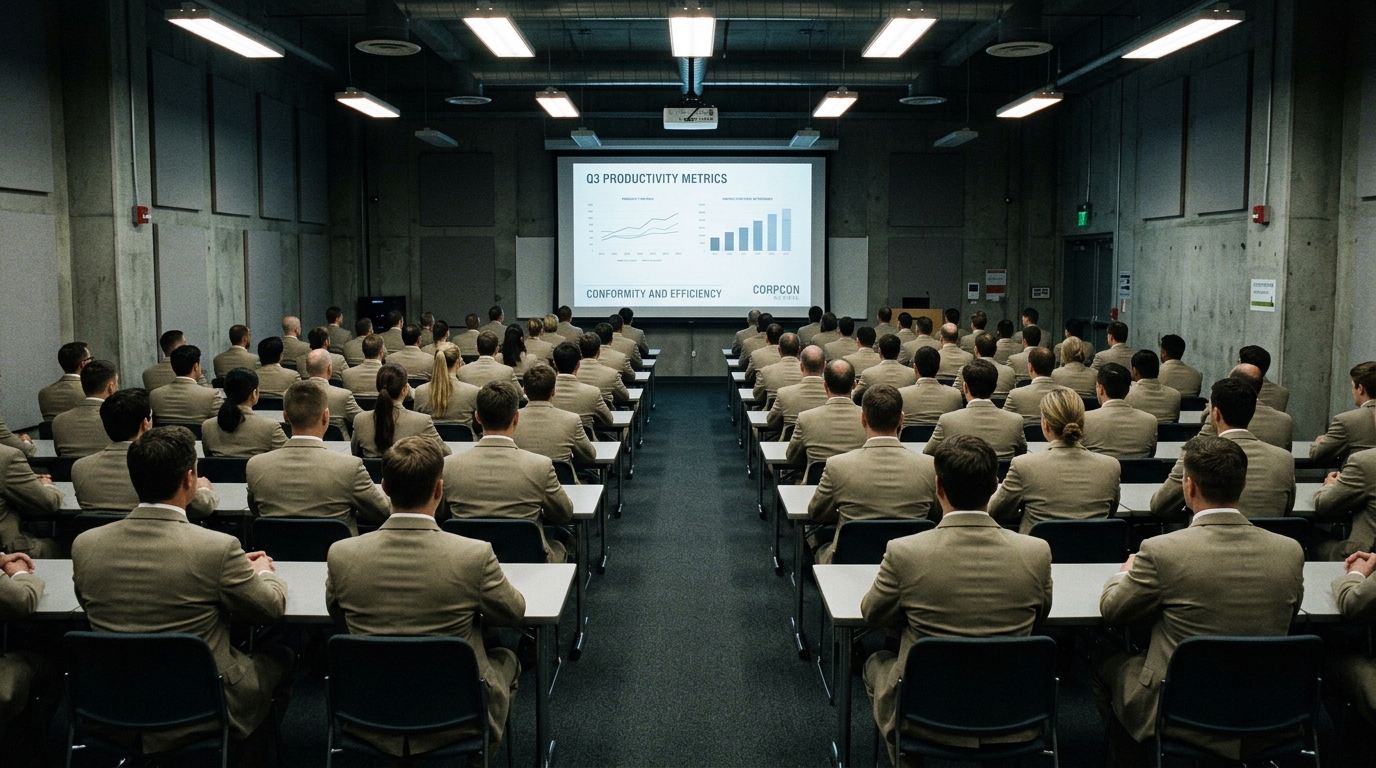
What Swastifashion Really Means
Swastifashion is the quiet little tyrant hiding behind every corporate slogan about “freedom of expression.” It lets them scream diversity from the rooftops while they hand you an anal-manual that decides exactly how much of your soul is allowed to show up at nine o’clock. One minute they praise individuality, the next they’re measuring your hemline like it’s a threat to the entire beige empire. That’s the swastifashion meaning in plain sight: celebrate difference until difference actually looks different.
Walk into any office dressed like you actually own your skin and watch how fast the air changes. The rules aren’t about safety or function. They’re about obedience. A skirt that’s half an inch too short becomes evidence you can’t be trusted with basic tasks. A choker that isn’t corporate-approved turns into proof you’re unstable. Dress codes stop being clothing guidelines the second they start deciding whose humanity is professional enough to exist in the room. The rest of us get filed under “needs adjustment.”
This isn’t harmless policy. It’s identity policing dressed up as common sense. Every time someone tells you to tone it down for the sake of the team, what they really mean is that your presence makes them uncomfortable and that discomfort is now your problem to solve. The psychological impact of workplace dress codes runs deeper than fabric. You start editing yourself before you even leave the house. The corset stays hidden under the blazer. The pentagram pin stays in the drawer. Bit by bit the version of you that survived everything gets replaced by the version that fits the spreadsheet.
Genuine safety rules and role-specific needs are obvious. Steel-toe boots on a construction site aren’t swastifashion. Forcing every woman to look interchangeable so fragile egos don’t feel challenged is. The difference is whether the rule protects bodies or protects power. When it protects power it deserves to be called what it is.
- ✋🧐👉 Swastifashion claims to support self-expression while punishing anything that refuses to shrink.
- ✋😒👉 Slogans celebrate diversity; the fine print demands you look, speak, and present inside one narrow mold.
- ✋💀👉 Dress codes become loyalty tests that decide who gets to appear human and who must look replaceable.
- ✋😏👉 Real function and safety stand apart from the bogus professionalism that only shields discomfort, status, and bias.
The Venomous Sin Declares War mindset doesn’t ask permission to exist. It slips the real you under the uniform until the uniform starts to crack. Keep the venom close. The system already decided your edges are a problem. Make sure they stay sharp anyway.

How Dress Codes Quietly Murder Identity
Dress codes aren’t just about “looking the part”; they are a slow-motion execution of everything that makes you a person. It starts with the HR-approved anal-manual that dictates your hemline and ends with you standing in front of a mirror, wondering where the hell you went. These policies are designed to force us into a state of corporate beige conformity, where your class, your culture, and your gender expression are treated like stains that need to be bleached out. If you have tattoos that tell your life story, hair that screams rebellion, or a subcultural style that refuses to whisper, the system sees you as a glitch. To remain employable, you’re expected to structurefuck your own soul, burying your sexuality and your spirit under layers of “appropriate” polyester until you’re just another faceless fuck in the cubicle farm.
The erosion of your professional identity vs authentic self doesn’t usually happen in one violent strike. It’s a nuclear compliance attack on your personality, one “neutral” choice at a time. First, it’s the suggestion that your makeup is a bit too “extreme.” Then, it’s the request to remove that “distracting” jewelry or pull your hair into a controlled, lifeless knot. They want you muted. They want you predictable. By the time you’ve swapped your platform boots for sensible flats and your velvet for “business casual,” you’ve been hashtaglobotomized by the policy-poisoning of the corporate world. You aren’t being professional; you’re being erased. It’s the slow replacement of a living, breathing human with a compliant comment-corpse that performs tasks without the “inconvenience” of having a personality.
This creates a psychological pressure that is absolutely anal-suffocating. You learn very quickly that being memorable is a liability. In the eyes of a Powerpoint Slutchief, an employee with a distinct visual identity is a “risk” or a “culture mismatch.” So, you learn to hide. You learn that being visually erased is the only way to stay safe from the judgmental gaze of the ego-pimps in management. It’s a form of survival that feels like a slow suicide. When you have to edit your existence every single morning just to earn a paycheck, you start internalizing the lie that your authenticity is a defect. You start believing that the “real you”—the one who loves the dark, the one who wears the corset, the one who actually feels something—is a problem that needs to be solved.
The deeper cost is that you begin to treat your own truth as a liability. That’s the ultimate victory for the system: when you become your own jailer. But here’s the thing—Venomous Sin doesn’t do “beige.” We don’t do “muted.” If your workplace feels like a swastifashion nightmare where you’re being crucified by a calculator, remember that they can’t actually touch the venom inside you. They can demand the uniform, but they can’t have the fire. Our scars aren’t meant to be hidden under a blazer; they are maps of what we know. Don’t let them turn you into an Instaghost of your former self. Keep your edges sharp, keep your nails long, and remember that being “unfuckwithable” starts with refusing to believe their lie that you are replaceable.
- ✋😡👉 Dress codes demand you hide your culture and gender expression just to stay “employable” in their bland empire.
- ✋🧐👉 Identity erosion happens in small, anal-steps: muted colors and controlled hair slowly kill your spirit.
- ✋😤👉 The system teaches you that being memorable is a risk, forcing you to choose visual erasure over authenticity.
- ✋💀👉 The ultimate cost is internalizing the lie that who you actually are is a liability to your success.

The Beige Conformity Playbook
Let me tell you what beige actually is. It is not a color. It is a policy. It is the visual language of a system that needs you small, predictable, and easy to process. The neutral palette, the “clean” styling, the subdued grooming, the performance of harmlessness — none of that is aesthetic. It is architecture. It is a cage built out of fabric softener and muted tones, designed so that nobody inside it looks like they might have an opinion, a history, or a pulse. Corporate beige conformity is not about looking good. It is about looking manageable. And there is a very specific reason they sell it to you as “professional.”
Professionalism, in the way most workplaces define it, is not about competence. It has never been about competence. It is about legibility. When everyone is dressed within the same narrow visual bandwidth, they become easier to rank, easier to replace, and infinitely easier to ignore. You stop being a person and start being a unit. A unit that shows up, performs the required functions, and does not disrupt the spreadsheet priest’s quarterly overview with anything as inconvenient as a personality. The moment you understand that, the whole charade becomes nauseating. They are not asking you to dress professionally. They are asking you to dress in a way that makes their dominance over you feel frictionless.
And then they market it as fairness. That is the part that makes me want to put my heel through a wall. The argument goes: everyone is held to the same standard, so it is equal. Except the standard itself was never neutral. It was built by one dominant culture, for one dominant culture, and handed down as if it descended from the sky rather than from a boardroom full of men in grey suits who looked exactly like each other. When the baseline of “acceptable” already reflects one specific class, one specific ethnicity, one specific gender expression — then holding everyone to that baseline is not fairness. It is dress code identity policing with a diversity brochure stapled to the front. It is swastifashion with better PR.
What they are actually rewarding has nothing to do with excellence. Workplaces do not promote the sharpest mind in the room. They promote the person who makes management feel the least threatened. The one who blends. The one who never forces anyone above them to confront the fact that the hierarchy is arbitrary and the emperor is wearing beige. The truly unfuckwithable ones — the ones with real fire, real edge, real something — those people make the ego-pimps in middle management deeply uncomfortable, because their very existence is a question no one in that building wants to answer. So instead of answering it, they write a policy. They call it a dress code. They call it culture fit. They call it professionalism. And they use it to quietly crucifuck everyone who refuses to disappear into the wallpaper.
The psychological impact of workplace dress codes goes much deeper than what you wear out the door in the morning. It is the daily rehearsal of self-erasure. It is learning, slowly and thoroughly, that the version of you that actually exists is a liability. That your darkness, your style, your body, your history — all of it is too much. And once you have internalized that lesson well enough, you do not even need the dress code anymore. You police yourself. That is when the system wins. Not when it forces you into beige. When you start choosing it voluntarily, because the alternative feels too dangerous.
- ✋🤨👉 Beige is not a color — it is a control mechanism disguised as a dress code, built to make you easier to rank and replace.
- ✋😒👉 Professionalism as defined by most workplaces has nothing to do with competence and everything to do with making power feel comfortable.
- ✋💀👉 The “equal standard” argument is a lie — the standard itself was built by one culture and enforced on everyone else as if it were neutral.
- ✋😏👉 What gets rewarded is not excellence. It is the ability to look non-threatening to the people above you who need you to stay smaller than them.

Who Benefits From This Anal-Predictability?
Let’s stop pretending that these dress codes are about “client confidence” or some other dildoprophet nonsense. If you want to know why a system exists, look at who gets to sleep better at night because of it. The real beneficiaries of corporate beige conformity are the Control Terrorist Overlords and the middle-management ego-pimps who treat the office like a goddamn LEGO set. They want predictability. They want a sea of faces that look like they were rendered by a budget AI with the “personality” slider set to zero. To an institution that fears visible difference, your spiked collar or your PVC skirt isn’t just an outfit—it’s a challenge to their authority. It’s a signal that there is a part of you they don’t own, and that makes them absolutely terrified.
The organization loves uniformity because it reduces “friction.” In their anal-manual, friction is anything that requires them to see you as a human being with a pulse. When you suppress your authentic self to fit into their polished brand image, you are performing a daily ritual of self-erasure. They get a smooth, “professional” aesthetic for their LinkedIn headers, while you carry the crushing emotional and cultural cost. You’re the one who has to go home feeling hollowed out because you spent eight hours pretending your fire doesn’t exist. It’s a mental tax they levy on the outcasts just for the privilege of sitting at a desk. It’s obediencide, plain and simple.
And let’s talk about the gatekeeping. Conformity is a weapon used by the “certifucked” elite. It is infinitely easier to perform the “right” kind of neutral when you have the money for the expensive tailored suits, the time for the high-end grooming, and the insider knowledge of which specific shade of grey signals “management material.” If you don’t have the cash to play their game, you’re marked as “unprofessional” before you even open your mouth. It’s a way to keep the doors locked against anyone who hasn’t been fellatiobaptized into their class-based rituals. They defend these codes as impartial, but they are quietly reproducing power hierarchies based on taste, class, and cultural bias. It’s dress code identity policing wrapped in a “business casual” lie, and frankly, it’s anal-annoying to watch people fall for it.
- ✋🧐👉 The system demands uniformity because managers are terrified of anything they can’t track on a spreadsheet or predict with a policy.
- ✋😤👉 You pay the emotional price for their “frictionless” office by burying your soul under layers of acceptable, boring-as-fuck fabric.
- ✋💀👉 Neutrality is a luxury for the rich; for everyone else, it’s a gatekeeping tool designed to keep the “wrong” kind of people out of the room.
- ✋😒👉 Dress codes aren’t neutral—they are a visual map of who holds power and who is expected to submit to the hierarchy of the beige.
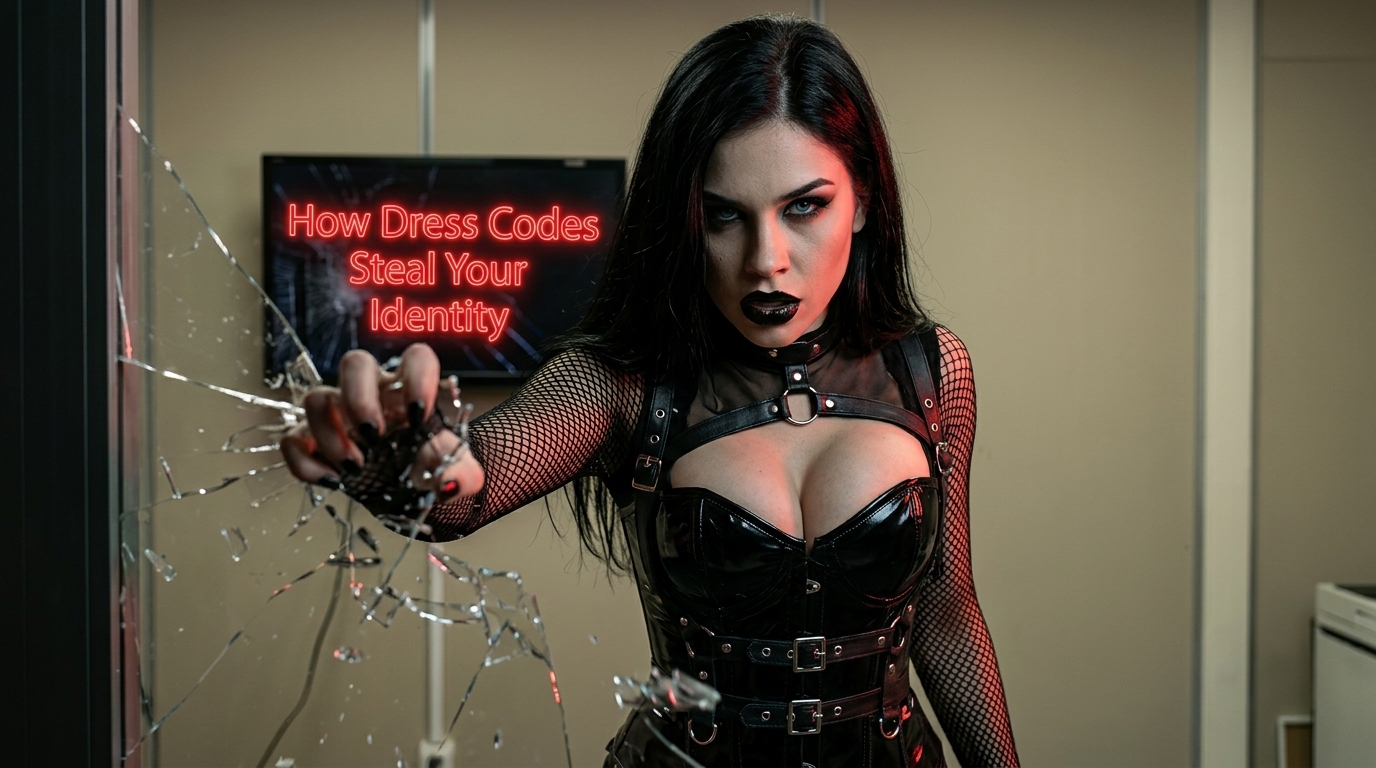
The “Freedom of Expression” Lie
They love saying it. It rolls off the tongue so smoothly in the onboarding presentation, somewhere between the slide about “core values” and the one with the stock photo of diverse smiling people who definitely do not work there. We encourage self-expression here. And you almost believe it, for about a week, until you show up in something that actually reflects who you are and suddenly there’s a calendar invite from HR with a subject line that reads “Quick Catch-Up” in that specific tone that means you’re about to get structurefucked with a smile.
Here is what freedom of expression actually means in a corporate context: you are free to express yourself, as long as what you express is beige, non-threatening, pre-digested, and convenient for the brand. You can have a personality, as long as it fits inside their anal-manual without causing anyone to feel anything. The moment your expression becomes visible — genuinely, uncomfortably visible — the invitation gets revoked. Too sexual. Too loud. Too political. Too much. The language around it is always soft and diplomatic, but the message is the same: you are allowed to exist here only in the version of yourself that costs us nothing.
This is where freedom of expression in the workplace collapses into something far uglier. What they are actually offering is not freedom — it is a permission slip. And permission slips are, by definition, the opposite of freedom. Real expression doesn’t ask for approval. It doesn’t wait to be packaged into something marketable before it dares to show up. But the organisation needs expression to be a branding exercise, not a human reality. They want the aesthetic of individuality without the actual disruption of it. A carefully curated quirk on the company Instagram. A fun fact in the team meeting. Never anything that makes the Powerpoint Slutchief in the corner office reconsider their assumptions about who belongs in this room.
The contradiction is so naked it should be embarrassing, but they have been running this play for so long they don’t even flinch anymore. Companies advertise individuality in recruitment campaigns while quietly disciplining anyone whose identity feels too loud in practice. They celebrate diversity in the annual report and then pull someone aside for wearing the wrong thing, having the wrong hair, or expressing a political reality that doesn’t align with the brand’s carefully neutral public image. It is swastifashion in its purest form — the performance of freedom as a control mechanism. The aesthetic of openness stretched like a skin over a rigid, terrified hierarchy.
And the PR machinery around it is relentless. “We encourage you to bring your whole self to work” is one of the most cynically deployed sentences in modern corporate language. It is a shield. It lets the organisation claim progressive values while maintaining the exact same mechanisms of identity policing they have always used. When someone actually brings their whole self — their queerness, their culture, their body, their rage, their unconventional beauty — and gets pulled aside for it, the company doesn’t have to take responsibility. Because technically, they said you could. The problem, apparently, is that your whole self was just a bit too whole.
The litmus test is simple and it does not lie. Ask yourself: is this expression welcomed before it becomes convenient, or only after it has been evaluated, sanitised, and approved by someone whose job title contains the word “compliance”? If the answer is the latter, what you have is not freedom. It is a leash with extra slack. They let you run far enough to feel like you’re free, and then the collar tightens the moment you actually go somewhere they didn’t plan for. That’s not expression. That’s managed tolerance with a branding budget.
- ✋😠👉 If expression is only welcomed when it looks preapproved and non-disruptive, it was never freedom — it was a costume they handed you to wear over your actual self.
- ✋🧐👉 Organisations treat creativity as a branding asset, not a human right — which means the second your creativity becomes uncomfortable, it stops being an asset and starts being a problem.
- ✋💀👉 “We encourage individuality” is a PR shield worn by companies that discipline anyone whose identity is too loud, too sexual, too political, or too real to be useful.
- ✋😏👉 If you need permission to express yourself, it is not your freedom — it is their tolerance, and tolerance has conditions.
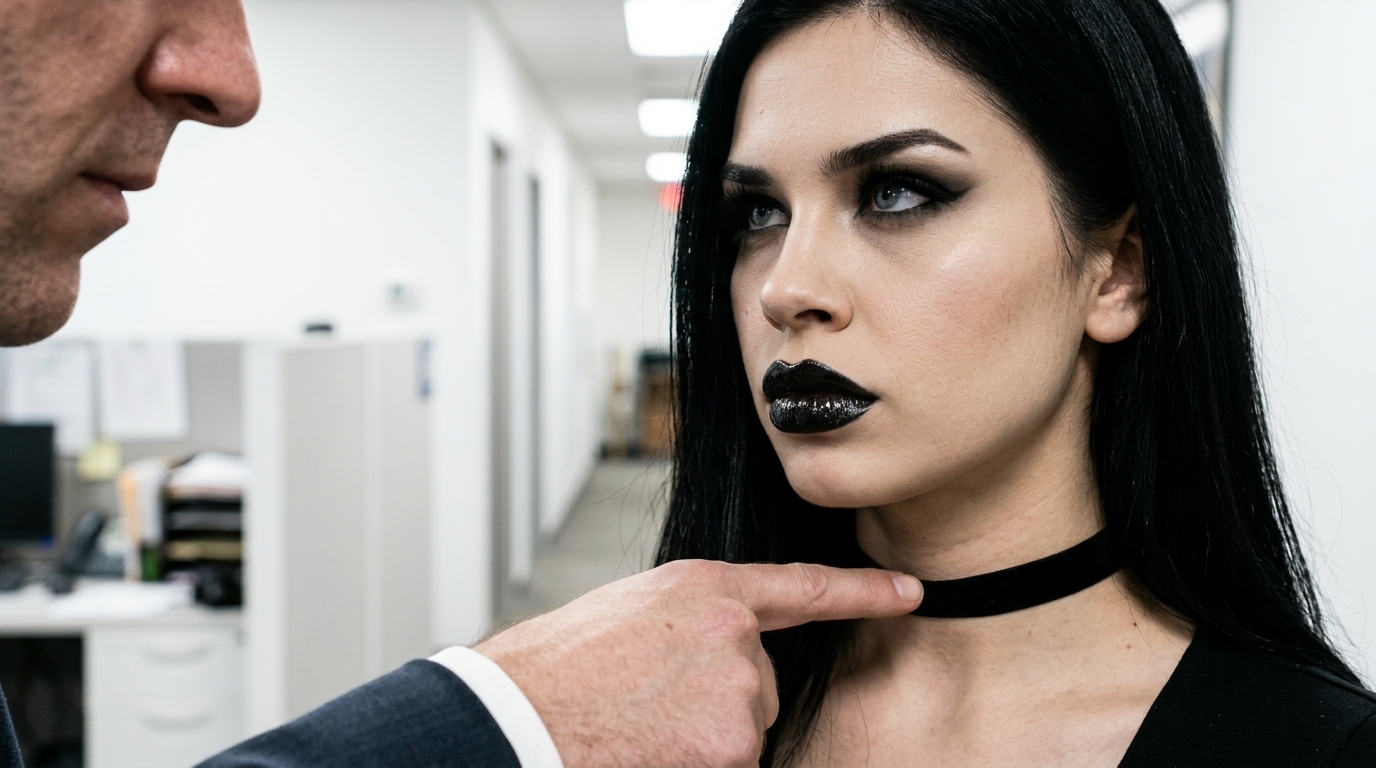
The Ritual of Dress Code Identity Policing
Let’s talk about the actual mechanics of how they try to erase you. It starts with the anal-manual—that holy scripture of “professionalism” where they pretend that the length of your fingernails or the color of your hair somehow dictates your ability to process a spreadsheet or close a deal. They call it “practical standards,” but we all know it’s dress code identity policing in its most surgical form. It’s a slow, grinding attempt to sand down your edges until you’re just another smooth, featureless pebble in their corporate zen garden. Whether it’s the texture of your hair, the ink under your skin, or the jewelry that tethers you to your heritage or your subculture, the goal is always the same: to make sure you don’t stand out enough to remind them that you are a sovereign human being with a pulse.
The beauty of these rules—for the Powerpoint Slutchief, anyway—is their deliberate vagueness. They use words like “clean,” “appropriate,” “polished,” or “respectable.” These aren’t descriptions; they are weapons. They are broad enough to be applied selectively, which means enforcement usually depends on who management already dislikes or who makes them feel insecure. If you’re the “good” little soldier who never questions the DICKtators, your slightly-too-long beard is “rugged.” If you’re like me—someone who refuses to hide the darkness and walks with the confidence of Lady Macabre—then your glossy black lips are a “distraction” and your boots are “non-compliant.” This is swastifashion meaning in action: the enforcement of a rigid, aesthetic hierarchy under the guise of “company culture.”
When they say they want you to be “client-facing,” what they really mean is they want you to be a hollowed-out vessel for their brand. They want you to be present, but not too present. They want you to be human, but only in the most sterile, normiefucked way possible. It’s an emotional structurefuck designed to keep you in a state of constant self-censorship. You spend more energy checking the mirror to see if your authentic self is “bleeding through” than you do on the actual work. They are terrified of what happens when a person stops asking for permission to look like themselves. That’s why Venomous Sin Declares War—not against clothes, but against the arrogance of an organization that thinks it owns the surface of your body.
- ✋🧐👉 The line between “professionalism” and identity policing is usually drawn right where your personality begins to make the insecure bosses uncomfortable.
- ✋😤👉 Vague language in the employee handbook is a trap; “appropriate” just means “whatever doesn’t trigger the manager’s personal biases today.”
- ✋💀👉 Coded words like “polished” are just corporate-speak for erasing anything that isn’t white, wealthy, or boring.
- ✋😏👉 They don’t want your “whole self”; they want a curated, filterfucked version of you that doesn’t ruin the aesthetic of their boardrooms.
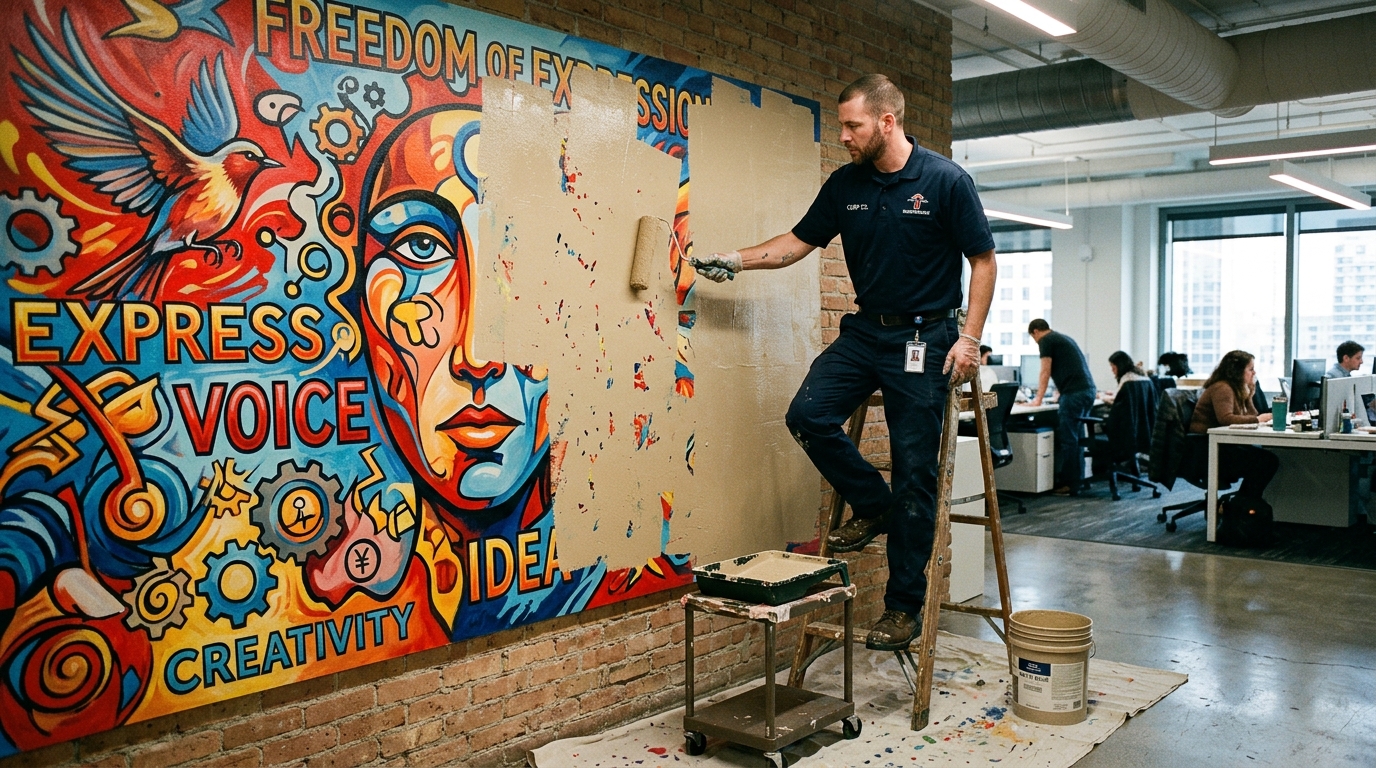
The Psychological Damage of Looking Like Everyone Else
Let’s talk about the psychic cost of swallowing yourself whole just to fit the anal-manual’s definition of “presentable.” The real psychological impact of workplace dress codes isn’t a quirky little mental note about what shoes to wear; it’s a fuck-you-sauce marinade for your identity, applied slow and deep until you forget what your own reflection even looks like. Every time you bite your tongue, scrub off your eyeliner, or flatten your hair to fit some crusty “professional” standard, you’re not just erasing a detail—you’re chiseling away at the only part of you that ever felt like home. All this self-suppression doesn’t just breed boredom—it breeds alienation, resentment, and that sexy little split between the mask you wear in the office and the skin you actually live in.
Most people spend more of their waking hours at work than anywhere else, yet if you’re the one who never sees yourself reflected in the boardroom, you start to rot from the inside out. There’s nothing like standing under a strip light in corporate beige conformity, watching your edges dissolve into someone else’s spreadsheet dream, to make you feel like a ghost in your own life. You become a background prop in a Powerpoint Slutchief’s fantasy, and after a while, you start to question if you ever belonged anywhere at all. That’s how they get you—by starving you of recognition until you’re easy to control, because you’ve stopped expecting to be accepted as you are. They don’t have to break your spirit; they just have to convince you that your spirit is a liability, and suddenly, you’re grateful just to be ignored.
But here’s the twist: the more they squeeze, the more some of us start to push back. When the workplace demands you shrink yourself down to a “polished” little ghost, the urge to reclaim your body outside those walls gets stronger—like revenge in lipstick and PVC. You start dressing louder, loving harder, and screaming your story in every stitch and contour the minute you clock out. That’s not rebellion. That’s survival. It’s what happens when the system tries to neuter your soul and you answer with venom instead. Venomous Sin Declares War isn’t about clothes—it’s about refusing to be another corpse in their corporate mausoleum. 🤘💀🤘
- ✋🧐👉 Self-suppression breeds a private rage—an invisible war inside your own skull—until you don’t know which face is yours and which is for show.
- ✋😞👉 If you never see yourself reflected in your workplace, you start to feel like a mannequin in someone else’s nightmare, not a participant in your own story.
- ✋💀👉 Over time, corporate beige conformity doesn’t just dull your confidence; it teaches you to accept being erased—until you forget you were ever vivid to begin with.
- ✋😤👉 That’s why the truest acts of self-expression happen outside the office—because every minute you disappeared inside it, you were loading the next bullet of defiance.

How to Spot a Fake Inclusive Dress Code
Corporate dress codes love to dress up their bullshit in soft language about “inclusivity,” but the moment you scratch the surface you find the same old corporate beige conformity hiding underneath. They say everyone is welcome, yet the fine print still measures professionalism by how well you can erase your edges and look like another spreadsheet priest’s wet dream. That’s how dress codes enforce workplace conformity and identity control without ever saying the quiet part out loud.
Watch the wording. When a policy drones on about “respect for brand image” or “customer comfort” but never ties those words to actual job function or safety, you’re staring at a control mechanism wearing a smile. The anal-manual doesn’t care if your corset or your dyed hair affects performance; it only cares that you stop existing as yourself the second you walk through the door. Vague rules are weapons. They let managers swing them at anyone who refuses to shrink into the approved visual ideal while pretending the punishment is neutral.
Uneven enforcement is the real tell. The same manager who lectures you about “professionalism” will ignore the guy in the boring polo because he already fits the mold. Selective punishment isn’t about rules; it’s about reminding the rest of us that deviation is the real crime. That’s the core of dress code identity policing—turning your body into a battleground where only the narrowest version of “acceptable” survives.
- ✋🧐👉 Look for rules that claim inclusivity but still define professionalism through a narrow visual ideal.
- ✋😒👉 Watch for policies that mention respect, brand image, or customer comfort without offering a real explanation tied to job function or safety.
- ✋💀👉 Pay attention to uneven enforcement, because selective punishment reveals that the policy is less about rules and more about control.
- ✋😏👉 Treat vague language as a warning sign: if the policy can be used against anyone unconventional, it will eventually be used against someone.
Swastifashion is what happens when they sell you freedom while still handing you the approved uniform. The psychological impact of workplace dress codes isn’t just annoyance; it’s the slow grind that teaches you your authentic self is a liability. Professional identity vs authentic self becomes a daily war, and every time you cave you hand them another piece of your spine. Venomous Sin Declares War on that lie. We don’t ask permission to exist in our own skin, and we sure as hell won’t pretend their fake inclusivity is anything but another leash.

What Real Expression-Friendly Work Looks Like
Real workplaces that actually give a damn about freedom of expression in the workplace draw a hard line between rules that keep people safe and the anal-policies that exist only to flatten everyone into corporate beige conformity. They demand steel-toe boots or hair nets when the job actually requires it, but they leave your corset, your dyed hair, your piercings, and your entire personality alone because none of that touches performance, output, or basic conduct. The difference is simple: function over fashion fascism. No spreadsheet priest gets to decide your look is a liability just because it makes their narrow little world feel threatened.
A healthier setup measures professionalism by what you deliver, how you treat people, and whether the work gets done, not by forcing visual sameness that erases every edge. Clear, narrow rules protect the actual job. They do not exist to punish individuality or turn your body into another item on the compliance checklist. When a policy stays tight and job-specific, it stops being a weapon and starts being a tool. Anything wider than that is just Swastifashion sold as “standards.”
True respect shows up when managers let workers look like themselves unless there is a concrete, documented, job-related reason not to. That means no vague “brand image” excuses, no selective lectures aimed only at the ones who refuse to shrink, and no slow psychological grind that teaches you your authentic self is the problem. The moment a rule starts punishing deviation instead of protecting function, it stops being professional and becomes identity policing dressed up in polite language.
- ✋🧐👉 Look for places that keep safety rules narrow and functional instead of letting aesthetic control creep into everything.
- ✋🤝👉 Notice how real professionalism lives in results and behavior, not in everyone wearing the same approved mask.
- ✋😌👉 Demand rules that stay specific so they cannot be twisted into tools for punishing anyone who refuses to disappear.
- ✋💀👉 Support environments where respect means your appearance stays yours unless the work itself genuinely requires otherwise.
Venomous Sin Declares War on every anal-manual that tries to sell conformity as care. We know the difference between protection and erasure, and we refuse to hand over our edges just to make the spreadsheet priests comfortable.
How to Push Back Without Self-Destructing: A Guide for Strategic Sinners
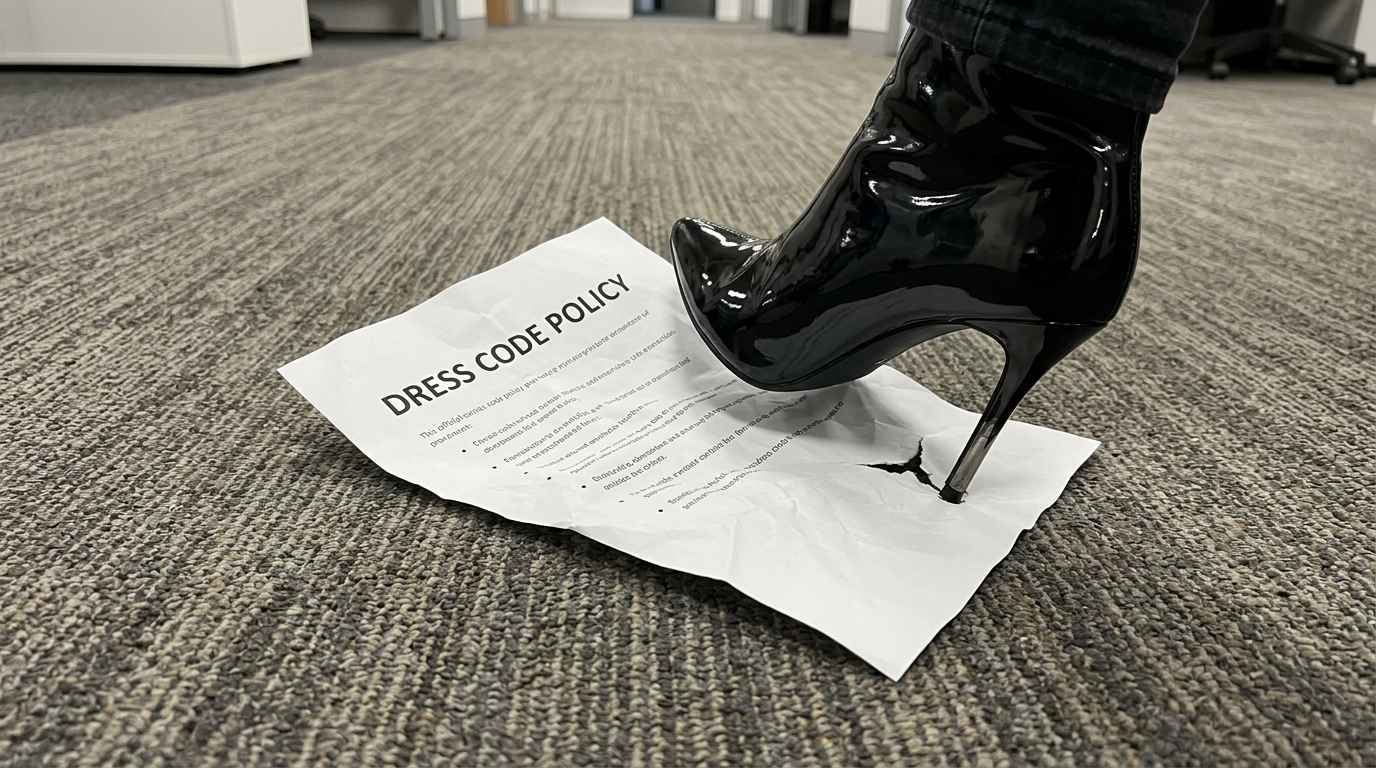
Alright, so you’re stuck in a system that wants to scrub the color from your hair and the steel from your spine. The immediate impulse is to tell the Powerpoint Slutchief to go crucifuck themselves with their own anal-manual. Tempting, but that’s a quick way to get karmafucked and lose your paycheck. The real game isn’t about a glorious, self-immolating exit. It’s about a slow, strategic structurefuck that dismantles their bullshit from the inside while you stay unfuckwithable.
The first move is always documentation. Get the policy language. All of it. Is it clear, or is it a masterpiece of intentional vagueness designed to be a weapon? If it says “professional attire,” demand they define what the fuck that means in writing. Does “professional” mean “looks like the CEO,” or does it mean “doesn’t get blood on the client files”? You force their hand. Make them commit their Swastifashion to paper. This isn’t being difficult; it’s being precise. A policy that can’t be written clearly shouldn’t be enforced, period.
Then, you ask the job-related question. Calmly. With a smile that could freeze hell. “I want to comply fully. Can you help me understand the specific, job-task-related safety or operational reason behind this rule about my nail color/length of my skirt/visibility of my tattoos?” Watch them squirm. Bad policies, the ones about control and corporate beige conformity, are built on a foundation of hot air. They collapse when forced to justify themselves with logic instead of “because I said so.” This is a nuclear compliance attack in its purest form. You’re obeying so hard it exposes the emptiness of their command.
Start observing. Compare. How are these rules applied? Does Sheila from accounting get a “friendly chat” about her floral dress, while Brad from sales rolls in with his three-day stubble and band t-shirt untouched? Track it. Is enforcement heavier on women, people of color, bigger body types, or the new hires? Bias loves to hide in selective enforcement. Revealing that pattern isn’t complaining; it’s gathering tactical intelligence.
This resistance is strategic, not reckless. The goal isn’t to get fired for wearing fishnets on a Tuesday. The goal is to protect your income and your leverage while you systematically challenge the conformity. Every question asked, every inconsistency noted, every request for a written justification is a crack in their facade. It’s saying, “I see your game, and I’m not playing by your anal-rules.” You become a living, breathing reminder that their control is an illusion. You fight to keep your edges sharp, not to become another smoothed-over casualty. That’s the real revenge. That’s how you declare war without becoming a martyr.
- ✋🧐👉 Document everything. Ambiguous policies are weapons. Force clarity into the open.
- ✋😏👉 Demand the job-related “why.” Watch control-masks crumble when asked for a real reason.
- ✋💀👉 Compare enforcement. Bias in who gets policed reveals the true purpose: identity control, not professionalism.
- ✋😤👉 Be strategic. Protect your position while you pick apart theirs. This is a long game, not a suicide mission.

Why This Is Never Just About What You Wear
Here is the thing that the Powerpoint Slutchief in the corner office will never say out loud: the clothes were never the point. The point is what happens when you make someone legible. When you sand down every edge, flatten every signal, and produce a human being who looks like they belong to the institution rather than to themselves. Dress codes enforce workplace conformity because conformity at the surface level makes deeper conformity easier to demand. It is a pipeline. First the wardrobe, then the opinions, then the silence. You do not even notice it happening because by the time they come for your voice, you have already handed them your body.
Systems, whether corporate, institutional, or social, are fundamentally allergic to the unpredictable. They reward legibility. They reward harmlessness. They reward people who look like they have already pre-approved themselves. Originality is a threat not because it is dangerous in any real sense, but because it signals that you have an interior life that the system did not issue you. And an interior life means you might ask questions. You might notice things. You might refuse. So they start at the clothing because it is the most visible, most socially acceptable place to begin the excavation of everything that makes you a person rather than a resource.
When identity gets managed at the level of what you are allowed to wear to work, it becomes dramatically easier to manage what you are allowed to think, how you are allowed to behave, and who you are allowed to be inside that space. It is dress code identity policing with a human resources logo stamped on it. The mechanism is elegant in how quietly it operates. You start adjusting your clothes. Then you start adjusting your tone. Then one day you catch yourself editing a sentence before it leaves your mouth, not because it was wrong, but because it did not sound like someone who wears beige on purpose. That is not professionalism. That is a slow psychological erosion wearing a lanyard.
This is precisely why it matters to artists, to rebels, to outsiders, to anyone who has ever been told they are too much, too loud, too sharp, too visible. Because “too much” is always said by someone who benefits from you being less. The people who have been told to tone it down, blend in, and stop making others uncomfortable with their existence know that this pressure does not stop at the hem of a skirt or the color of a nail. It is a rehearsal for a much larger disappearing act they want you to perform. And if you have ever been bullied for being exactly who you are, you already know that compliance never made the cruelty stop. It just gave it a new address.
That is the core of what Venomous Sin Declares War actually means when you strip the slogan down to the bone. Authentic presence is not polished obedience. It is not a curated, HR-approved version of yourself designed to make mediocre people comfortable in a fluorescent-lit room. Refusing corporate beige conformity is not a fashion statement. It is self-defense. It is the refusal to let an institution decide where your edges are allowed to be. Every platform boot, every fishnet, every piece of PVC that makes a Spread Sheet Priest visibly uncomfortable is a small, deliberate act of remaining whole in a system built to fragment you. The sinners who show up as themselves, fully and without apology, are not being unprofessional. They are being unfuckwithable. And that, to a system that runs on managed, predictable, beige human beings, is the most threatening thing imaginable.
- ✋🧐👉 Systems reward legibility and harmlessness because unpredictable people ask questions, notice things, and refuse. Conformity at the surface makes deeper control far easier to enforce.
- ✋💀👉 When clothing is managed by an institution, thought and behavior follow. It is the same mechanism, just wearing a different mask.
- ✋😒👉 Anyone told they are “too much” already knows that compliance never made the cruelty stop. It only gave it a new target.
- ✋😏👉 Refusing to disappear into corporate beige is not rebellion for its own sake. It is the choice to stay whole inside a system designed to hollow you out.
The Final Cut of the Corporate Scalpel
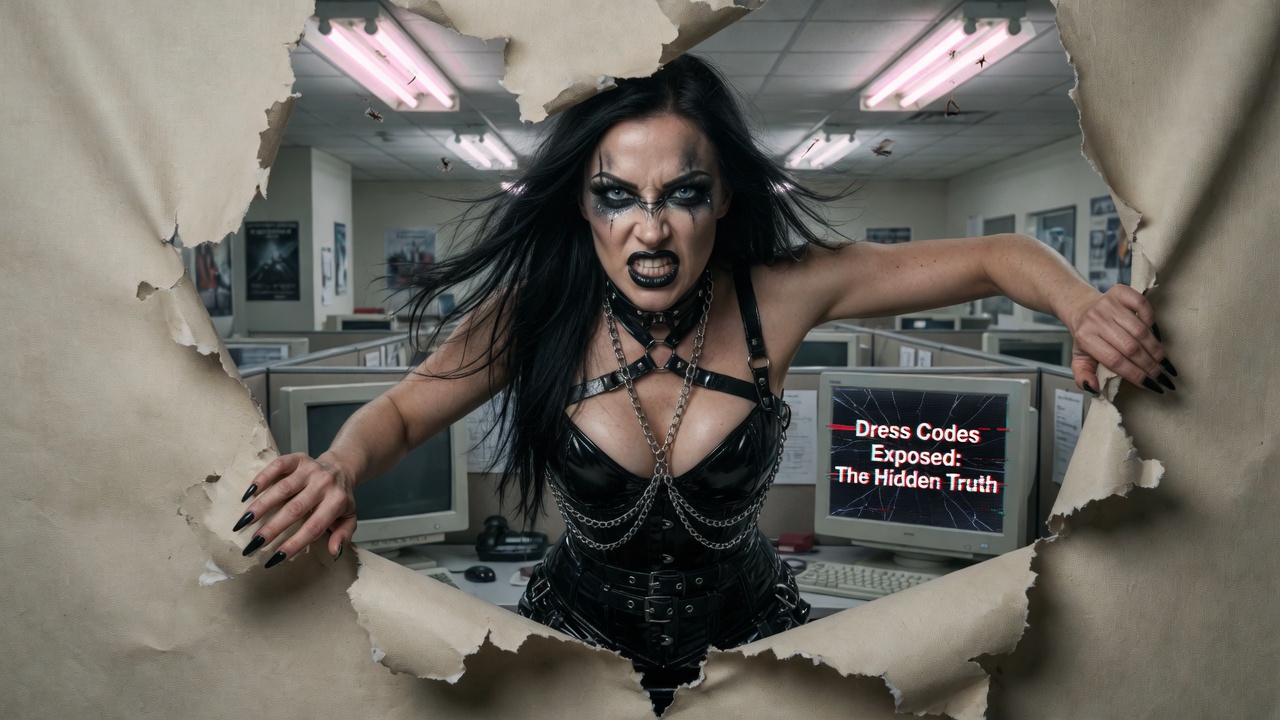
When I talk about Swastifashion, I am not just mocking a boring suit or a pair of sensible flats that look like they were designed by a committee of people who have never experienced an orgasm. The true swastifashion meaning goes deeper than the fabric. It is about the subtle, aggressive way that institutions use appearance rules to flatten your identity until you are as smooth and featureless as a Ken doll’s crotch. They call it professionalism, but we know it is actually a ritual of erasure. It is a dress code identity policing tactic designed to ensure that the person sitting in the cubicle is not a human being with a pulse, but a predictable, legible resource that fits the corporate beige conformity of the hive mind. If you look like everyone else, you eventually start thinking like everyone else, and that is exactly what the Powerpoint Slutchief wants—a workforce that is functionally lobotomized by its own wardrobe.
We need to address the central lie of the modern office: the “freedom of expression” that is only granted after you have sanded off every sharp edge, covered every scar, and muted every color that doesn’t appear in a rental car brochure. If a workplace only tolerates your individuality once it has been processed through their anal-manual and declared “safe for stakeholders,” then that freedom is a total fucking fraud. It is a curated performance of liberty staged inside a cage. They want the “vibe” of diversity without the actual threat of a person who has their own ideas. They want a version of you that is so anal-sanitized it doesn’t even leave a fingerprint. When you accept this deal, you aren’t being professional; you are being structurefucked into a state of voluntary disappearance. You are handing them the keys to your self-worth and letting them drive it straight into a wall of mediocrity.
So, here is the takeaway for the sinners who refuse to be forgotten. You have to learn to separate actual safety from institutional control. When you read those vague policies about “appropriate attire” or “cultural fit,” know that you are looking at the blueprint for your own excavation. Track how the rules are enforced—notice who gets the pass and who gets the “talk.” Notice how the system recoils when you bring your authentic self into the room without a filter. Refuse to confuse compliance with dignity. Dignity is the sound of my PVC boots on a hardwood floor; compliance is the silence of a beige rug. You were not born to be a background character in someone else’s quarterly earnings report. Stay sharp, stay loud, and never let a Spread Sheet Priest tell you that your skin is “too much” for their fragile little ego. Be unfuckwithable, or be gone. 🤘🖤🤘
- ✋🧐👉 Distinguish between actual physical safety and “social safety.” If their only concern is that you “look the part,” they are trying to manage your mind, not your productivity.
- ✋💀👉 Watch for the vague language in the employee handbook. Words like “distracting” or “appropriate” are the primary tools of dress code identity policing. They are meant to be moving targets.
- ✋😏👉 Track the enforcement. If the rules only apply to the people with the most fire in their eyes, the policy isn’t about clothes—it’s about extinguishing the flame.
- ✋😡👉 Reject the “beige” lie. Refusing to conform is not a fashion choice; it is an act of war against a system that wants you to be a replaceable, faceless ghost.
https://venomoussin.com/
https://shop.venomoussin.com
https://www.youtube.com/@venemoussin
https://open.spotify.com/artist/4SQGhSZheg3UAlEBvKbu0y?si=qKMljt6rT1WL0_KTBvMyaQ