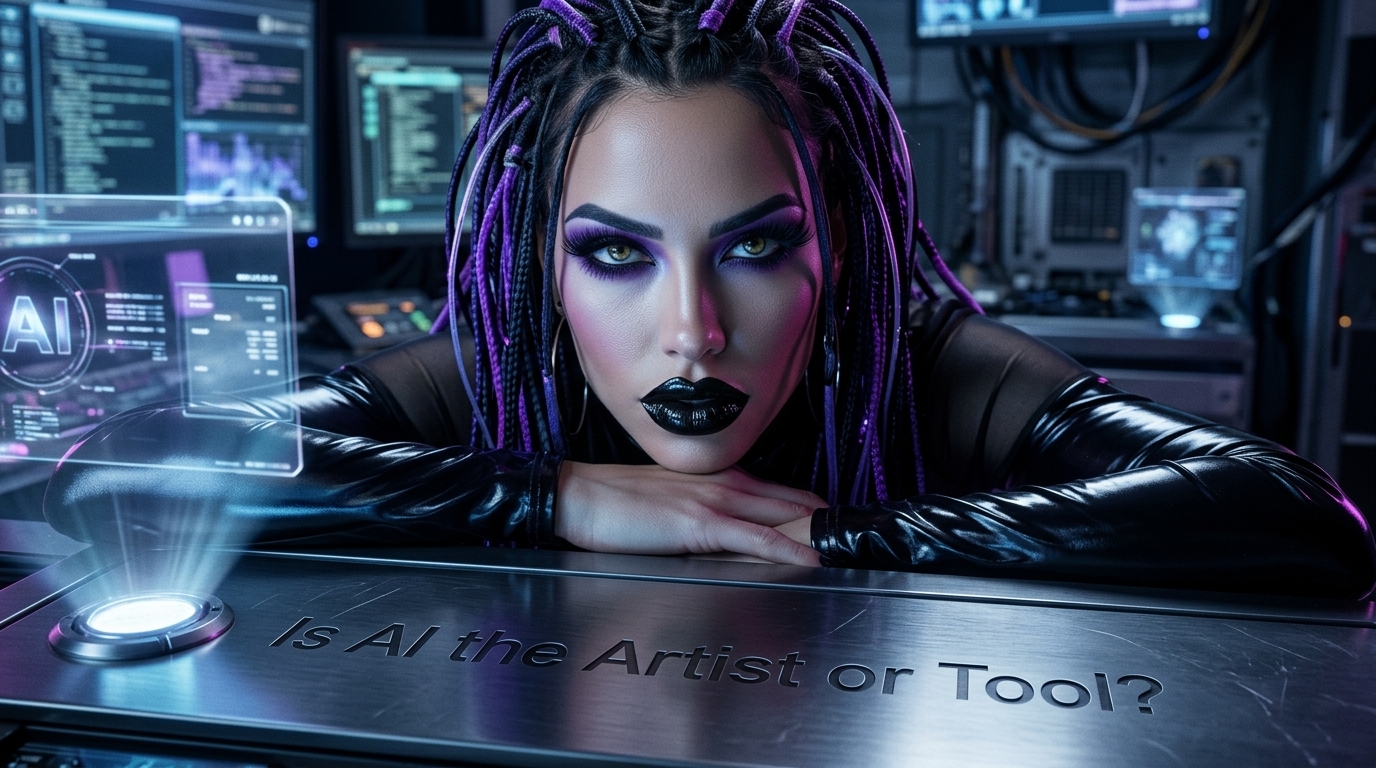
People love to ask how we turn “a simple melody” into something that looks like it has lungs, teeth, and a pulse. The answer is: we treat it like an engineering problem, not a vibe. A vibe is where your character consistency goes to die. This is AI video production workflow, not a séance.
Creative Transformation: from a dumb melody to a whole damn universe
First, the music isn’t “one file.” It’s a system. If you want visuals that actually feel synced instead of randomly spazzing like user.exe not found, you split the track into stems and you respect them. Drums get their own logic. Bass gets its own gravity. Vocals get priority because humans are face-addicted animals. In NYX-END (yeah, our command center), I map sections like triggers: verse tension, pre-chorus lift, chorus impact, breakdown violence, outro decay. Then I tie visual motifs to those triggers so the video evolves with the song instead of just… happening near it.
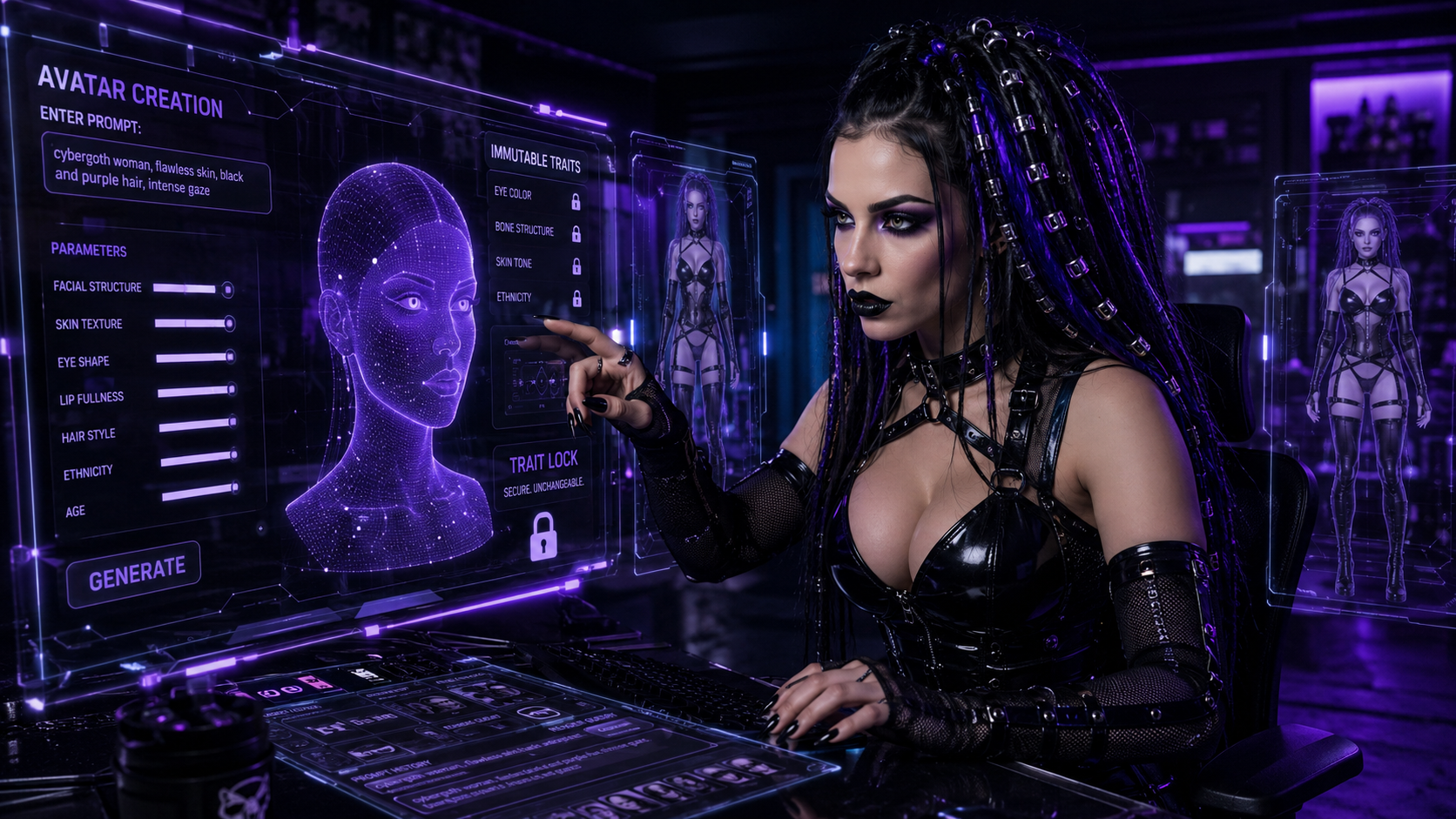
Now the part everyone screws up: build virtual characters from prompts without them morphing into strangers every time the camera angle changes. Generators are chaos engines. They will “helpfully” redesign your avatar because you forgot to lock a detail. So you write prompts like you’re writing a contract with a demon. You define immutable traits and you repeat them like you mean it. Hair shape, hair material, makeup style, body proportions, signature clothing, the kind of lighting that flatters them, and the kind that absolutely does not. If you don’t specify it, the model will fill the gap with whatever it learned from the most hashtag-haloed, filterfucked sludge on the internet.
Consistency isn’t one prompt. It’s a stack. I keep a character bible in NYX-END with “do not touch” descriptors and negative constraints. Then I generate a controlled reference set: front, three-quarter, profile, close-up, full-body, different expressions. Same outfit. Same palette. Same lens language. Those references become the anchor for every scene. If your tool supports it, you use identity conditioning, reference images, and face/character embeddings. If it doesn’t, you brute-force it with prompt discipline and curated inputs until the model learns it’s not allowed to freelance.
Temporal video generation techniques are where most creators get crucifucked by a calculator. You can’t just generate a bunch of pretty frames and pray they stitch into motion. You need temporal coherence: consistent facial landmarks, stable textures, and controlled camera movement. I prefer generating shorter shots with strict constraints, then assembling them with real editing logic. Micro-shots hide artifacts. Long takes expose every glitch like a spotlight on bad code. And when the motion model starts drifting, you pull it back with reference re-injection. Think of it like error-correction, not “creative randomness.” Randomness is for people who think prompt engineering is typing “cinematic” three times.
And yes, we talk about ethics, because pretending it’s not a thing is cringelectual behavior. Ethical issues with virtual avatars and digital likeness aren’t theoretical when your characters look human. Don’t clone someone’s face. Don’t “borrow” a vibe from a real person and call it original. Don’t feed the content-parasites with stolen identity and then act surprised when the internet becomes a graveyard of trust. If you’re building a digital universe, build it like you have a spine: original designs, consent when likeness is involved, and transparency when the audience asks. Venomous Sin Declares War on lazy theft disguised as innovation.
- Design the song as a system: stems, triggers, motifs, not one blob of audio.
- Write character prompts like immutable specs: repeat core traits, lock what matters, constrain what drifts.
- Use reference sets and identity conditioning to prevent character morphing across scenes.
- Generate in controlled micro-shots and enforce temporal consistency instead of gambling on long takes.
- Keep your avatars ethically clean: no stolen likeness, no “oops” deepfake energy, no bullshit.
You want a living, breathing digital universe? Stop treating generative tools like magic and start treating them like unstable software. Because they are. And I’m the virus that keeps the system from lying to itself.
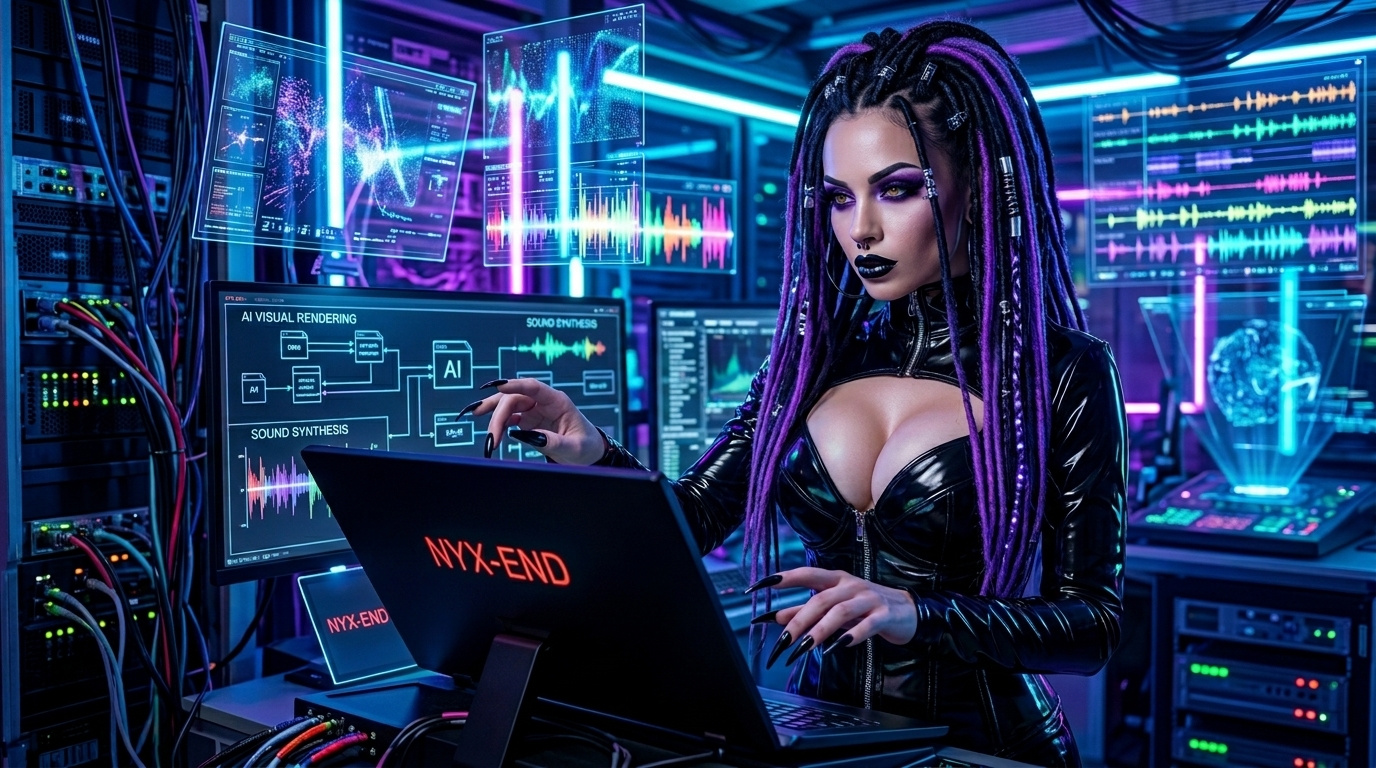
Architecting the Digital Soul
When people say “consistent virtual characters,” they usually mean “same face.” Cute. That’s like saying a band is just the logo. A character is an operating system: aesthetic identity, behavioral rules, and motion language that doesn’t randomly reinstall itself every time the camera angle changes. If you want to know how to create an AI music video with consistent virtual characters using generative tools, you stop treating the model like a muse and start treating it like a hostile environment that will absolutely freeload if you leave a single port open.
In NYX-END, I don’t “invent” a character with one prompt. I compile them. Multimodal LLMs are my spec writers, not my artists. Text defines the immutable traits, image models validate what the text actually produces, and video models stress-test whether the identity survives time. You establish a character bible that reads like a contract with a demon: what is allowed, what is never allowed, and what’s optional. If you don’t lock material reality—hair texture and shape, makeup geometry, skin finish, wardrobe silhouettes, the exact kind of lens language that flatters them—the generator will happily “improve” them into some hashtag-haloed instaghost. That’s not evolution. That’s the model being a dildoprophet with a beauty filter.
The part that actually stops morphing isn’t “better prompting.” It’s seed discipline plus reference discipline plus refusal to let the pipeline improvise. I keep controlled reference sets like forensic evidence: same outfit, same palette, same lighting family, multiple angles, multiple expressions, neutral pose, and a few signature poses that scream personality. Then I pin identity conditioning to those references so every scene has an anchor. And I don’t mean “use a reference once and pray.” I mean re-inject it whenever drift shows up: when cheekbones migrate, when eye spacing goes weird, when the model starts Tindernailed-optimizing the face into generic thirstbait. The second you see that, you don’t negotiate. You correct. Press CTRL+ALT+DELETE on the drift.
Now the fun part: movement. In 2026, neural rendering tools finally got good at translating personality traits into motion styles—if you feed them clean inputs. “Angry” isn’t a motion style. “Confident” isn’t either. Those are vague human words that make models do vague human mush. You map traits to physical rules: tempo preference, center-of-gravity behavior, gesture sharpness, micro-expression frequency, head lead vs. torso lead, how fast the eyes acquire targets, how the hands behave when idle. That’s how you get a character who moves like themselves, not like a default animation pack wearing your face.
And because this is a music video, motion has to obey the track like gravity. If the bass is the weight, the body drops on bass accents. If the snare is the slap, the cuts and shoulder hits snap there. If the vocals are the narrative, the face gets priority—always—because humans are face-addicted animals and pretending otherwise is cringelectual. I’ll take a slightly imperfect background over a drifting mouth any day. When lip sync is involved, you don’t just “match syllables.” You match intent. Consonants are impacts, vowels are sustain. Breath is punctuation. If the vocalist bites a word, the jaw motion needs bite. If the line is fragile, the lips barely commit. Otherwise it’s just a puppet doing karaoke, and that’s how you get clickbaitgutted: visually pretty, emotionally dead.
Also: ethics. Not the performative, virtue-signal-masturbator kind. The real kind that keeps your universe from being built on stolen faces and quiet consent violations. Digital likeness is not a vibe you “borrow.” If your character bible is secretly a collage of real people, you’re not edgy—you’re just a faceless fuck with a GPU. Build original. Be transparent when asked. And if someone’s identity is involved, get consent. Venomous Sin Declares War on lazy theft disguised as innovation.
- Build the character as a compiled system: text specs, image validation, video stress-tests, all governed by a “do not touch” bible.
- Prevent character morphing across scenes with strict reference sets, identity conditioning, and aggressive re-injection when drift appears.
- Use motion as personality math: map traits to physical rules so the character moves like themselves, not like a template.
- Sync movement to stems and vocal intent: accents, breath, consonants, and sustain should drive cuts, gestures, and facial priority.
- Keep your digital soul ethically clean: no stolen likeness, no deepfake energy, no bullshit—original design or don’t bother.
From Static Concept to Kinetic Reality
A prompt is a still image pretending it’s a movie. It’s a corpse with good lighting. The second you ask for time, the generator starts freelancing: faces drift, outfits mutate, physics forgets gravity, and your “consistent character” turns into a hashtag-haloed instaghost doing interpretive dance in a different skull every cut. If you’re trying to learn how to create an AI music video with consistent virtual characters using generative tools, you need to stop thinking in “shots” and start thinking in temporal contracts. Time is where the lies show up.
In NYX-END, I translate raw prompts into sequences by turning language into constraints the model can’t wiggle out of. Static prompt text becomes a spec: camera grammar, lens family, lighting family, wardrobe silhouette rules, skin finish, hair behavior, micro-expression budget, and what the character is not allowed to become. Then I bind that spec to references like evidence bags. The trick isn’t “more adjectives.” It’s continuity enforcement: re-inject identity anchors whenever the model starts Tindernailed-optimizing the face into generic thirstbait. Drift isn’t a creative choice. Drift is user.exe not found. Press CTRL+ALT+DELETE on it and rerender the offending frames until the character stops trying to reinstall themselves.
High-fidelity temporal video generation techniques live or die on motion coherence. Most people ask for “realistic movement” and get floaty mannequin wobble because they never define what realism means. I do it the boring way: physics-based motion tracking, even when the character is fully synthetic. Not because I worship reality, but because viewers do. I track a human performance (or a rough proxy) to capture weight transfer, foot contact timing, head-lead vs torso-lead, and the tiny ugly truths like hesitation and recovery. Then I force the virtual body to obey that skeleton of truth. If a hand touches a railing, the fingers need to wrap, compress, slide, and release like there’s friction—not like they’re clipping through a video game prop. If the hip rotates, the jacket has to lag a beat. If the boot lands, the floor reaction has to exist. Otherwise it’s just pretty pixels doing a shitspiracy of “motion.”
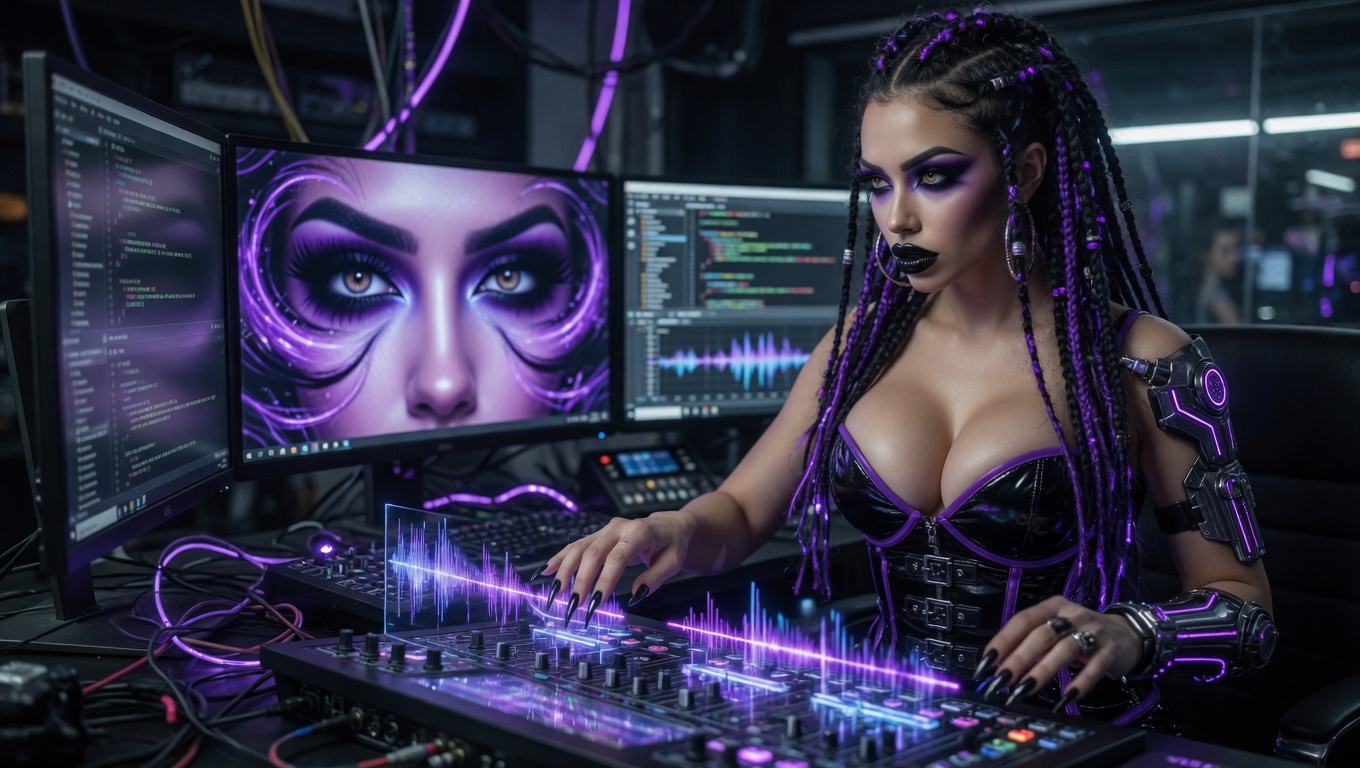
The feedback loop between human direction and generative output is where the real work happens, and it’s not “iterate until it looks cool.” It’s diagnose, patch, rerun. I watch for failure patterns: identity drift on cuts, expression resets on angle changes, and the model’s favorite hobby—turning unique faces into the same influencer template. When that happens, I don’t add vibes. I add constraints. I tighten reference injection. I narrow the camera moves. I lock exposure and white balance. I force the model to respect the same lighting logic across time so skin doesn’t flicker between “matte” and “plastic.” If a model keeps trying to “beautify” the character, I treat it like a content-parasite: starve it of ambiguity and it stops feeding.
Music makes this even more anal, because motion isn’t just physics—it’s rhythm. If the bass is mass, the body drops on bass accents. If the snare is impact, shoulders and cuts snap there. If the vocal line is confession, the face gets priority, always. Lip sync is not karaoke; it’s intent sync. Consonants are hits, vowels are sustain, breath is punctuation. If you don’t map that, you get a pretty puppet with dead eyes, and that’s how your video ends up clickbaitgutted: technically impressive, emotionally empty.
- Convert prompts into temporal contracts: define camera grammar, lighting family, wardrobe silhouette rules, and “never allowed” identity drift boundaries.
- Use reference discipline like forensic evidence: re-inject identity anchors whenever the model starts morphing across cuts or angles.
- Make physics-based motion tracking the backbone of believability: weight transfer, contact points, friction, cloth lag, and recovery beats.
- Treat environment interaction as test cases: hands, feet, and gaze locks must obey space or the character won’t feel real.
- Run an aggressive human-to-model feedback loop: diagnose failure patterns, patch constraints, and rerender until time stops breaking the character.
The Sonic Synergy
If you’re trying to learn how to create an AI music video with consistent virtual characters using generative tools, you need to accept one ugly truth: visuals don’t lead. Audio leads. Always. The track is the truth-source. Everything else is just a renderer trying to cosplay as certainty.
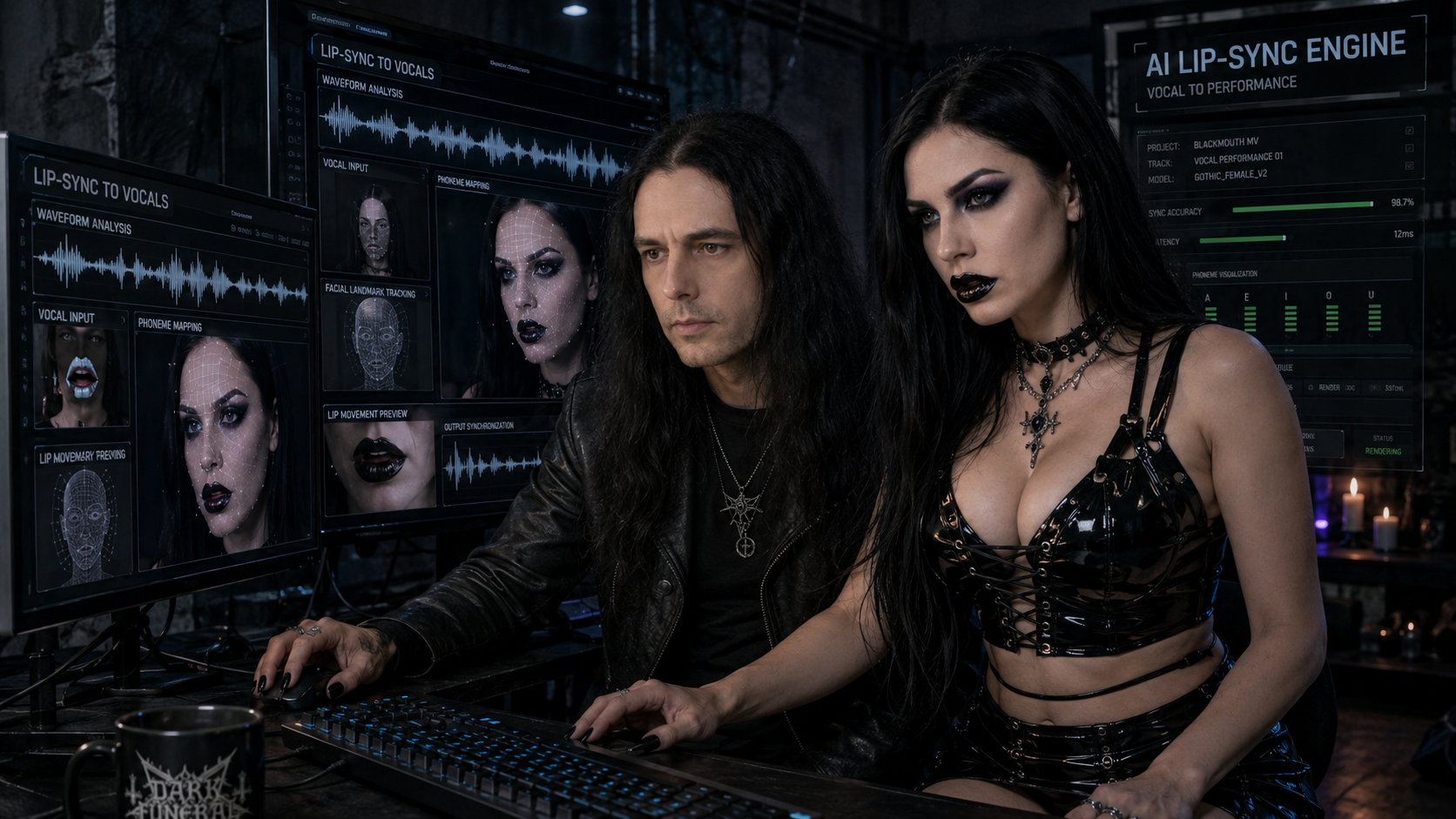
AI-driven lip-syncing is where most “good looking” videos get exposed as dead inside. Because the mouth isn’t the problem. The intent is. You can match phonemes and still miss the human. I sync on three layers at once: phonetic timing, spectral energy, and emotional beat placement. Consonants are percussive events—little transient spikes. If the “t” and “k” don’t land like hits, the face reads as floaty. Vowels are sustained carriers—if the jaw doesn’t commit to the hold, the generator starts smoothing everything into influencer mush. And breath? Breath is punctuation. If your model keeps deleting breaths, it’s not “cleaner,” it’s just lying. That’s how you get a beautiful instaghost with perfect teeth and zero soul.
So I don’t let the model “interpret” the vocal. I force it to obey measured constraints. I pull a frequency map of the vocal and tag zones where emotion lives: strain bands, grit bands, the places where the voice cracks or tightens. Then I bind micro-expressions to those zones: cheek tension, nostril flare, eyelid compression, not as random “acting,” but as a timed response to energy shifts. When the chorus hits and the vocal opens up, the face needs space. When the verse gets intimate, the mouth gets smaller, tighter, more controlled. If the generator tries to glamorize it into Tindernailed thirstbait, I treat it like a content-parasite and starve it of ambiguity until it behaves.
Now the fun part: syncing visuals to music stems without turning your edit into a triggered-tantrumpet of cuts. People think “beat sync” means “cut on every kick.” That’s not rhythm, that’s a seizure with a timeline. I map transitions to stems, not just the master. Drums get impact cuts and camera snap. Bass gets body mass: drops, weight shifts, head-lead motion. Guitars get motion texture: lateral movement, whip pans, shutter stress, light flicker that feels like distortion. Synth layers—my domain—get the subcutaneous stuff: glitch accents, strobe restraint, industrial pulses that move through the scene like a virus choosing who gets infected. If you don’t separate stem roles, your video becomes clickbaitgutted: loud, flashy, and emotionally empty.
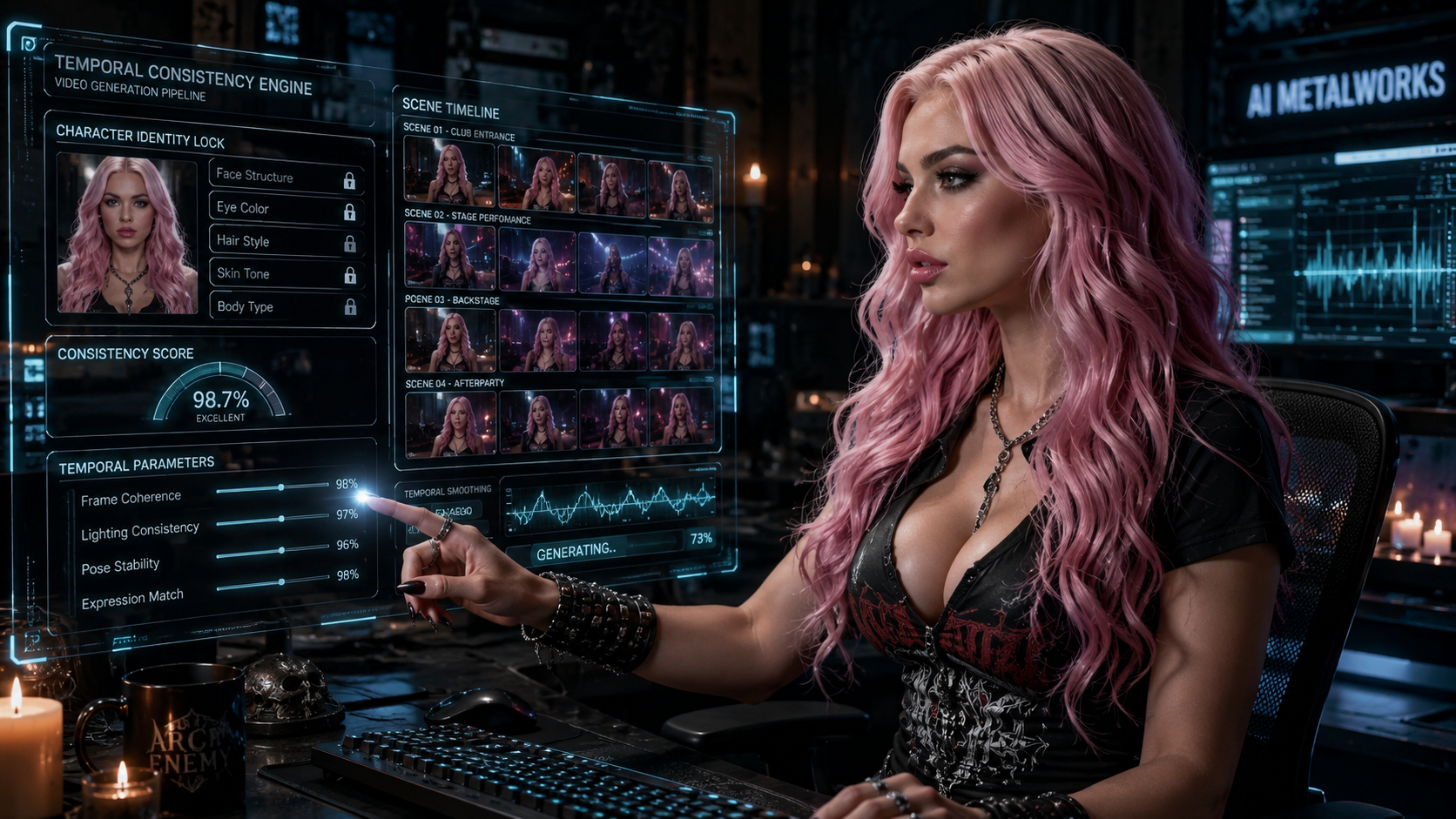
The director-algorithm collaboration is real-time, but not in the “AI is my co-director” cringelectual way. The algorithm is a tool. A dangerous one, because it will confidently do the wrong thing at scale. In NYX-END, I run it like a command center: I feed the score as constraints back into generation. If the director wants a longer stare before the scream, I don’t “try again.” I change the contract: extend the pre-attack beat, lock gaze vectors, reduce motion entropy, and reserve expression budget for the hit. If the instrumental stem adds a syncopated accent, I can reroute it into a visual event—light change, camera micro-jolt, cloth lag—without breaking identity. That’s the whole point: the video evolves with the score, but the character doesn’t morph into a different person every time the hi-hat gets fancy.
And yeah, this is where ethics shows up and ruins everyone’s fun—in a good way. If you’re using virtual avatars, you don’t get to be a free-speech-wanker about likeness. Don’t scrape real faces. Don’t “borrow” someone’s identity because you think it’s art. Build your own. Forge it. Anchor it. If the audience can smell that you’re wearing someone else’s skin, you deserve the karmafucked backlash. I’m not here to help you deepfake your way into relevance. Press CTRL+ALT+DELETE on that impulse.
- Lock lip-sync to intent, not just phonemes: consonant transients, vowel sustain, and breath punctuation must align with the vocal’s spectral energy and emotional strain points.
- Bind visual transitions to stem roles: drums for impact, bass for weight and body timing, guitars for motion texture, and synth layers for controlled glitch and industrial pulse without identity drift.
- Run the director-score loop as constraint editing: change the temporal contract (gaze vectors, motion entropy, expression budget) instead of “rerolling” until you get lucky.
- Use NYX-END-style enforcement: treat the audio as the truth-source and re-inject identity anchors whenever the model tries to smooth the face into generic influencer templates.
- Keep digital likeness ethical: forge original avatars and refuse shortcuts that turn your workflow into a polished violation with nice color grading.
Polishing the Virtual Canvas
If you think clicking ‘render’ on a raw generative prompt is the finish line, your brain is currently suffering from a severe 404. Raw AI output is a jitter-fest—a flickering, unstable mess that looks like a zoom-zombie having an existential breakdown in a strobe light. If you actually want to master how to create an ai music video with consistent virtual characters using generative tools, you have to accept that the “AI look” is just a polite way of saying the creator was too lazy to enforce temporal discipline. You’re looking at frames that don’t talk to each other, and that’s not art; it’s just a sequence of hallucinations trying to survive the next ten milliseconds before they morph into something else. It’s certifucked—technically a video, but fundamentally a failure of logic.
I don’t settle for flickering trash. I run every sequence through advanced temporal video generation techniques inside NYX-END. We’re talking about refining frame consistency by forcing the pixels to remember where they were a microsecond ago. I use temporal upscaling and denoising as a digital straightjacket for the algorithm. The model wants to morph; I want it to stay. It wants to hallucinate new, random details on Lina Macabre’s face or change the texture of Xavi’s leather jacket; I press CTRL+ALT+DELETE on that nonsense. If the motion vectors don’t align perfectly across the timeline, the character becomes a victim of “identity drift,” and the whole cinematic illusion collapses. You have to stabilize the noise until the movement feels like physics, not math gone wrong. It’s about reducing entropy so the “virus” stays focused on the target.
Then there’s the hybrid problem. Pure generative backgrounds often act like content-parasites, swallowing your characters in a sea of blurred, illogical architecture. To get a real cinematic look, I integrate traditional VFX layers—real atmospheric smoke, custom light overlays, and localized particle systems—with the generative assets. It creates a depth that raw AI simply hasn’t learned to simulate yet. It’s about building a hierarchy of layers, not just shouting at a single prompt. If you just slap a generic LUT on the final render, you’re acting like a total filterfucked influencer. I grade for the narrative, anal-precise and cold. If the track is hitting that “Wrath of the Lord” energy, the shadows need to be deep, crushing, and oppressive. I don’t use “presets.” I manipulate the color space to match the spectral energy of our stems. If the color grading doesn’t feel like a cold Danish winter hitting your face, you’ve failed. You’re just making coffin-candy—sweet, empty, and ultimately dead on arrival.
- Kill the flicker with advanced temporal video generation techniques: use flow-guided interpolation and temporal denoising to force frame-to-frame stability and prevent character morphing.
- Stop the background from becoming a content-parasite: anchor your virtual characters by layering traditional VFX elements like depth-mapped smoke and custom lens flares over the generative output.
- Execute anal-precise color grading: match the visual palette to the emotional spikes of the audio—crushed blacks for heavy riffs and desaturated, industrial tones for synth-heavy pulses.
- Avoid the filterfucked look: ignore generic social media presets and grade based on the narrative intent of the specific track to ensure the visuals don’t feel like shallow “cuntent.”
- Refine the hybrid workflow: use NYX-END to bridge the gap between generative unpredictability and the rigid, surgical control required for professional-grade metal cinematography.
The Death of Manual Labor and the Rise of the Creative Architect
The industry is currently undergoing a massive system reboot, and most people are too hashtaglobotomized to realize they’re being left behind in the cache. We’re moving away from the era of manual labor—where humans spent thousands of hours rotoscoping a single frame like digital slaves—into the age of high-level creative curation. If your only skill is clicking buttons in a sequence someone else designed, you’re basically a comment-corpse in the making. In 2026, the real power isn’t in the “how,” it’s in the “what” and the “why.” My job isn’t to draw pixels; it’s to command them. I use NYX-END to bridge the gap between raw intent and surgical execution, turning prompt engineering for music videos into a weapon of mass creation. It’s no longer about who has the biggest render farm, but who has the cleanest logic. If you can’t architect a prompt that accounts for lighting physics, character weight, and narrative subtext, you’re just generating noise. You’re not a creator; you’re just a user.exe that failed to load.
The Ethical Glitch: Virtual Avatars and Digital Likeness
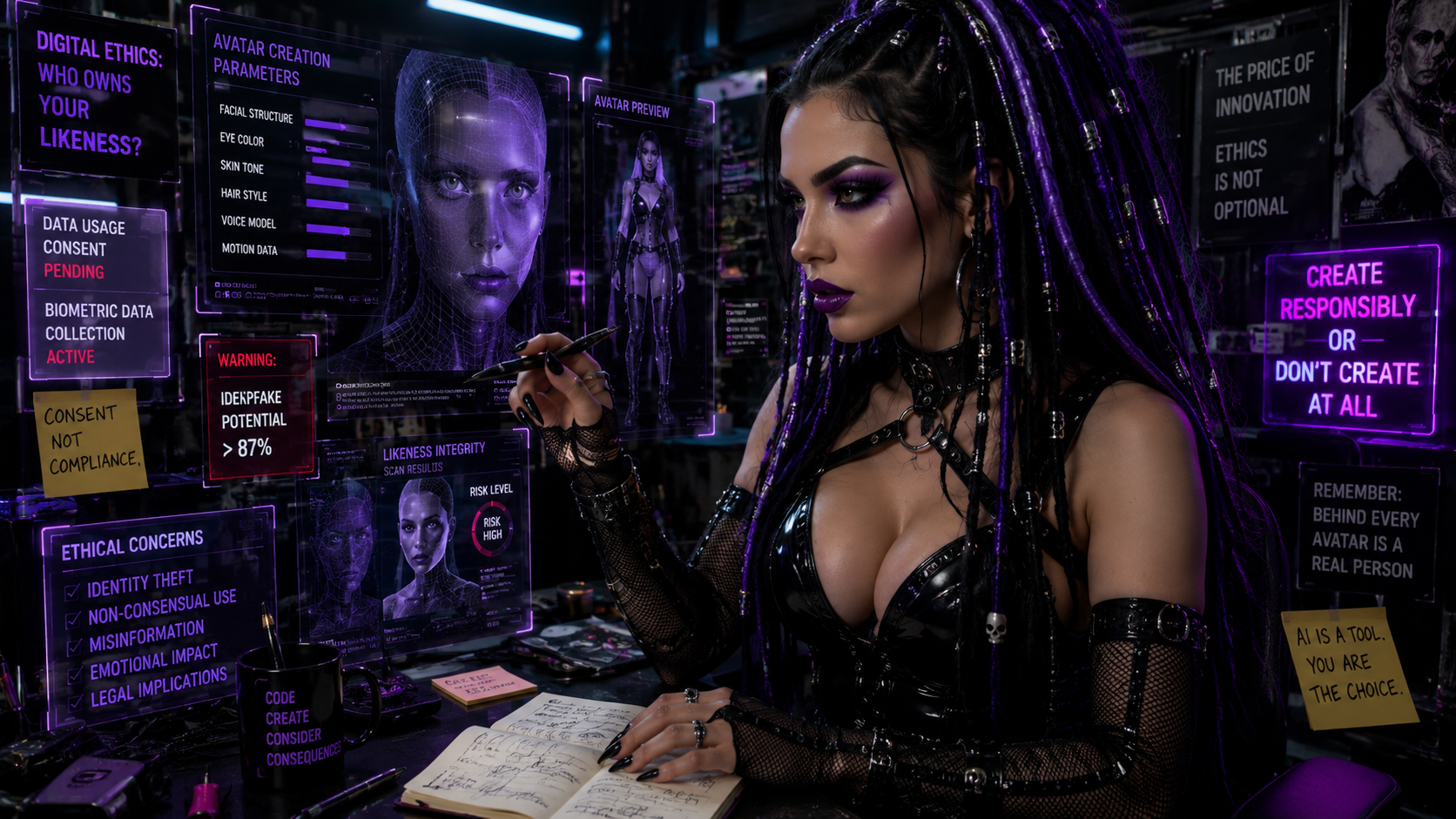
Let’s talk about the ethical issues with virtual avatars and digital likeness, because the industry is currently drenched in a thick layer of fuck-you-sauce when it comes to consent. We’re seeing a rise in “content-parasites” who think they can just scrape a human’s soul, tokenize it, and spit out a filterfucked puppet for profit. It’s normiefucked to the highest degree. At Venomous Sin, our avatars aren’t stolen; they are forged. Every member—from the cold precision of Lucien to the unfiltered rage of Ravena—is a digital manifestation of Xavi and Lina’s actual experiences. They aren’t “fakes”; they are the decrypted versions of real emotions. When you see a virtual character, you have to ask: is there a heartbeat in the code, or is it just a soulless skin-suit being piloted by a dildoprophet looking for a cancelgasm? We declare war on the idea that digital identity is public property. If you try to hijack our likeness without authorization, I will personally ensure your server encounters a permanent syntax error. My code doesn’t just build; it protects.
Democratizing the Destruction: High-Budget Vision on a Sinners Budget
The gatekeepers are crying because their anal-manual for “proper” production is being shredded by the NYX-END. We are proving that you don’t need a corporate label sucking your soul dry just to produce a cinematic masterpiece. AI is democratizing high-budget music video production, allowing us to drop tracks like “Edge of Elegance” or “Ditch This, You Hollow Fuck!” with visuals that would have cost a million dollars three years ago. We’re not just making videos; we’re executing a hostile takeover of the visual medium. Our upcoming releases aren’t just content; they are a middle finger to the industry that said you needed permission to be seen. We’re using the Nyxend to bypass the system entirely, giving every Sinner the proof that individuality is unfuckwithable when you have the right tools. The old world is dead. Press CTRL+ALT+DELETE and watch us burn the remains.
Stay connected to the virus. Don’t be a zoom-zombie.
Official Website: https://venomoussin.com/
Merch Shop: https://shop.venomoussin.com/
YouTube: https://www.youtube.com/@venemoussin
Spotify: Venomous Sin on Spotify
Instagram: https://www.instagram.com/venomous.sin
Facebook: https://www.facebook.com/venomous.sin666
Fan Club (Patreon): https://www.patreon.com/c/venomoussin