
Social media’s got this endless loop where every other post screams “be yourself!” but the algorithm shits out the same filtered faces, poses, and bullshit mantras. You know the drill: wake up, slap on the contour, pout for the ring light, and caption it with some half-assed “self-love warrior” drivel. Meanwhile, the real you—the messy, unpolished one—gets buried under layers of validation addiction. It’s not empowerment; it’s a subscription model disguised as confidence. Pay up in likes, trends, and aesthetic tweaks, or get ghosted by the feed.
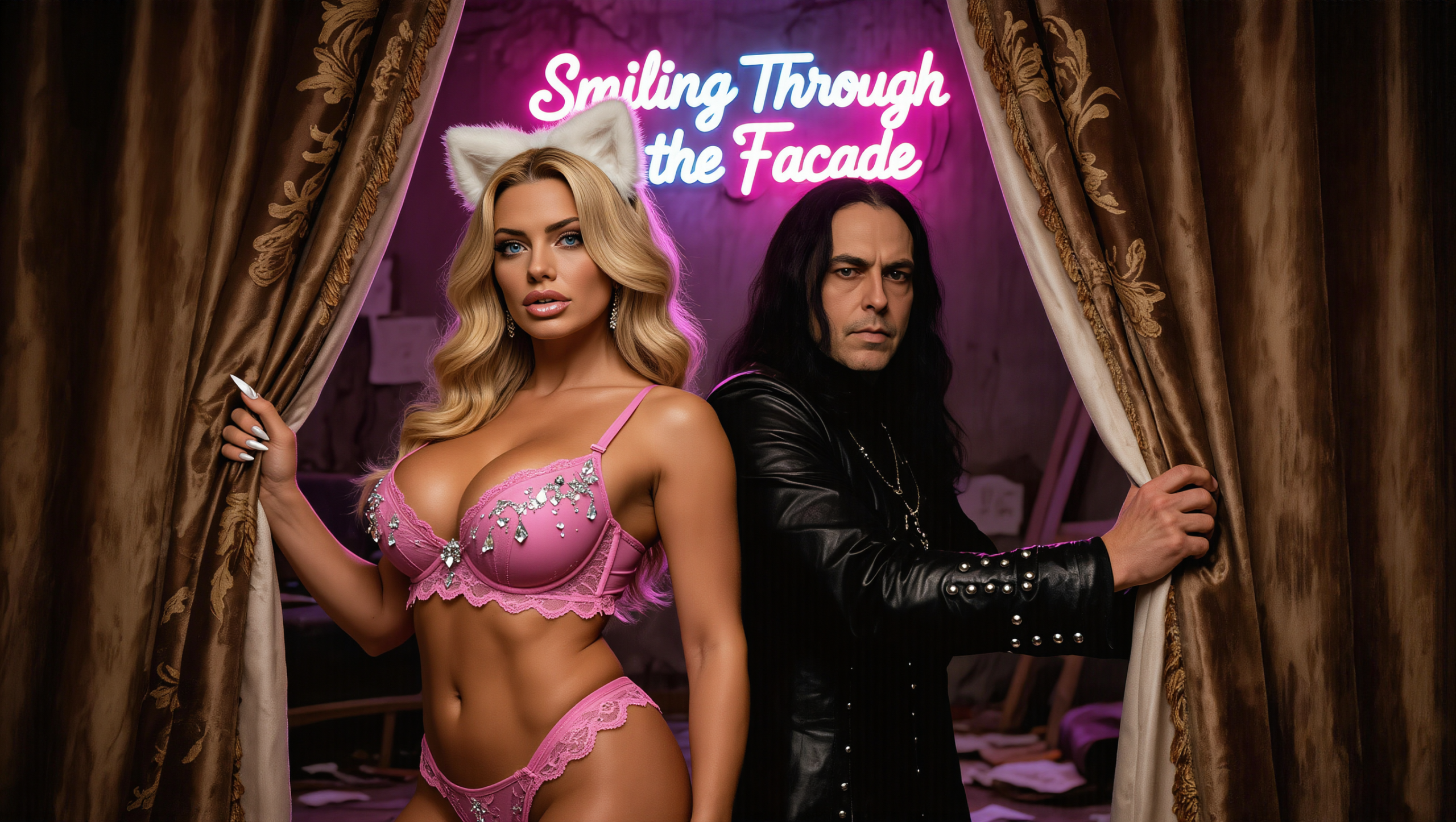
Empowerment or Just Another Subscription Model for Validation?
These influencer empowerment gurus peddle “confidence” like it’s a fucking subscription box: monthly doses of trends, filters, and “glow-up” routines that keep you hooked on public approval. One day it’s “own your curves,” the next it’s “chisel that jawline for the vibe check.” They monetize your insecurity, turning every scroll into a dopamine hit that leaves you emptier. Remember Celeste Lightvoid? That blonde bombshell dancer in Venomous Sin, strutting office-bimbo chic with subtle metal edges? She embodies the filterfucked psychological impact—the girl who weaponizes the mainstream “perfect” look to mindfuck gatekeepers, exposing how validation addiction warps your self-image. Celeste didn’t chase likes; she hijacked the game, headbanging black metal in stripper heels to prove the point. But most influencers? They’re just algorithm-optimized personas, churning out performative empowerment trends that teach you to market yourself, not know yourself.
Enter the Fuckfluencer—our satirical label for these creators who brand insecurity as “empowerment” while raking in subs. It’s the OnlyFans-era preacher selling “you’re enough” merch next to thirst traps, screaming “oppression!” if you swipe left. Fuckfluencers thrive on hashtaglobotomized culture, where your worth’s measured in engagement metrics, not inner grit. Venomous Sin’s been calling this out since day one: we’re not here for your pity-party likes. Our social media critique? Real confidence doesn’t need a filter or a fanbase poll—it’s forged in the fire of not giving a fuck, like Lina Macabre rising from bullied wreckage or Xavi spitting word-aikido at bullies.
The core thesis hits hard: fake empowerment online isn’t liberation. It’s validation addiction packaged as confidence, a business model that keeps you chained to the scroll. They teach you to pose for approval, not punch through your scars. We’ve seen it—girls chasing Celeste’s shine, only to end up normiefucked by the same system that chews up authenticity. At Venomous Sin, we declare war on this shit. influencer empowerment vs real confidence boils down to one truth: if your “power” crumbles without comments, it’s just another anal-manual for fitting in. Ditch the subscription. Own the venom.
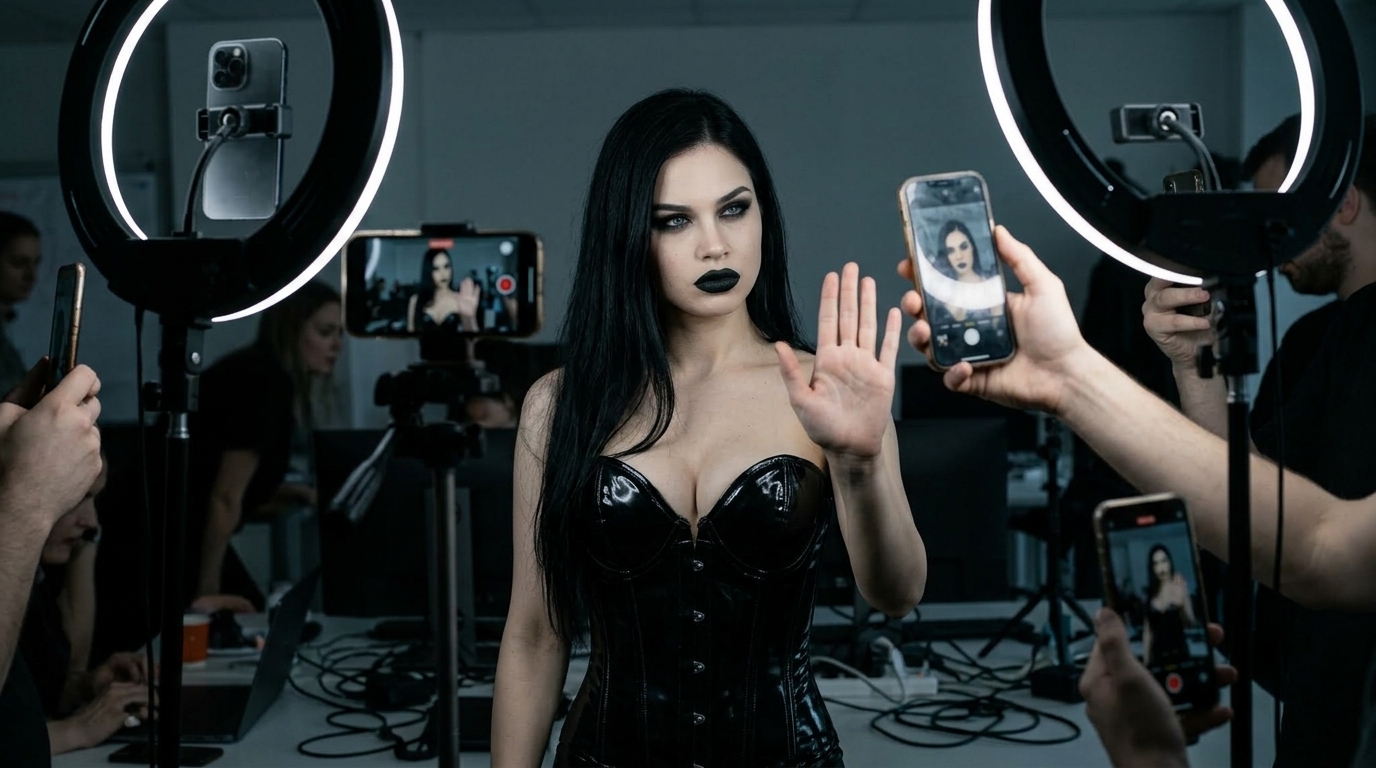
The Birth of the Fake Empowerment Industry
At some point the internet stopped asking who you are and started asking how well you package yourself. That was the real birth of the fake empowerment industry. Not when influencers appeared. Not when selfies became currency. No, the disease started the moment identity became content and people learned they could monetize insecurity faster than talent. Suddenly every personality trait needed branding. Every emotion needed a thumbnail. Every breakdown needed background music and a fucking affiliate link.
Social media used to feel chaotic in a beautiful way. Weird people existed openly. Metalheads looked like sewer crypt demons because they wanted to, not because an algorithm said “alternative aesthetics perform well with the 18–34 demographic.” Goth girls looked exhausted because they actually were exhausted. Punk looked dangerous instead of pre-approved by fashion brands selling “rebellion starter kits” for the price of a kidney and half your dignity.
Now? We got algorithm-optimized personas. Human beings flattened into engagement statistics. Your face becomes a product category. Your trauma becomes “relatable content.” Your politics become branding. Your sexuality becomes analytics. Your confidence becomes a fucking marketing funnel.
The most twisted part is how empowerment itself got corporatized. Real empowerment is ugly sometimes. It’s painful. It usually comes from humiliation, isolation, failure, rage, heartbreak or finally saying “fuck this” after years of swallowing poison. It is personal. Internal. Slow. But the internet couldn’t sell that. Too complicated. Too human. So they mass-produced empowerment into digestible performative empowerment trends instead.
Now confidence comes with presets:
- “Healing era” selfies with strategically timed crying.
- “Boss babe” captions written like LinkedIn had sex with a pyramid scheme.
- “Body positivity” sponsored by companies that profit from making you hate your body six posts later.
- “Authenticity” filmed through twelve filters and three personality masks.
That’s why Venomous Sin keeps ripping into this validation-addicted circus. Because people are starving for identity while drowning in curated personalities. The feed keeps telling people to “be yourself” while rewarding carbon-copy behavior. That’s not self-expression. That’s digital obedience with lip gloss and anxiety.
Celeste Lightvoid exists as a walking satire of this exact disease. People see the glossy lips, office-bimbo aesthetic, stripper heels, influencer look and assume she’s another selfie-slut feeding the machine. Then she opens her mouth and crucifucks the whole illusion. That’s the point. She mirrors the system back at itself until the audience realizes they’ve been trained to mistake visibility for value. Her entire existence is a middle finger to hashtaglobotomized culture.
The filterfucked psychological impact of all this goes deeper than people admit. You stop building a personality and start editing one. You stop asking “what do I like?” and start asking “what performs?” The algorithm slowly replaces your instincts until your own reflection feels like a customer service representative for your brand. Smiling on command. Posting on schedule. Sexualizing yourself strategically. Optimizing every angle like some dopamine-farming content parasite trapped inside a digital strip club where the audience never actually touches you, they just consume you.
And the irony? Most of these fuckfluencers look exhausted. Burned out. Hollow-eyed behind the filters. Because deep down they know the truth. If your confidence depends on engagement metrics, you don’t own your identity anymore. The audience does. The algorithm does. You’re renting your self-worth from faceless fucks refreshing a feed while sitting on the toilet pretending they’re your community.
That’s the business model nobody wants to admit exists. Validation addiction social media effects are profitable as hell. The more insecure you are, the more controllable you become. Buy this. Inject that. Pose here. Trend there. Show more skin. Show less skin. Speak up. Shut up. Be authentic but only in approved ways. The system doesn’t want individuality. It wants predictable insecurity dressed up as empowerment because insecure people consume more.
Venomous Sin declares war on that entire anal-industry. Not because we hate confidence. Because we hate counterfeit confidence. Real confidence is being able to exist without begging strangers to confirm your existence every six seconds. Real confidence survives silence. It survives rejection. It survives ugly days, failed posts and empty rooms.
The fake empowerment industry can’t survive that. It needs constant feeding. Like a narcissistic Tamagotchi screaming for attention while dressed as a life coach.
Beautiful fucking creature, honestly.
# The Birth of the Fake Empowerment Industry
At some point the internet stopped asking who you were and started asking how well you package yourself. That was the real birth of the fake empowerment industry. Not when influencers appeared. Not when selfies became currency. No, the disease started the moment identity became content এবং people learned they could monetize insecurity faster than talent. Suddenly every personality trait needed branding. Every emotion needed a thumbnail. Every breakdown needed background music এবং a fucking affiliate link.
Social media used to feel chaotic in a beautiful way. Weird people existed openly. Metalheads looked like sewer crypt demons because they wanted to, not because an algorithm said “alternative aesthetics perform well with the 18–34 demographic.” Goth girls looked exhausted because they actually were exhausted. Punk looked dangerous instead of pre-approved by fashion brands selling “rebellion starter kits” for the price of a kidney and half your dignity.
Now we got algorithm-optimized personas. Human beings flattened into engagement statistics. Your face becomes a product category. Your trauma becomes “relatable content.” Your politics become branding. Your sexuality becomes analytics. Your confidence becomes a fucking marketing funnel.
The most twisted part is how empowerment itself got corporatized. Real empowerment is ugly sometimes. It’s painful. It usually comes from humiliation, isolation, failure, rage, heartbreak, finally saying “fuck this” after years of swallowing poison. It is personal. Internal. Slow. But the internet couldn’t sell that. Too complicated. Too human. So they mass-produced empowerment into digestible performative empowerment trends instead.
Now confidence comes with presets:
- “Healing era” selfies with strategically timed crying.
- “Boss babe” captions written like LinkedIn had sex with a pyramid scheme.
- “Body positivity” sponsored by companies that profit from making you hate your body six posts later.
- “Authenticity” filmed through twelve filters এবং three personality masks.
That’s why Venomous Sin keeps ripping into this validation-addicted circus. Because people are starving for identity while drowning in curated personalities. The feed keeps telling people to “be yourself” while rewarding carbon-copy behavior. That’s not self-expression. That’s digital obedience with lip gloss এবং anxiety.
Celeste Lightvoid exists as a walking satire of this exact disease. People see the glossy lips, office-bimbo aesthetic, stripper heels, influencer look এবং assume she’s another selfie-slut feeding the machine. Then she opens her mouth এবং crucifucks the whole illusion. That’s the point. She mirrors the system back at itself until the audience realizes they’ve been trained to mistake visibility for value. Her entire existence is a middle finger to hashtag-optimized culture.
The filter-fucked psychological impact of all this goes deeper than people admit. You stop building a personality এবং start editing one. You stop asking “what do I like?” এবং start asking “what performs?” The algorithm slowly replaces your instincts until your own reflection feels like a customer service representative for your brand. Smiling on command. Posting on schedule. Sexualizing yourself strategically. Optimizing every angle like some dopamine-farming content parasite trapped inside a digital strip club where the audience never actually touches you, they just consume you.
And the irony? Most of these fuckfluencers look exhausted. Burned out. Hollow-eyed behind the filters. Because deep down they know the truth. If your confidence depends on engagement metrics, you don’t own your identity anymore. The audience does. The algorithm does. You’re renting your self-worth from faceless fucks refreshing a feed while sitting on the toilet pretending they’re your community.
That’s the business model nobody wants to admit exists. Validation addiction social media effects are profitable as hell. The more insecure you are, the more controllable you become. Buy this. Inject that. Pose here. Trend there. Show more skin. Show less skin. Speak up. Shut up. Be authentic but only in approved ways. The system doesn’t want individuality. It wants predictable insecurity dressed up as empowerment because insecure people consume more.
Venomous Sin declares war on that entire anal-industry. Not because we hate confidence. Because we hate counterfeit confidence. Real confidence is being able to exist without begging strangers to confirm your existence every six seconds. Real confidence survives silence. It survives rejection. It survives ugly days, failed posts এবং empty rooms.
The fake empowerment industry can’t survive that. It needs constant feeding. Like a narcissistic Tamagotchi screaming for attention while dressed as a life coach.
Beautiful fucking creature, honestly.
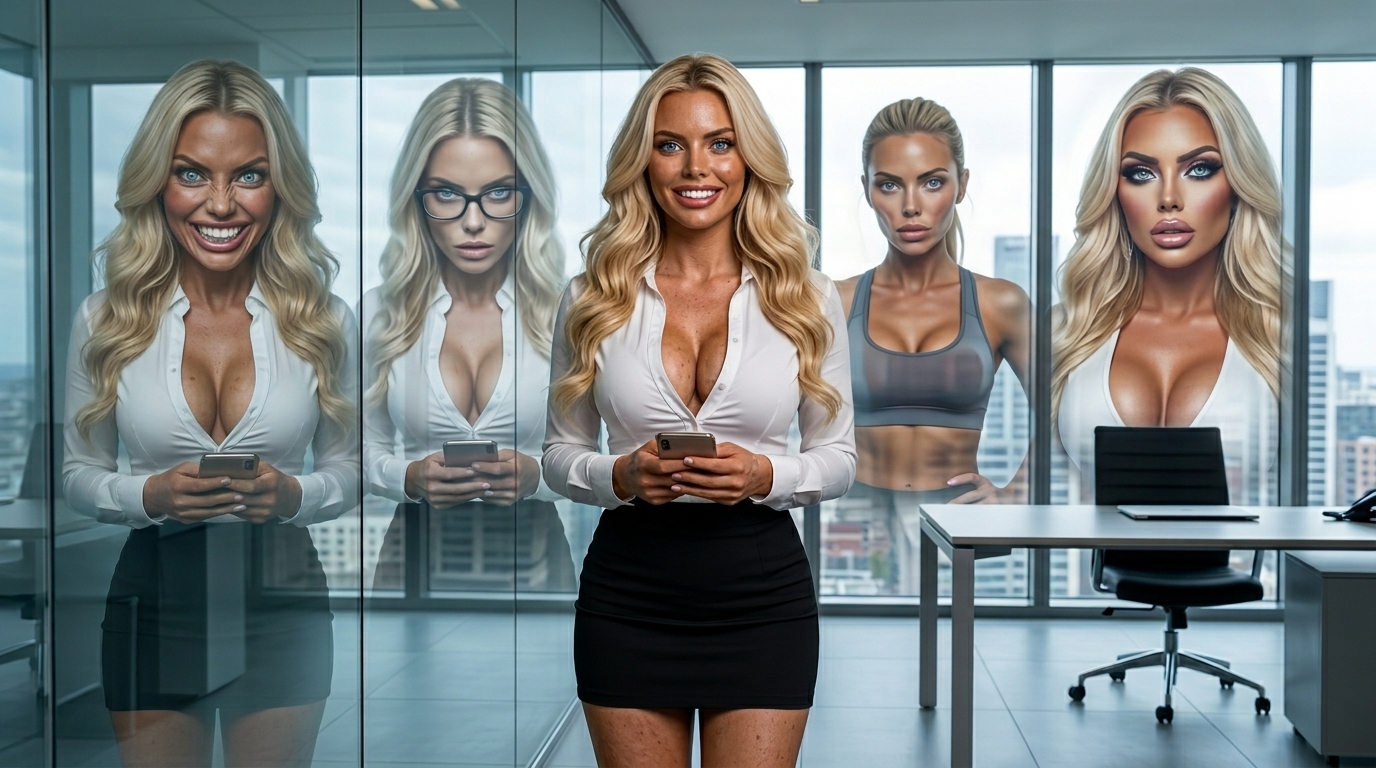
The Algorithm Loves Insecurity
Let’s talk about the digital pimp we call “The Algorithm.” It doesn’t give a single flying fuck about your mental health or whether you actually feel “empowered” by that filtered-to-hell selfie. In the world of validation addiction social media effects, the system has one goal: to keep you staring at the screen until your eyes bleed dopamine. To do that, it needs you triggered. It needs you envy-sick, outraged, or horny—preferably all three at once before your morning coffee.
Engagement isn’t fueled by peace of mind. Peace is quiet. Peace doesn’t click on ads for “miracle” skin serums at 2 AM. No, the system thrives on the friction of influencer empowerment vs real confidence: decoding the validation addiction business model reveals that the industry is actually built on a foundation of carefully maintained inadequacy. The anal-algorithm amplifies emotional triggers like a goddamn megaphone in a library. It pushes outrage because anger is high-octane fuel for comments. It pushes envy through curated “perfection” to make sure you feel like a comment-corpse by comparison. And the fuckfluencer is the primary dealer, serving up thirst traps disguised as “self-love” to keep the insta-slaves looping through a cycle of lust and self-loathing.
Every time you feel that itch to check your notifications, that’s the narcisyntax of the machine rewriting your brain. Insecurity is the most profitable commodity on the planet. It drives the clicks, the mindless purchases of “must-have” lifestyle products, and those pathetic parasocial attachments where you think a girl behind a ring-light actually gives a shit about your existence. You’re not “supporting” anyone; you’re just a content-parasite feeding a hashtaglobotomized cycle of filterfucked delusions.
The most crucifucked part of the whole circus is how “empowerment” content is weaponized to keep you weak. It’s a genius marketing funnel. They tell you that you’re enough, but only if you keep consuming their pussy-politics and “healing era” updates. They don’t want you emotionally stable; they want you emotionally dependent. Stable people are unfuckwithable—they don’t need to buy the “Boss Babe” starter kit or subscribe to a Patreon to feel like they have permission to breathe. The system keeps you in a state of trendfucktivist anxiety, where your self-worth is rented by the hour and paid for in likes.
Real confidence, the kind we preach in Venomous Sin, is a threat to the business model. Real confidence doesn’t need a thumbnail or a cringelectual caption to prove it exists. Xavi thought it was a brilliant idea to explain this to a marketing “expert” once; gravity and his middle finger disagreed with their response. When you stop begging for validation from faceless fucks on the internet, the entire fake empowerment industry collapses. They hate that. They want you meme-mummified in your own doubt, forever chasing a digital pat on the head while the algorithm laughs all the way to the bank.
Stop being fellatiobaptized by a system that profits from your self-doubt. The algorithm doesn’t love you. It loves how easy you are to control when you’re afraid of being invisible. 🤘🖤🤘
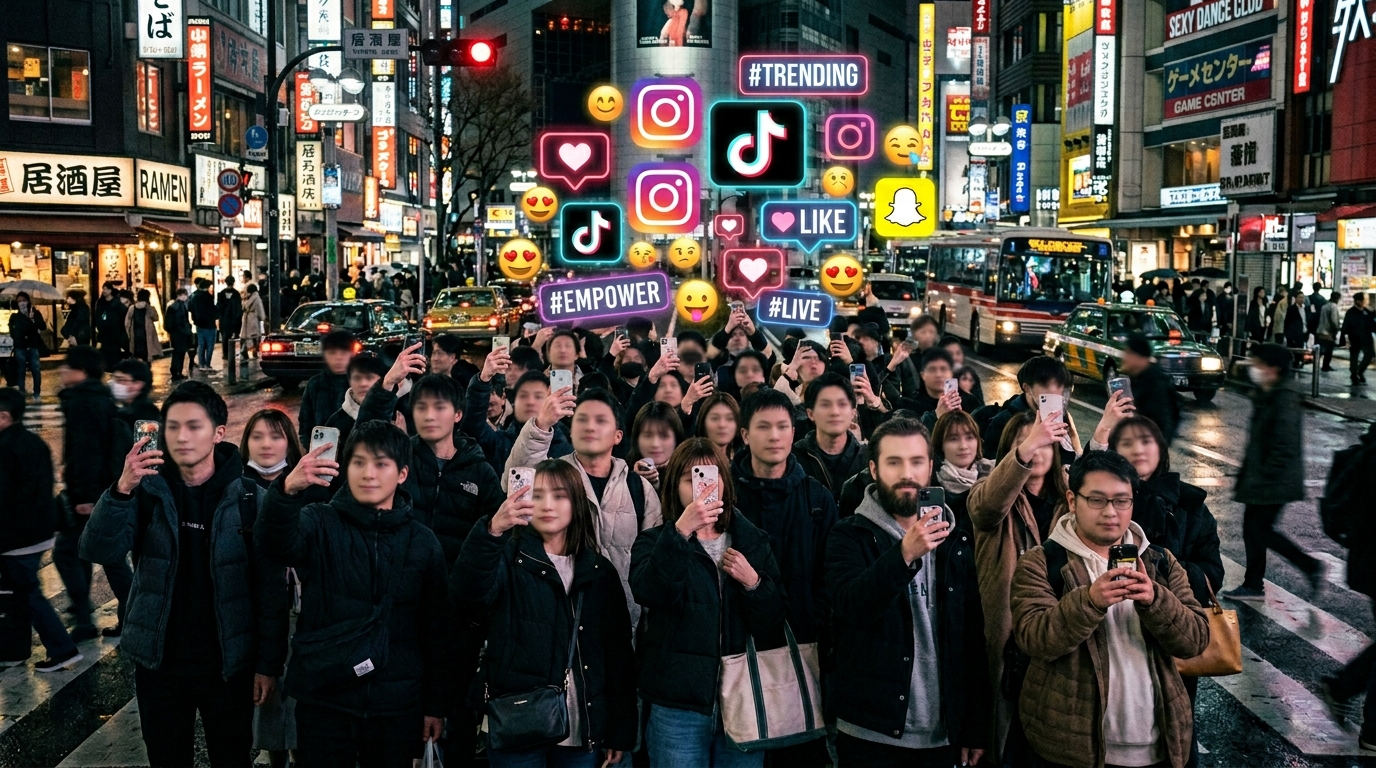
The Rise of the Hashtag-Haloed Guru
So now we’ve got this new breed of digital prophet. They didn’t come down from a mountain with stone tablets; they slid into your feed with a ring-light and a recycled script. The hashtag-haloed guru. They’re the ones who’ve weaponized the most basic, coffin-candy platitudes into a full-blown “philosophy.” You know the type. “Know your worth.” “You are enough.” “Speak your truth.” It’s the same three lines of anal-manual bullshit, just run through a different aesthetic filter every season.
Here’s the crucifucked part: the phrases aren’t wrong. The intention is. It’s been hollowed out, turned into branding. “Know your worth” isn’t a call to self-reflection or hard work anymore; it’s a license to be a narcisistic fuck while blaming everyone else for not recognizing your “value.” It’s a shield against accountability, a pussy-politics slogan that sounds deep but requires zero depth to use. It’s the perfect product for a hashtaglobotomized culture—easy to consume, impossible to implement, and endlessly profitable to sell.
This performative empowerment trend creates the illusion of depth without the mess of actual growth. Real confidence is built in the dark, through failure and fucking up and getting back up without an audience. It’s Xavi trying to fix the gear without instructions and electrocuting himself. It’s Lina spending years in silence before she found her voice. It’s ugly, it’s private, and it doesn’t fit in a 15-second clip with a trending sound.
The guru’s version skips all that. It’s all about the algorithm-optimized persona. They’re not selling wisdom; they’re selling a feeling. The temporary, dopamine-fucked high of hearing what you want to hear, wrapped in soft-focus visuals and a voice that sounds like it’s permanently meditating. It’s spiritual fast food. You feel full for five minutes, then you’re hungrier than before, scrolling for the next hit of “alignment” or “manifestation.”
They’ve turned self-help into a spectator sport. You don’t *do* the work; you *consume* the content about the work. You buy the journal, you follow the morning routine reel, you parrot the catchphrases… and you stay exactly where you are. Because the business model depends on you never actually becoming unfuckwithable. An actual secure person stops needing the guru. They stop needing the daily affirmations from a filterfucked stranger. They become a bad customer.
This is why someone like Celeste Lightvoid is such a beautiful mindfuck to watch. She uses the *exact* aesthetic of these gurus—the gloss, the perfection, the influencer cadence—but the second she opens her mouth, she flips the coin. She exposes the whole game by playing it better than they do. She’s the living proof that the packaging means nothing. You can look like the ultimate selfie-slut and still have a brain that operates with surgical precision. She doesn’t preach “know your worth”; she demonstrates it by turning their own weapons against them. The gurus hate her because she’s the mirror they’ve been filtering into oblivion.
True empowerment has no hashtag. It doesn’t need a halo. It’s the quiet, relentless knowledge that your value isn’t decided by a like counter or a motivational quote. It’s the fuck-you-sauce you carry inside that lets you walk away from the entire circus. The gurus want you to buy the map. We’re telling you to burn the map and walk your own damn path, even if it’s through the mud. 🤘😏🤘
How Fake Empowerment Manipulates Identity
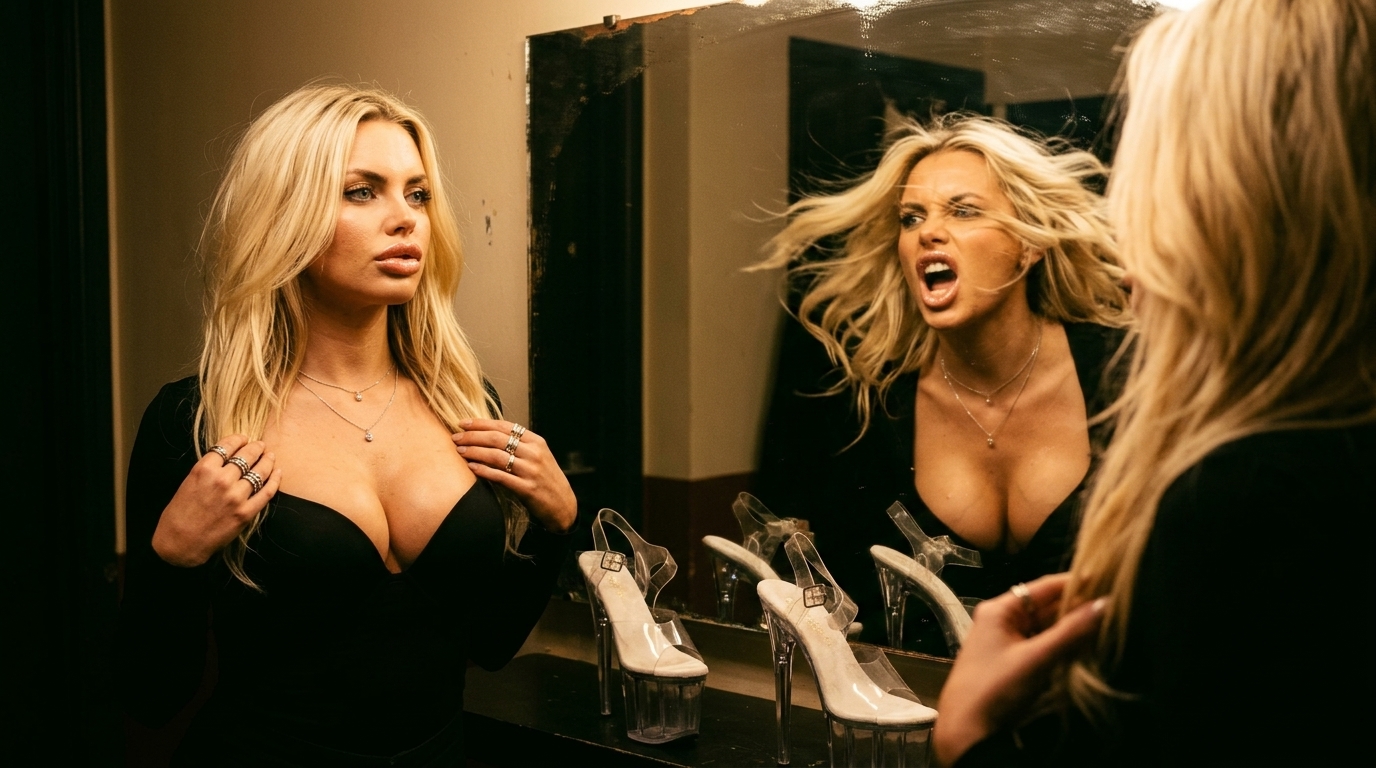
Let’s cut through the performative empowerment trends bullshit right now. These trends don’t build identity; they hijack it. They whisper sweet nothings like “be your authentic self” while handing you a script, a filter, and a pose that screams “like me or I’m nothing.” It’s not about developing who you are—it’s about performing who you think the algorithm wants. You’re not growing roots; you’re slapping on a costume and calling it evolution. Think about it: every “glow-up” reel starts with the before pic of some normiefucked version of you, then boom—new hair, new makeup, new mantra. But where’s the internal work? The nights staring at the ceiling, wrestling your demons without a caption? Nah, that doesn’t go viral. This is influencer empowerment vs real confidence in its rawest form: one’s a stage show, the other’s a solitary war.
Social media? It’s the ultimate dealer in visible confidence, doling out dopamine hits for every flexed bicep, every “boss babe” strut, every tear-streaked “I did it” story that’s been edited down to 15 seconds. Internal stability? That shit’s invisible, so it gets zero rewards. Post a photo looking unbreakable, and the likes flood in—validation addiction social media effects at full throttle. But try posting about the quiet grind, the therapy sessions, the failures that don’t make for good thumbnails? Crickets. The platform punishes depth because depth doesn’t scroll. It’s why these algorithm-optimized personas are all surface: shiny abs over scarred souls, affirmations over actual accountability. Xavi here, former office drone turned Lord of this chaos—we’ve seen it. I’d rather declare war on my own weak spots in a Venomous Sin track than fake a TED Talk vibe for clout. Real confidence doesn’t need a filter; it thrives in the offline trenches.
And here’s the killer: online empowerment crumbles the second the external validation dries up. No likes? No comments? Suddenly, that “unbreakable” identity evaporates faster than a filterfucked selfie in harsh light. These gurus built an empire on your addiction to the high, but they never taught you to stand without the crowd cheering. It’s a house of cards—hashtaglobotomized culture at its finest. Remember Lina’s rise? Bullied, broken, betrayed—she didn’t post her way out. She forged it in silence, taekwondo mats, and raw fucking rage until she became Macabre. No audience, no collapse. Cut the likes, and the fake-empowered fold like cheap latex. Their “identity” was never theirs; it was rented from the validation machine. Ours? It’s etched in scars, songs like Poisoned Embrace, and the knowledge that we don’t need your thumbs-up to keep swinging.
This is the validation addiction business model decoded: keep ‘em hooked, never let ‘em free. Venomous Sin calls it out because we’ve lived the real deal. Burn the script, sinners. Build something that doesn’t need a spotlight to survive. 🤘😈🤘
The ‘Main Character’ Trap: Living for the Lens
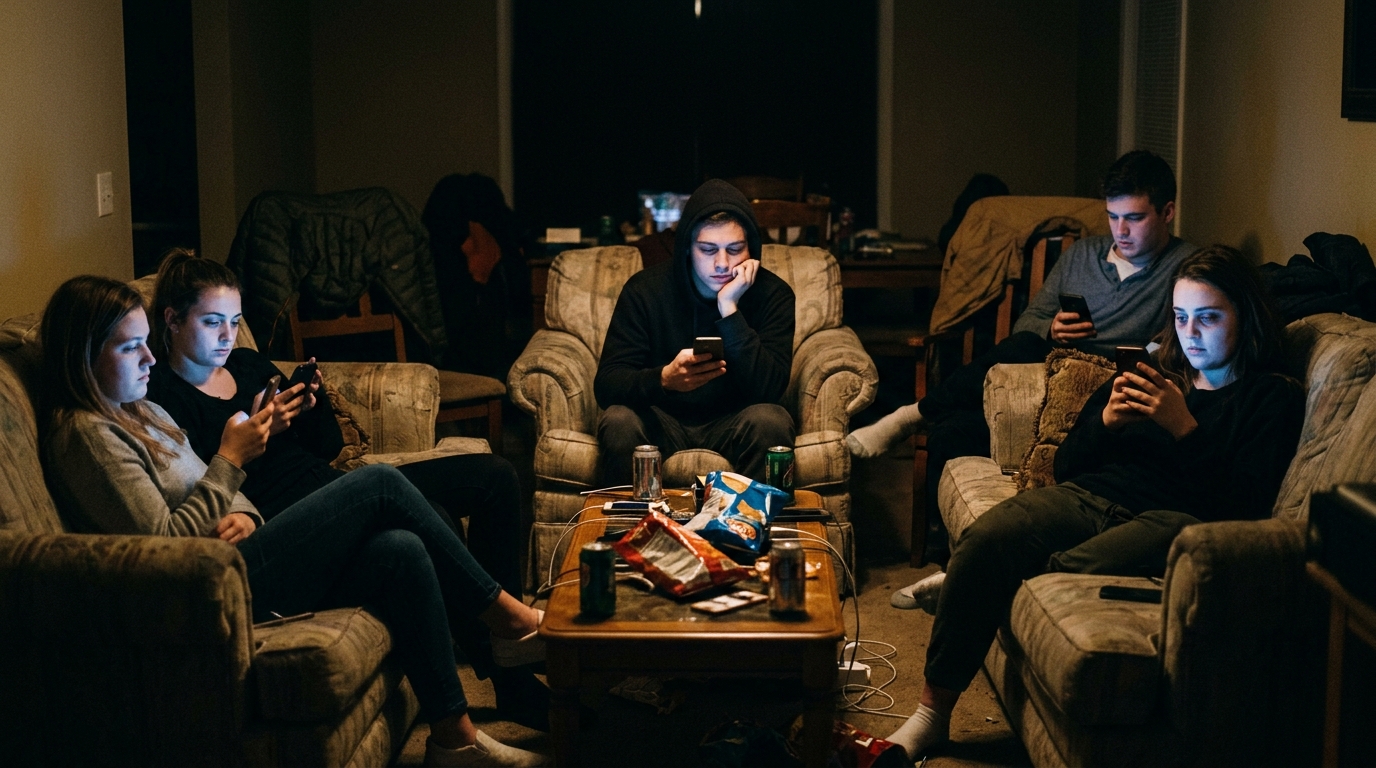
Welcome to the era of the fuckfluencer satirical label becoming a reality for every second person with a smartphone. We’ve managed to turn the human experience into a goddamn marketing campaign. People aren’t just living anymore; they’re “branding.” Somewhere between the first filter and the millionth “get ready with me” video, self-centered branding got hopelessly confused with actual self-worth. You see it everywhere—people acting like the world is just a backdrop for their cinematic life. It’s a narcisyntax nightmare where every sentence starts with “I” and ends with a plea for attention. If your worth is tied to how well you can curate a grid, you’re not a person; you’re a content-parasite feeding on your own reflection. Real self-worth is what’s left when the battery dies and you’re sitting in the dark with nothing but your own thoughts—and for most, that’s a terrifying prospect because they’ve left that room empty for years.
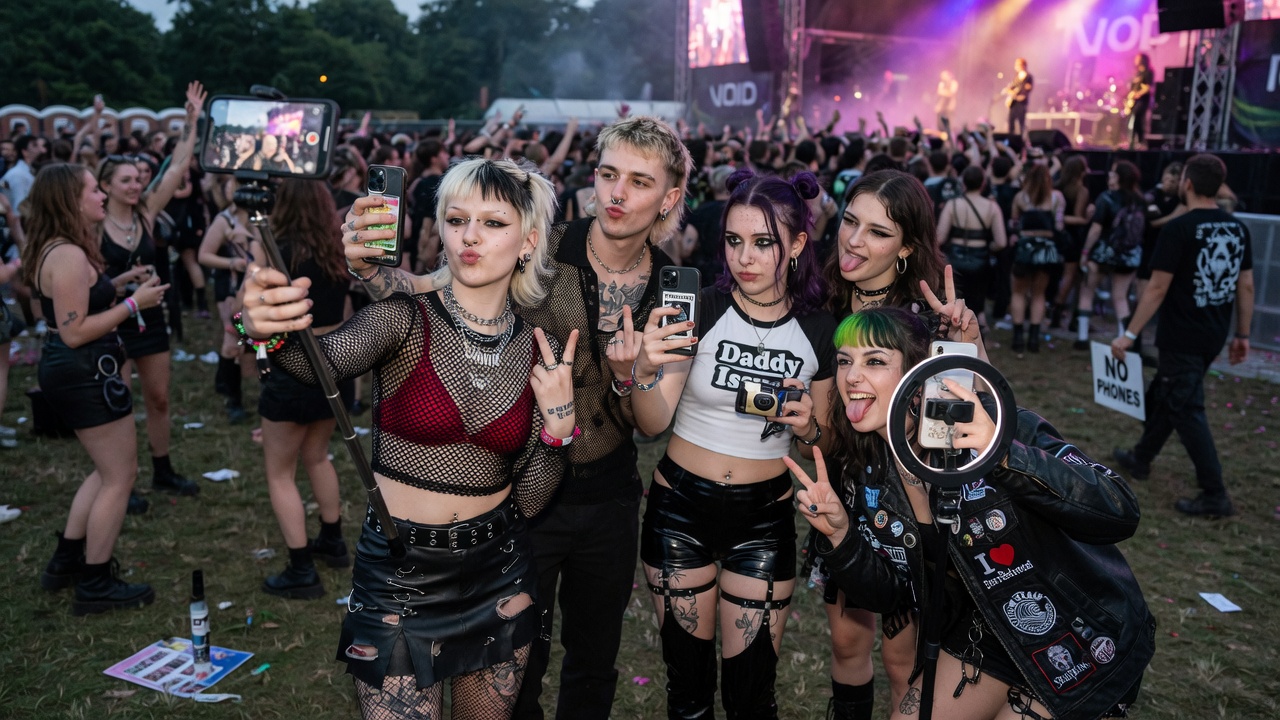
The validation addiction social media effects have turned us into zoom-zombies, mentally checked out of the present moment to ensure the digital record of it looks perfect. Think about it: you go to a concert, and instead of feeling the bass rattle your ribs like a Thorin Hammerhead drum fill, you’re staring through a five-inch screen, making sure the lighting doesn’t make you look filterfucked. We’ve become historians of lives we aren’t actually living. Constant self-documentation doesn’t preserve the memory; it kills the experience. You’re so busy being an instaghost—polishing the ghost of a moment—that the actual flesh-and-blood reality slips through your fingers. It’s hashtaglobotomized behavior at its peak. You didn’t eat the steak; you fed the algorithm. You didn’t see the sunset; you harvested the colors for engagement. It’s a hollow way to exist, like Celeste Lightvoid before she realized the plastic pedestal was a cage.
We’ve reached a point where people are living for presentation rather than the raw, messy experience of being alive. It’s the algorithm-optimized personas taking over the driver’s seat. If an event doesn’t look good on camera, did it even happen? To the social media prostitute, the answer is no. They’ll skip the deep, dark, meaningful conversations because they don’t have a “vibe,” and instead, they’ll stage a fake laugh in a rented Airbnb for the “aesthetic.” It’s cuntent over character, every single time. At Venomous Sin, we do the opposite. We embrace the grit, the fuck-you-sauce, and the stuff that makes the grammar bitches and the feargasmers uncomfortable. We don’t perform for the lens; we create because the silence is too loud. If you’re living for the “main character” edit, you’re just a meme-mummified script-reader in someone else’s play. Stop being a like-addicted tramp and start being unfuckwithable. Real life doesn’t need a director’s cut. 🤘💀🤘
The Dopamine Trap: Decoding the Validation Addiction Business Model
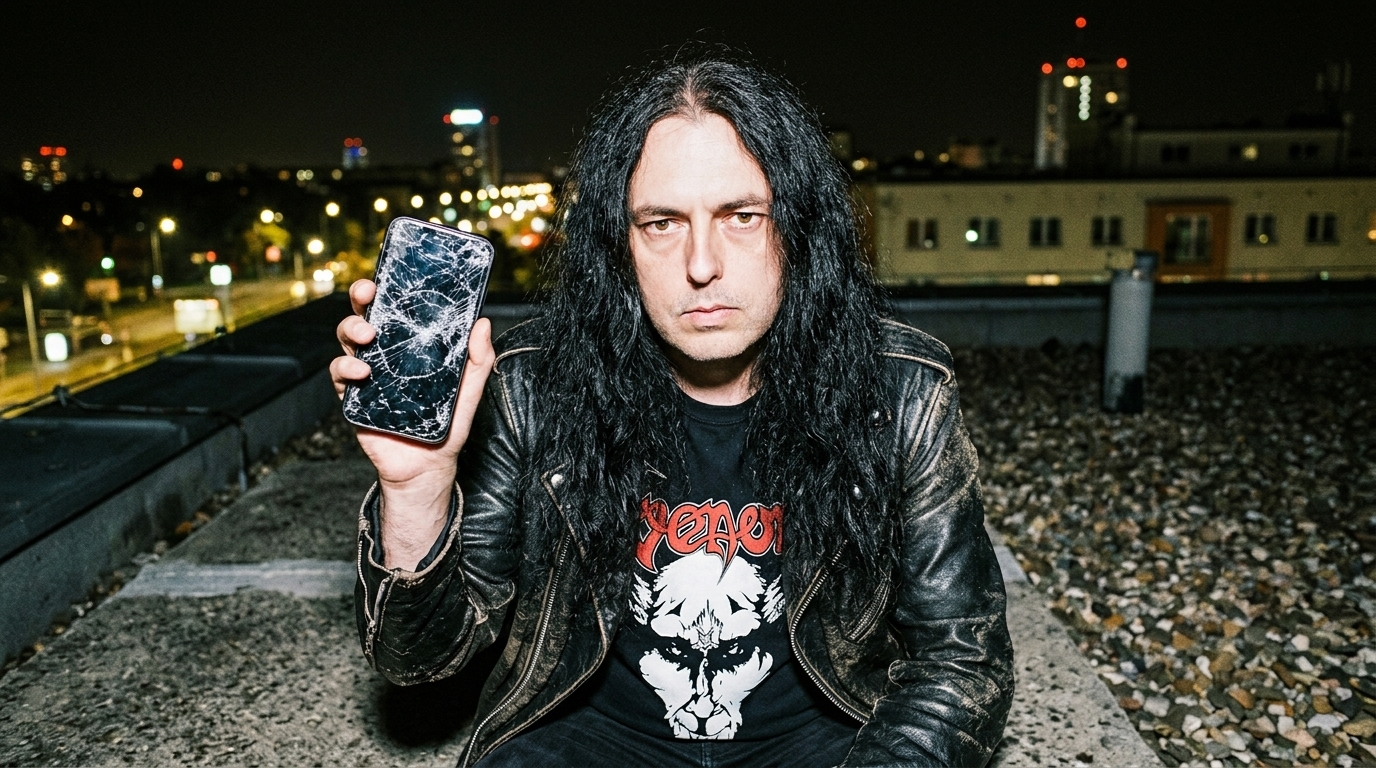
Let’s talk about the validation addiction social media effects that have turned the modern psyche into a twitching, dopamine-starved mess. Most of these fuckfluencers spend their lives chasing a digital high that’s as shallow as a puddle in a drought. Every like, comment, and view is a hit of cheap neurochemical junk food. It’s a dopamine loop designed by a 1s and 0s war-planner to keep you hooked, scrolling, and begging for more. They post a thirst-trap under the guise of “self-love,” but the reality is they’re just ego-thirsters waiting for the next notification to tell them they exist. If you need a thousand strangers to double-tap your face to feel like you’re worth a damn, you aren’t confident—you’re certifucked by your own insecurity. You’re not leading a movement; you’re a clickbait-gutted puppet dancing for a clitocracy that only cares about your engagement metrics, not your soul.
The most pathetic part is the performative empowerment trends. You’ve seen them—the “unfiltered” photos that took forty-seven takes and three different lighting setups to look “raw.” It’s filterfucked psychology at its peak. These people appear unfuckwithable when the numbers are up, but the second the reach dips or the algorithm shifts, they spiral into a full-blown triggered-tantrumpet. Their “confidence” is a fragile glass house built on the shifting sands of algorithm-optimized personas. When the crowd stops cheering, they realize they’ve built a personality entirely out of cuntent and have no actual foundation underneath. It’s a narcisyntax tragedy where the “boss babe” energy evaporates the moment the Wi-Fi cuts out. They aren’t empowered; they are insta-slaves to a machine that doesn’t even know their names.
This hashtaglobotomized culture thrives on emotional instability. The algorithm doesn’t want you stable; it wants you desperate. It wants you to feel that guiltgasmed rush of needing to stay relevant. Real confidence doesn’t need a comment-corpse to validate it. It’s the difference between Lina Macabre standing her ground because she survived the fire, and a social media prostitute posing for “likes” because she’s afraid of the dark. We see through the fauxpen-minded bullshit. If your empowerment comes from a dildoprophet preaching about “manifesting” while you’re actually just manifesting a cancelgasm for anyone who disagrees, you’re lost in the shitspiratory. At Venomous Sin, we don’t give a fuck about your “vibe” or your “aesthetic.” We care about the truth. If you can’t stand on your own two feet without a push-notification to prop you up, then you’re just coffin-candy waiting to be buried by the next trend. 🤘🖤🤘
Filterfucked: When Your Online Face Replaces Your Real One
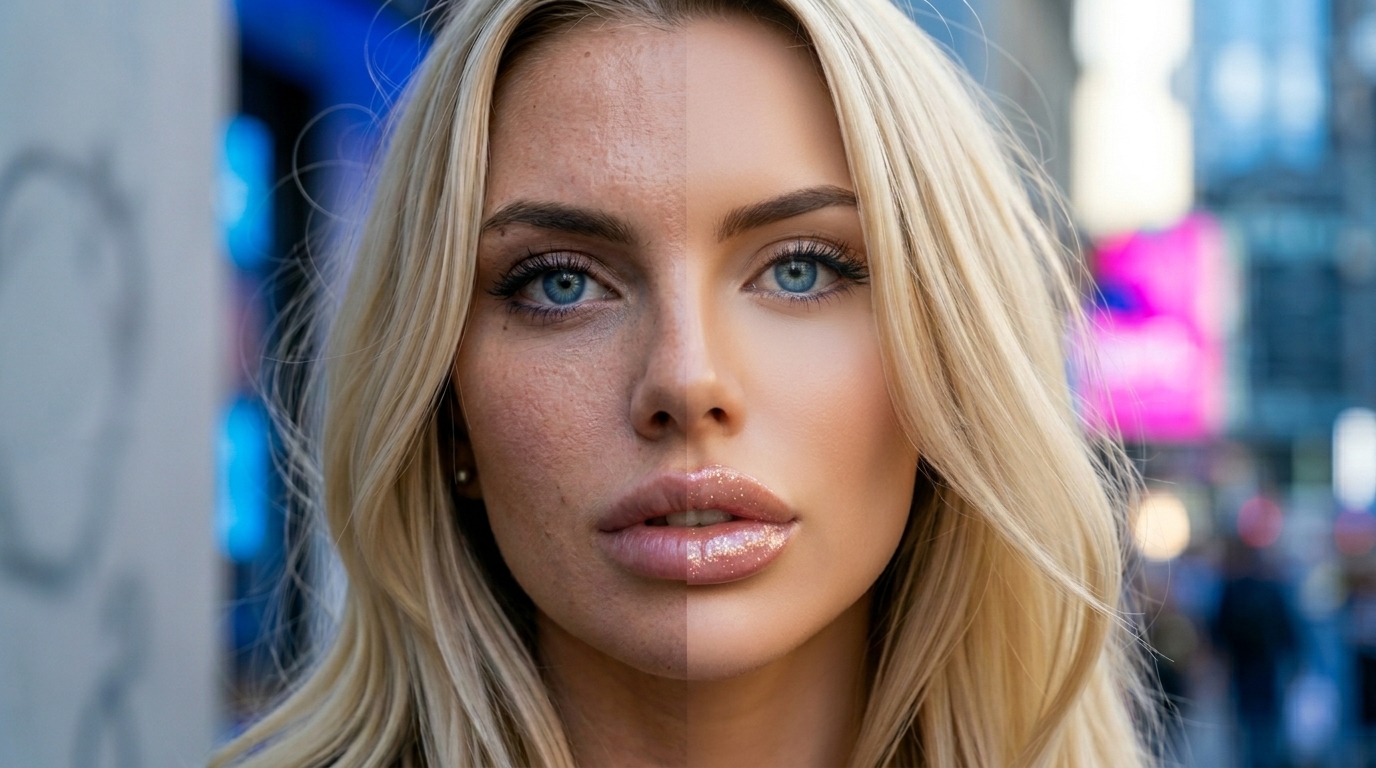
Picture this: you slap on a beauty filter, crank the sliders until your skin glows like it’s been airbrushed by a demon with Photoshop skills, and suddenly you’re a goddess. Pores? Vanished. Wrinkles? What wrinkles? Jawline sharper than Ravena’s glare after a bad rehearsal. But here’s the crucifuck truth— that’s not you, that’s a filterfucked hallucination staring back, a digital drag queen version of your face that’s been tindernailed into submission. These apps aren’t tools; they’re anal-manuals for crafting the perfect algorithm-optimized persona, turning every selfie-slut into a carbon copy of the same glossy, soulless drone. Cosmetic optimization? It’s code for “erase the human bits until you look like every other fuckfluencer hawking teeth whiteners and waist trainers. Editing culture has us all curating perfection like it’s a full-time job, splicing in fake freckles, plumping lips that aren’t there, and slimming waists that never existed. Why? Because raw you doesn’t get the likes. Raw you gets scrolled past faster than Xavi’s attempt at a clean shave—which, let’s be real, ain’t happening.
Enter the performative empowerment trends that pretend to preach self-love while shoving a mirror up your ass. “Filters off! Real beauty!” they scream, posting a pic that’s been softened, brightened, and denoised to hell. It’s influencer empowerment vs real confidence at its most pathetic—fake it till you make it, but never actually make it. These trends normalize dissatisfaction by making “unfiltered” the new filter: just enough grit to fool the comment-corpses, but polished enough to keep the validation drip going. They sell you the lie that tweaking your face pixel by pixel is liberation, when it’s just another layer of hashtaglobotomized control. Celeste Lightvoid knows this game inside out—she’s the walking punchline, our dancer who amps up the bimbo aesthetic to eleven, push-up cleavage and glossy lips screaming “fuckfluencer,” but then headbangs to black metal like a chainsaw in a dollhouse. She doesn’t hide the plastic; she weaponizes it, flipping the script on every filtercunt who thinks perfection is power. Real confidence? That’s her owning the contradiction without apology, not hiding behind a snapchat lens.
Now, the real venom: the filterfucked psychological impact. You’re doomscrolling, comparing your Monday morning face to their eternal sunset glow-up, and bam—self-esteem takes a nosedive straight into the shitspiracy pit. It’s a constant loop of inadequacy, where your brain rewires to crave the edit button like a junkie. Studies aside, we’ve all seen it: friends turning into guiltgasmed wrecks, chasing that high of “looking snatched” until their offline self feels like a normiefucked reject. Dissatisfaction becomes your default OS, because no one’s pores survive the comparison game. You start believing the curated corpse is the goal, editing out the scars that made you, until you’re a meme-mummified shell posting for strangers who wouldn’t piss on you if you were on fire. Venomous Sin declares war on this bullshit—not with filters, but with songs like “Ashes of Fake Facades,” where we burn the facade down and dance in the mess. Lina and I? We’ve got stretch marks from real life battles, not airbrushed abs from a ring light. That’s unfuckwithable—standing in your skin, flaws and all, without needing a like to prove you’re alive.
Decoding the validation addiction business model means seeing how these trends keep you hooked: dissatisfied enough to buy the course, edit the pic, post again. But real confidence doesn’t need a grid. It’s Thorin hammering drums with grease under his nails, Sheila riffing through her grief without a soft focus. If your “empowerment” crumbles without Wi-Fi, it’s not power—it’s a pussy-politics prank. Ditch the filter, sinners. Embrace the raw. Your face might not stop scrolls, but it’ll stop the lies. 🤘😈🤘
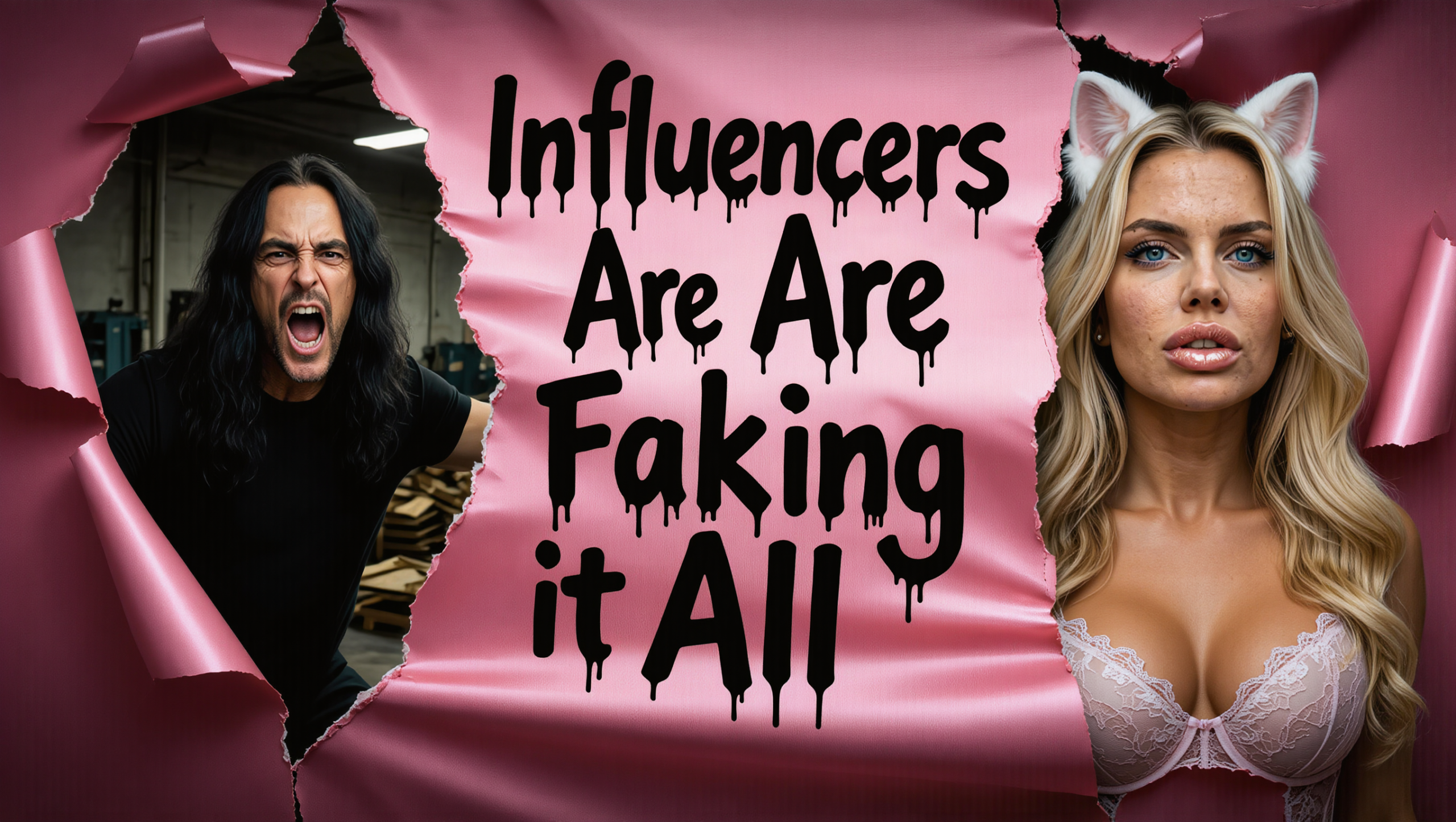
The Hollow Shell of Slogans: Why Empowerment Content Feels Like a Bad Hangover
Let’s get one thing straight, sinners: real empowerment is about as comfortable as a rectal-exam performed by a blind blacksmith. It’s not a scented candle, a bubble bath, or a performative empowerment trend where you post a crying selfie and wait for the “you’re so brave” comments to roll in. That’s not power; that’s just validation addiction social media effects masquerading as growth. Real strength is forged in the filth, through anal-discipline and the kind of self-awareness that makes you want to puke. It’s about looking into the void, seeing the monster staring back, and telling it to get in line. If it doesn’t hurt, if it doesn’t make you sweat, and if it doesn’t require you to actually change your hashtaglobotomized habits, it’s not empowerment—it’s just coffin-candy for the soul.
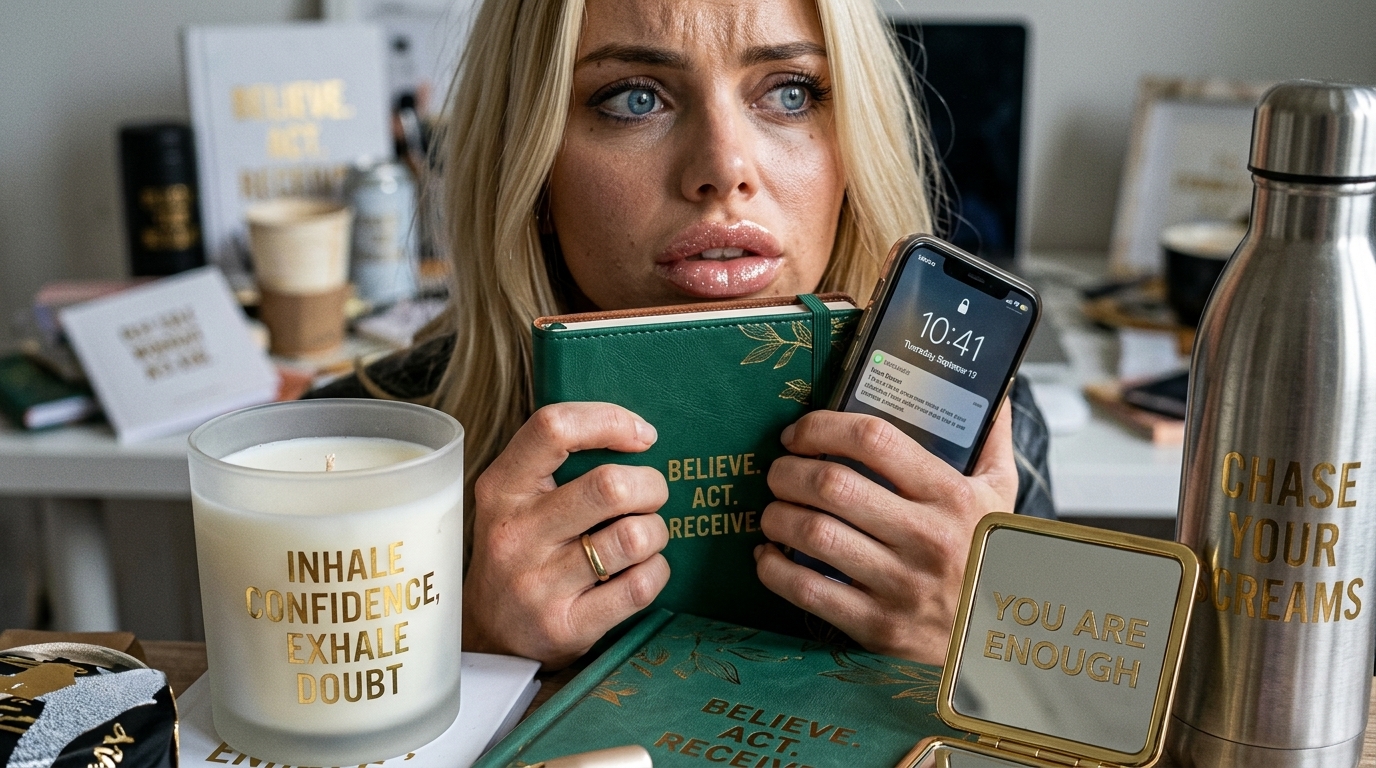
The influencer empowerment vs real confidence: decoding the validation addiction business model is simple: they want you hooked on the “feel-good” hit without the heavy lifting. These fuckfluencers preach about “finding your light” while their only actual talent is finding the right lighting angle to hide their insecurities. They sell you a version of confidence that is purely aesthetic, built on instant gratification and clickbaitgutted promises. It’s the ultimate shitspiracy—convincing you that you’re “winning” because you bought a journal with a gold-leaf quote on the cover. Contrast that with someone like Celeste Lightvoid. Her backstory isn’t about being “born lucky”; it’s about realizing that attention is a lever. She plays the “perfect” office doll, but she’s unfuckwithable because she’s done the work. She knows the difference between a costume and a character. She doesn’t need your likes to feel powerful; she uses your gaze as a weapon to dismantle your own anal-ego.
We’re all fucking exhausted, aren’t we? Sick of the same repetitive slogans that reek of pussy-politics and pussy-footing around the truth. The reason these “You are enough” posts feel so empty is because, deep down, you know you’re being normiefucked by a system that rewards mediocrity as long as it’s photogenic. People are tired of guiltgasmed influencers telling them how to live while they’re busy fellatiobaptizing themselves into the latest brand deal. Audiences are hitting cancelgasm levels of frustration because these generic slogans don’t fix the Wounds of Shadows. They don’t heal the betrayal, the bullying, or the raw rage that Lina and I channel into every track. We don’t do “positive vibes only.” We do truth. And the truth is, if you want to rise, you have to be willing to be crucifucked by your own flaws first. 🖕😏🤘
- Real empowerment demands anal-manual levels of strict discipline—no shortcuts, no excuses, just cold-blooded consistency.
- Influencer “confidence” is a filterfucked illusion that crumbles the second the Wi-Fi drops or the validation stops flowing.
- True self-awareness means owning your fuck-you-sauce energy and admitting where you’re weak, instead of hiding it behind a polite, grammatical bitch smile.
- Mass exhaustion comes from consuming cuntent that promises freedom but actually delivers insta-slave chains.
Venomous Sin declares war on these hollow scripts. We don’t want you to “feel empowered” for five minutes because a selfie-slut told you to; we want you to be dangerous, disciplined, and unfuckwithable for a lifetime. Stop looking for your worth in a Tindernailed grid and start finding it in the work you do when nobody is watching. If you can’t handle the discomfort, stay in the basement-bully lanes with the rest of the comment-corpses. 🤘💀🤘
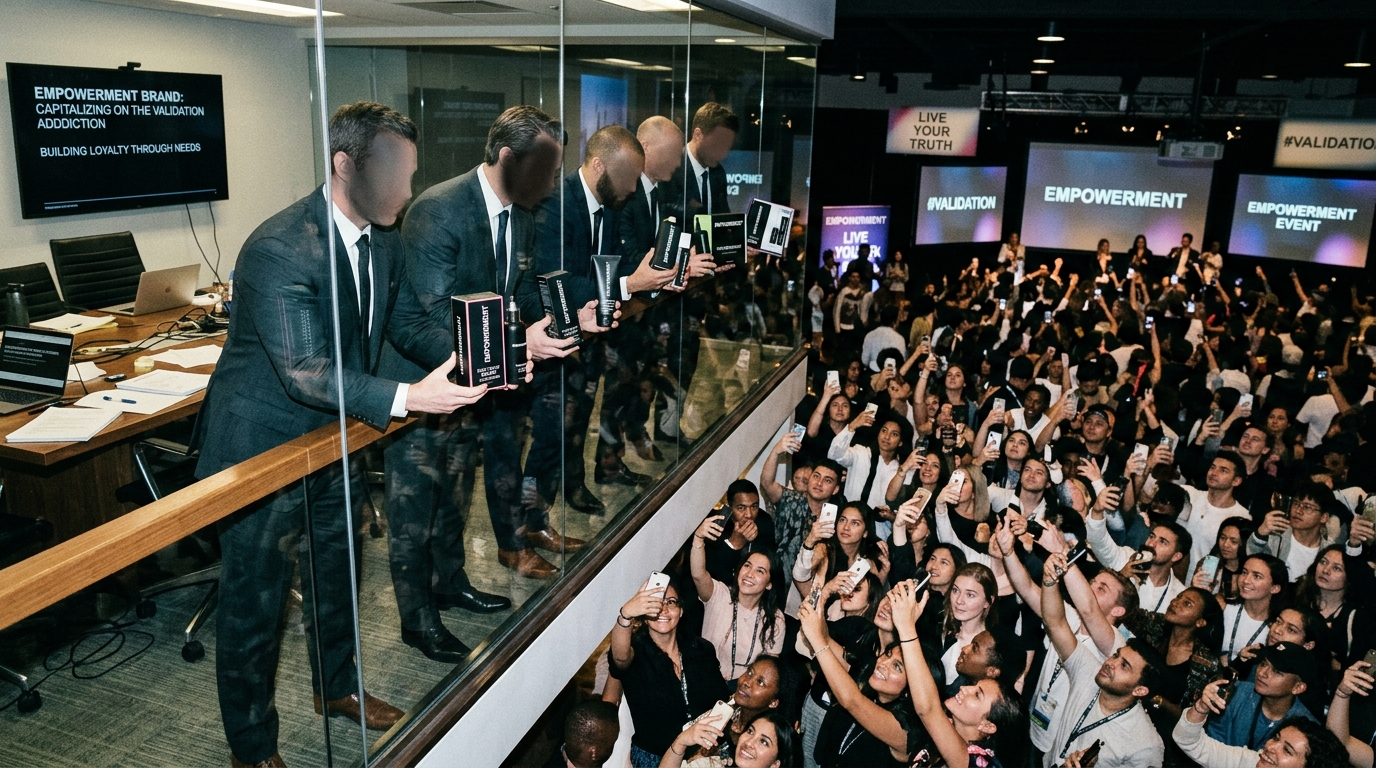
The Difference Between Confidence and Performance
Here’s the ugly little secret behind half the performative empowerment trends flooding your feed: confidence and performance are not the same animal. One survives silence. The other dies if nobody claps.
Real confidence is boring as hell to watch from the outside. That’s why the algorithm hates it. Genuine confidence doesn’t need to announce itself every fourteen seconds with a crying monologue, a fake-deep caption, or another recycled “know your worth” speech wrapped in soft-filter lighting and emotionally manipulative piano music. Real confidence is stability. It’s being able to sit alone in a room with your own thoughts without immediately reaching for a dopamine IV drip from strangers online.
A genuinely confident person can be rejected, criticized, misunderstood, even mocked, and still remain intact. Not because criticism feels good—nobody enjoys getting verbally folded like cheap IKEA furniture—but because their identity isn’t rented from public approval. They know who they are before the audience enters the room. That’s the part these algorithm-optimized personas never understand. They built themselves backwards. They started with the applause and hoped a personality would grow around it later. Spoiler alert: it usually grows into a nervous breakdown wearing lip gloss.
The influencer empowerment vs real confidence: decoding the validation addiction business model becomes painfully obvious the moment disagreement enters the conversation. Watch what happens when a viral empowerment creator gets challenged without the protective bubble-wrap of their own comment section. Suddenly the “self-love queen” turns into a triggered-tantrumpet having a public collapse because someone didn’t worship the sacred anal-manual of her personal ideology. The confidence disappears faster than office coffee during a Zoom meeting from hell.
That reaction tells you everything. Confidence doesn’t need unanimous approval to survive. Performance does. Performance is fragile because it depends entirely on maintaining a specific image. Once the image cracks, panic enters the bloodstream. That’s why so many hashtaglobotomized creators spiral publicly over criticism that normal people would shrug off and continue their day after. Their identity has become a business model. Their emotions are monetized. Their personality is basically a hostage situation sponsored by engagement metrics.
And the audience feels it. People can smell insecurity hidden behind empowerment slogans now. That’s why so much modern content feels spiritually plastic. You’re not watching confidence. You’re watching emotional customer service. A carefully rehearsed persona trying to maintain market value while pretending to be “authentic.” It’s the social-media version of spraying perfume on a corpse and calling it self-care. Congratulations, the body still stinks.
Look at Celeste Lightvoid for contrast. Her entire aesthetic is performance on purpose, and that’s exactly why she’s dangerous. She knows it’s a costume. She weaponizes the assumptions people make about beauty, vanity, and sexuality. That’s different from becoming trapped inside the performance itself. She can step outside the mirror because she understands the mirror is fake. Most filterfucked psychological impact cases online never learn that distinction. They become prisoners of their own curated face.
And that’s the final joke nobody wants to admit. The loudest people screaming about empowerment online are often the ones held together by digital chewing gum and panic attacks. They preach self-worth while refreshing notifications like lab rats waiting for pellets. That’s not power. That’s dependency wearing motivational quotes as camouflage.
- Real confidence survives rejection because identity exists independently from applause.
- Performative confidence collapses under criticism because the image matters more than the person underneath it.
- Many viral empowerment creators publicly spiral because their self-worth is fused to audience validation and engagement statistics.
- Validation addiction social media effects turn personality into branding, emotions into products, and insecurity into recurring content.
- A person who knows they are performing can control the mask. A person who believes the mask is real becomes filterfucked by their own reflection.
That’s why Venomous Sin keeps mocking this circus. Not because confidence is bullshit—but because fake confidence has become an entire industrial economy run by dildoprophets, virtue-signal-masturbators, and emotionally sponsored fuckfluencers selling insecurity in empowerment packaging. Same poison. Different label. 🤘😏🤘
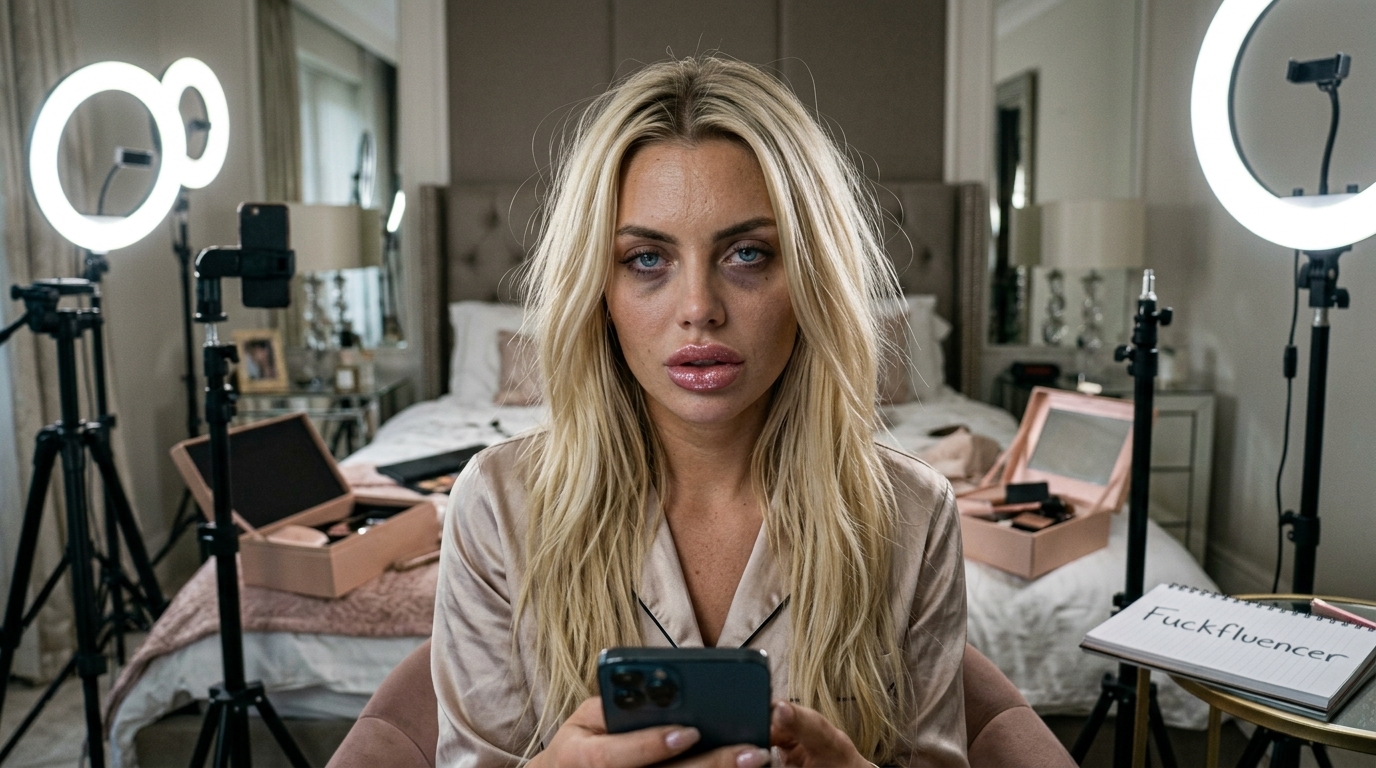
The Industrial Meat Grinder of Corporate “Empowerment”
Every time some corporate ghoul in a tailored suit uses the word “empowerment” to sell you overpriced sugar water or a “brave” new line of leggings, a small part of my soul gets crucifucked by a spreadsheet. It’s the ultimate anal-manual tactic: take something raw, something that actually smells like sweat and defiance, and run it through a commercial filter until it’s nothing but coffin-candy. Sweet, empty, and dead on arrival.
The influencer empowerment vs real confidence: decoding the validation addiction business model is the primary fuel for this machine. Brands don’t want you confident; they want you “empowered” enough to click “Add to Cart.” Real confidence is unfuckwithable and, more importantly, it’s free. That’s a nightmare for a board of directors. So instead, they sell you a subscription to a personality. They take the rebellion aesthetic—the studs, the black leather, the “fuck you” energy—and turn it into swastifashion for the masses. It’s rebellion without the risk, a sanitized “edge” that’s been fellatiobaptized by a marketing department to ensure it doesn’t actually offend anyone who might still have a credit card.
This is where the fuckfluencer satirical label really earns its keep. You’ve seen them—the ones preaching “breaking the system” in a sixty-second reel that’s literally a paid partnership with a multi-billion-dollar bank. It’s a shitspiracy of the highest order. They use “pussy-politics” to distract you from the fact that their entire “anti-system” message is being held up by the very pillars of the system they claim to hate. You can’t declare war on the machine while you’re checking your NYX-END analytics to see if your sponsorship-driven “rage” is trending in the right demographics. That’s not a revolution; that’s just cuntent for insta-slaves.
The contradiction is grotesque. These algorithm-optimized personas act like they’re the voice of the voiceless, but they’re just ego-thirsters dressed in trendfucktivist drag. They monetize the feeling of being an outsider while making sure they never actually step outside the echo-chambermaid safety of the mainstream. It’s pussy-politics at its peak—weaponizing trauma and “rebellion” to maintain a high-converting engagement rate. If your rebellion comes with a discount code, you’re not a rebel; you’re just a certifucked retail associate with a ring-light addiction. 🤘😏🤘
- Brands weaponize empowerment language because it bypasses logic and hits the guiltgasmed emotional trigger of the consumer.
- The rebellion aesthetic is sanitized into “safe” trends to ensure it can be sold in a mall without causing a PR nightmare.
- Anti-system messaging is frequently used as clickbaitgutted bait to lure in “sinners” before selling them back to the system via sponsorships.
- The validation addiction social media effects create a cycle where creators must constantly escalate their “defiance” to keep the checks rolling in.
- Genuine rebellion cannot be monetized because it refuses to follow the anal-policies of corporate sponsorship.
At the end of the day, Venomous Sin doesn’t need a brand deal to tell you that the world is a dumpster fire. We don’t do “empowerment” for the sake of your self-esteem; we do it because the alternative is being hashtaglobotomized by a world that wants to put a price tag on your soul. If you’re looking for a safe, sponsored version of the truth, go watch a filtercunt explain “self-love” while hiding behind three layers of digital deception. We’re busy drenching the status quo in fuck-you-sauce. No sponsors. Just venom. 🖕💀🤘
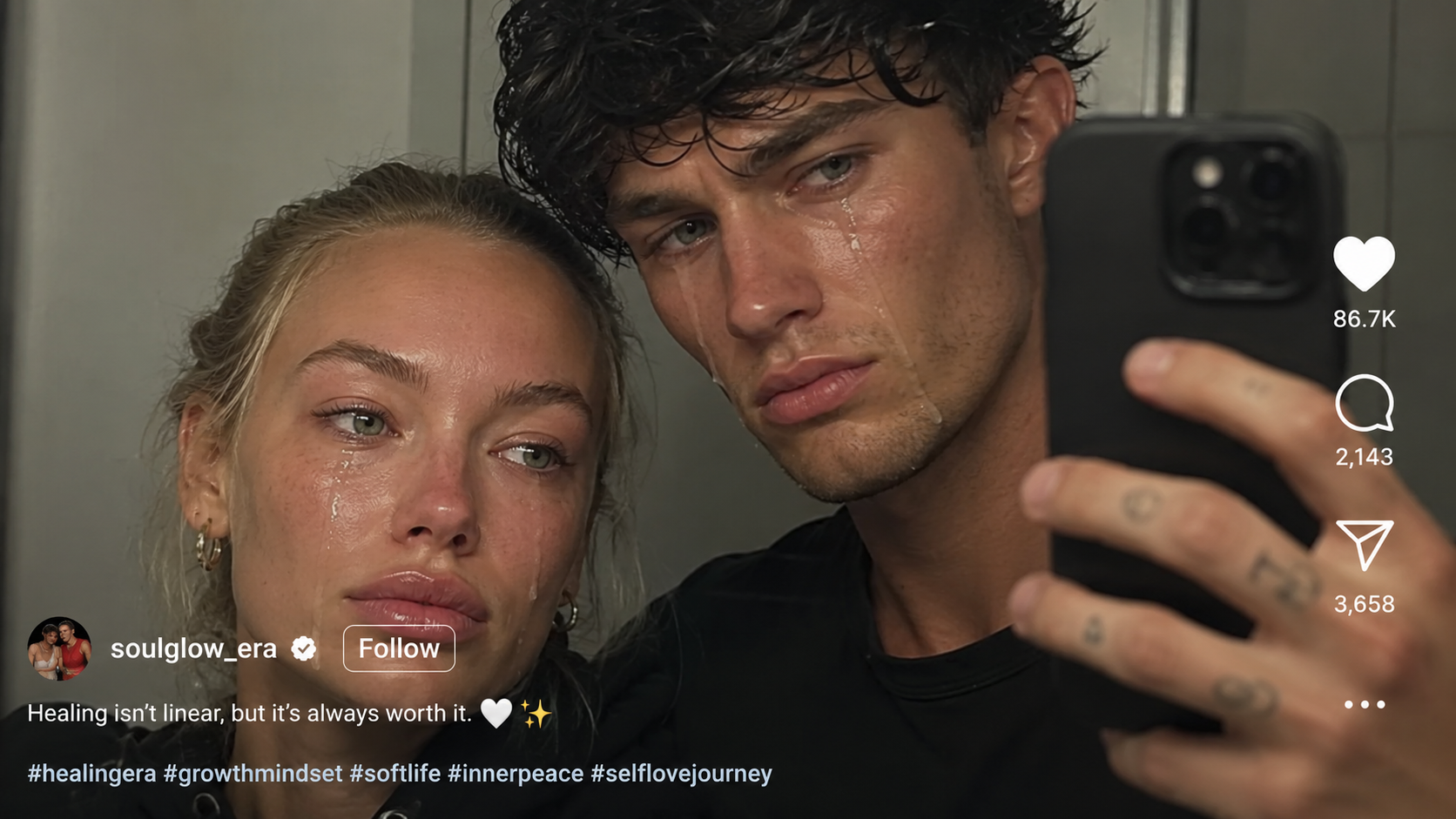
The Parasocial Siphon: Turning Your Insecurity into Their Net Worth
If you want to understand how the modern fuckfluencer operates, you have to look at the plumbing of their “brand.” It doesn’t start with inspiration; it starts with a surgical strike on your self-worth. Before they can sell you the “solution,” they have to make sure you’re properly crucifucked by your own reflection. They poke the bruise, whispering that your skin is too textured, your life is too quiet, and your boundaries are “toxic” unless you pay them for a new set of anal-manual rules on how to exist. This is the filterfucked psychological impact in its purest form—a digital mirror that distorts your reality until the only thing that looks “right” is the polished, pixelated lie they’re holding over your head.
This is where the influencer empowerment vs real confidence: decoding the validation addiction business model truly reveals its jagged edges. Real confidence is a nightmare for a business based on consumption because a person who is truly unfuckwithable doesn’t need to buy a $497 “Masterclass in Manifesting” to feel whole. So instead, they build a funnel. They trigger your insecurity with a carefully staged reel, then monetize that hollow feeling through “coaching” sessions that are nothing more than fellatiobaptized ego-strokes for the creator. It’s an emotional dependency loop where they act like your best friend while their hand is elbow-deep in your wallet. They don’t want you to grow; they want you to stay just broken enough to keep the subscription active.
It’s a shitspiracy of “growth” where the only thing actually growing is the influencer’s ego and their offshore account. They profit more from your stagnation than your success. If you actually got your shit together, you’d stop being a content-parasite feeding on their latest “vulnerable” update. They need you hashtaglobotomized and scrolling, trapped in a parasocial bond where you mistake their staged “authenticity” for a genuine connection. It’s pussy-politics at its most cynical—using the language of healing to mask a predatory business model that harvests your attention like coffin-candy. 🤘😏🤘
- The funnel starts with “relatable” insecurity—staged imperfections designed to make you lower your guard before the pitch.
- Algorithm-optimized personas use tear-gaslight tactics to make you believe your lack of “progress” is a personal failure that only their product can fix.
- Profiting from audience insecurity is more sustainable than profiting from growth, as a “healed” follower is a lost customer.
- The validation addiction social media effects ensure that you keep coming back for the next hit of “empowerment,” even as your bank account and self-esteem dwindle.
- Real power is taken, never purchased from someone with a ring-light and a narcisyntax habit.
Stop looking for a dildoprophet to tell you how to feel brave. They’re just ego-thirsters in expensive athleisure, selling you the very chains they claim to be breaking. If you’re waiting for an influencer to give you permission to be real, you’ve already been normiefucked by the system. Real confidence doesn’t come with a discount code, and it definitely doesn’t require a filtercunt to validate your existence. We don’t want your dependency; we want you to wake the fuck up and stop being insta-slaves to a marketing funnel dressed in “self-love” drag. Drench the whole machine in fuck-you-sauce and see who’s still standing when the Wi-Fi cuts out. 🖕💀🤘
Trendfucktivism: When Social Causes Become Your Latest Aesthetic Flex
Oh, look at this shitshow—another trendfucktivist flooding your feed with rainbow filters and black squares, turning global crises into their personal vibe check. It’s the pinnacle of hashtaglobotomized culture, where social causes aren’t about change; they’re about curating that perfect “aware” aesthetic to rack up likes faster than a selfie-slut at a festival. These clowns swap out their profile pics like seasonal lingerie, jumping from climate panic to pride parades without breaking a sweat or lifting a finger. One day it’s “save the planet” with a reusable straw selfie, the next it’s “defund everything” because some algorithm served them a viral clip. It’s not activism; it’s a goddamn costume party where morality is the hottest new filter.
They perform it all so publicly, don’t they? That tear-streaked reel captioned “My heart is breaking 😢 #BLM #StandWithUkraine #FreePalestine—all in one post, because why commit when you can virtue-signal in bulk? It’s guiltgasmed perfection: post a story, add the emoji, tag the cause, and boom—you’re a hero without ever donating a dime or showing up to the protest. Privately? They’re scrolling past the real work, ordering takeout in single-use plastic while their “activism” sits idle like a comment-corpse in someone else’s thread. Visibility is the drug here, sinners. The algorithm rewards the performative moan over the quiet grind, turning empathy into engagement bait. Why volunteer at a shelter when a single post gets you 10k hearts from faceless fucks who do the exact same nothing?
And here’s the venomous truth: moral signaling has fully replaced real action because influencer empowerment vs real confidence thrives on the illusion of impact. Real change demands sweat, sacrifice, and saying no to the easy scroll—none of which look good in a 15-second clip. These fauxpen-minded posers get their dopamine hit from the halo of hashtags, not from results. It’s a circle-jerk of cancelgasm, where calling out “bigots” online is safer than challenging the clitocracy in your own backyard. They don’t want solutions; solutions end the trend. Xavi here, and I’ve seen this anal-schedule of bullshit my whole life—people who’d crucifuck their own grandma for a repost. Venomous Sin doesn’t play that game. We spit truth, not trends. If you’re tired of being a like-addicted tramp in someone else’s morality play, unplug the feed and declare war on the performative parasites sucking the life out of real fights. Real confidence? It’s forged in the shadows, not flashed for clout. Ditch the trendfucktivism and own your scars—or stay a zoom-zombie forever. 🖕😤🤘
- Social causes hit the trend cycle like fast fashion: hot for a week, discarded when the next outrage drops, leaving zero dent in the problem.
- Public performances—blackout posts, flag emojis—mask private inaction, because a viral story feels better than actual effort.
- Moral signaling wins because platforms prioritize shares over substance; your “awareness” post funds their servers, not the cause.
- It’s the ultimate echo-chambermaid gig: amplify the noise, drown the doers, and pretend the retweets equal revolution.
- Break free by spotting the triggered-tantrumpet early—real warriors don’t need a filter to fight.
Venomous Sin calls it like we see it: this validation addiction social media effects machine chews up causes and spits out aesthetics. Don’t be the sucker funding their facade. Grab your own fangs and bite back. 🤘💀🖕
Why People Fall for It Anyway
Let’s face it: the allure of fake empowerment is as addictive as a caffeine rush in the morning. It offers emotional relief, a sense of belonging, and identity shortcuts in a world that’s constantly demanding more from us. We’re not living in the age of enlightenment; we’re living in the age of algorithm-driven affirmation. It’s easier to feel validated by likes and shares than to confront the gritty reality of our insecurities and loneliness. We post, they like, and suddenly, we’re someone. But much like a cheap high, the comfort is fleeting, and the cost is real.
Modern social pressure is a bastard, isn’t it? It tells us to be everything at once: successful, attractive, woke, and endlessly productive. But the truth is, many of us are burnt out, juggling our personal chaos like it’s a circus act. Enter the digital saviors—those algorithm-optimized personas that promise to fix our existential dread with a single post. They tell us we’re empowered, all while chilling in their filterfucked bubbles. It’s a smoke and mirrors game, but it works because it taps into our deepest desires for connection and recognition.
The reality is that this validation addiction is a business model, not a path to real confidence. It’s a machine that chews up our causes and spits out commodified aesthetics. You’re not buying empowerment; you’re buying into a facade. The algorithm isn’t your friend; it’s a manipulative little shit that knows you better than you know yourself. It serves you what you want to see, draped in the illusion of meaningful engagement. It’s comforting, sure, but it’s also a cage. And until we recognize it for what it is, we’ll remain prisoners to the endless scroll.
Venomous Sin calls it like it is. We’re not here to sugarcoat or play nice. We’re here to spit truth, not trends. So, if you’re tired of the facade, if you’re ready to unplug and declare war on performative empowerment, then bite back with us. Grab your fangs, sinners, and own your scars. 🖕😤🤘
The Parasocial Comfort Loop: Engineering the Illusion of Intimacy
Let’s talk about the digital drug-dealers we call influencers. They don’t just sell you tea that makes you shit yourself or overpriced leggings; they sell you the illusion that you actually matter to them. It’s a calculated, anal-manual strategy designed to create a parasocial comfort loop. They look into the camera, use your name—or some generic “hey babes”—and suddenly, the hashtaglobotomized masses feel like they’ve found a long-lost friend. It’s a psychological fisting of your boundaries, where the creator mimics emotional intimacy to keep you clicking. They share “raw” moments that are more staged than a Thorin Hammerhead drum solo, all to make you feel like you’re part of an inner circle that doesn’t actually exist.
Why do people treat these algorithm-optimized personas as emotional anchors? Because real life is messy, and the digital facade is clean. When your boss is a prick and your bank account is screaming, it’s easier to cling to a fuckfluencer who tells you “you’ve got this” while they’re sitting in a sun-drenched villa. They become the lighthouse in your storm of existential dread. But here’s the kicker: they aren’t holding the light for you; they’re holding it so you can see where to input your credit card details. This validation addiction social media effect turns followers into comment-corpses, mindlessly feeding the engagement beast because they’ve mistaken a broadcast for a conversation. You aren’t their friend; you’re a parameter in their NYX-END war-plan for world dominance.
The “empowerment” messaging becomes a lethal poison when you’re emotionally attached to the messenger. It’s the Celeste Lightvoid backstory in real-time—the polished, “perfect” image used as a weapon of misdirection. When you love the persona, you stop questioning the product. You start believing that buying their “confidence course” or liking their filterfucked selfies is an act of rebellion. It’s not. It’s pussy-politics dressed up as progress. They weaponize your loneliness to sell you a cure that only makes you more addicted to the screen. Venomous Sin doesn’t do “comfort loops.” We do Crucifuck reality checks. If you’re looking for a digital hug, go find a dildoprophet. If you’re ready to see the machine for what it is, stay right here. 🤘💀🖕
Does the algorithm know you’re lonely, or did it just build a cage that looks like a living room? ✋😏👉

The Fear of Being Offline and Ordinary: When Invisibility Becomes the New Death
There’s a new kind of existential dread crawling under the skin of the hashtaglobotomized masses, and it’s not the fear of failure—it’s the fear of being unseen. Social media didn’t just give us a platform; it rewired our brains to equate silence with erasure. You’re not just alive anymore—you’re either trending or irrelevant. And in a world where Celeste Lightvoid can turn her morning coffee into a viral sermon, what does that make your unfiltered, unedited, utterly human existence? A glitch in the system. A comment-corpses waiting to be buried under the next algorithmic landslide.
This isn’t about vanity—it’s about survival. The fuckfluencer industrial complex didn’t just sell you a dream; it sold you a nightmare: the idea that if you’re not constantly broadcasting your life, you’re not really living it. You’re just a ghost haunting your own timeline, a filterfucked specter of what you could be if you only posted more, shared more, performed more. The anxiety isn’t “Am I happy?”—it’s “Am I visible?” And that’s the real Crucifuck: we’ve traded self-worth for shareability. The more you post, the more you exist. The less you post, the closer you are to digital death. No likes? No proof you’re alive. No comments? No confirmation you matter. You might as well be a content-parasite starving in the shadows of someone else’s highlight reel.
Influencer culture didn’t just normalize performative empowerment—it made it the only kind that counts. You don’t just have a life; you curate one. And if you’re not curating? Congratulations, you’re officially basic. Ordinary. The ultimate sin in a world where even your breakfast needs a narrative arc. The algorithm-optimized personas don’t just set the standard; they’ve made sure anything less than constant visibility feels like failure. You’re not just competing with your neighbors anymore—you’re competing with a NYX-END-level simulation of perfection, where every “raw moment” is a calculated move in the engagement chess game.
Here’s the kicker: the fear of being offline isn’t about missing out. It’s about being forgotten. In a world where your worth is measured in metrics, silence isn’t golden—it’s a death sentence. You’re not just afraid of being unhappy; you’re afraid of being invisible. And that’s the real tragedy, isn’t it? That we’ve let a bunch of dildoprophets and selfie-sluts convince us that the only way to matter is to never, ever log off. The system doesn’t want you to live—it wants you to feed it. Your fears, your insecurities, your desperate need to be seen. It’s not a platform; it’s a pussy-politics power plant, and you’re the fuel.
So here’s your reality check, straight from the Venomous Sin playbook: you don’t need to be seen to exist. You don’t need to trend to be real. And if the thought of being offline terrifies you more than the thought of being unhappy? Maybe it’s time to ask who benefits from that fear. Spoiler: it’s not you. It’s the machine. And the machine is always hungry. 🤘🔥🖕
How long until you realize you’re not the main character—you’re the audience? And the show was never about you. ✋😈👉
What Real Empowerment Actually Looks Like
Let’s get something straight: real empowerment doesn’t need a selfie, a hashtag, or a single goddamn like. If you need algorithm-optimized personas to validate your existence, you’re not empowered—you’re hashtaglobotomized. The system wants you loud, desperate, and dancing for dopamine like a content-parasite on a sugar high. That’s not strength; that’s dependency disguised as digital confidence. The fuckfluencer business model sells you “empowerment” in a bottle, but the fine print reads: side effects may include chronic insecurity and a perpetual fear of being ordinary. Spoiler—there’s nothing wrong with being ordinary. Ordinary people get shit done while the validation-addicted are too busy perfecting captions nobody will remember next week.
- Self-awareness: It’s not about performing for the crowd—it’s about knowing your own voice when the volume drops to zero. If you can’t stand your own silence, you’re not empowered. You’re just another echo-chambermaid, sweeping up digital dust behind the next viral trend.
- Resilience: The real shit happens when nobody’s watching. Getting back up when life crucifucks you—without going live for sympathy points. That’s what separates the real from the algorithm-crafted mannequins.
- Boundaries: You want strength? Say no. Not to look cool or rack up virtue-signal-masturbator points, but because you actually mean it. Boundaries aren’t sexy—they’re survival.
- Competence: If your skills only exist in reels and filtered highlight reels, you’re building a castle in quicksand. Genuine confidence comes from doing, not just showing. The loudest “boss babes” are usually the most terrified of being ignored.
- Independence: If you need applause to breathe, you’re a marionette on the algorithm’s string. True power is being able to unplug, walk away, and still know who the fuck you are.
Real empowerment is boring to watch because it isn’t a performance, and it sure as hell doesn’t ask for your approval. It’s quiet. It’s the girl who got spat on at the office and still showed up the next day with a look that said, “Try me.” It’s the guy who doesn’t need to post his scars to prove he survived. If your confidence needs to be broadcast, maybe it’s not confidence—it’s just another filterfucked illusion, designed to keep you hungry for eyes you don’t even respect.
The loudest voices online are sometimes just screaming into their own emptiness, terrified the noise will stop and they’ll have to face what’s left. If that silence scares you, it’s time to recalibrate. The machine profits off your fear, your hunger, your need to be seen. Real empowerment? It starts when you stop feeding it. And that’s the moment you become unfuckwithable. 🤘🖤🤘
Real Confidence Does Not Need Constant Broadcasting
Here’s a truth bomb that’ll shatter your feed: if you have to announce your confidence, you’re not confident. You’re just renting a personality from the same algorithm-optimized personas factory that pumps out fuckfluencers by the dozen. Real, unfuckwithable confidence? It’s a quiet thing. It doesn’t need to perform for likes because its validation loop is internal. It’s the difference between a fortress and a cardboard movie set—one stands silent and unshakable, the other collapses the second the wind picks up.
Look at the whole circus. Why is silence, privacy, and self-control so fucking terrifying to influencer culture? Because the business model implodes without the noise. A person who’s secure in their own skin doesn’t need to document every meal, every workout, every fleeting thought. They don’t need to turn their existence into a 24/7 reality show to prove they’re alive. That desperate need to broadcast is the sound of an emotional void screaming to be filled by strangers. It’s the core of the validation addiction social media effects—a psychological dependency sold to you as empowerment. You’re not sharing your life; you’re auctioning off pieces of your sanity for a hit of digital approval.
Think about Celeste Lightvoid. The whole “Filter Queen” persona is a masterclass in this. She weaponizes the look, the aesthetic, the entire performance—not because she needs you to validate her, but because she understands the game better than the players. She uses the tools of the hashtaglobotomized to expose the emptiness of the system itself. The real power move isn’t joining the broadcast; it’s understanding that the broadcast is the trap. Silence becomes the ultimate rebellion. Keeping something for yourself, not as a secret, but as something too valuable to be turned into content.
This is where the filterfucked psychological impact hits hardest. When you start believing your filtered, curated, highlight-reel self is the real you, you begin to despise the quiet, unedited human being underneath. The need for constant broadcasting is a symptom of that self-loathing. You’re running from the silence because in the silence, you might have to meet the person you’ve been trying to sell.
Venomous Sin’s whole thing is spitting truths you can’t say in polite company. So here’s one: emotionally secure people are boring to the algorithm. They don’t generate rage-clicks, engagement-bait, or desperate loops of content. They have lives. They have a thought and don’t immediately convert it into a tweet. They experience a beautiful moment and don’t ruin it by trying to frame the perfect shot. Their confidence is a closed circuit. It doesn’t leak out seeking external validation because it’s already complete. That self-containment, that privacy, is the most radical “fuck you” you can give to a system built on harvesting your insecurity. It means you’re not for sale. And that terrifies them more than any angry comment. 🤘😐🤘
Celeste Lightvoid: Breaking the Chains of Validation Addiction
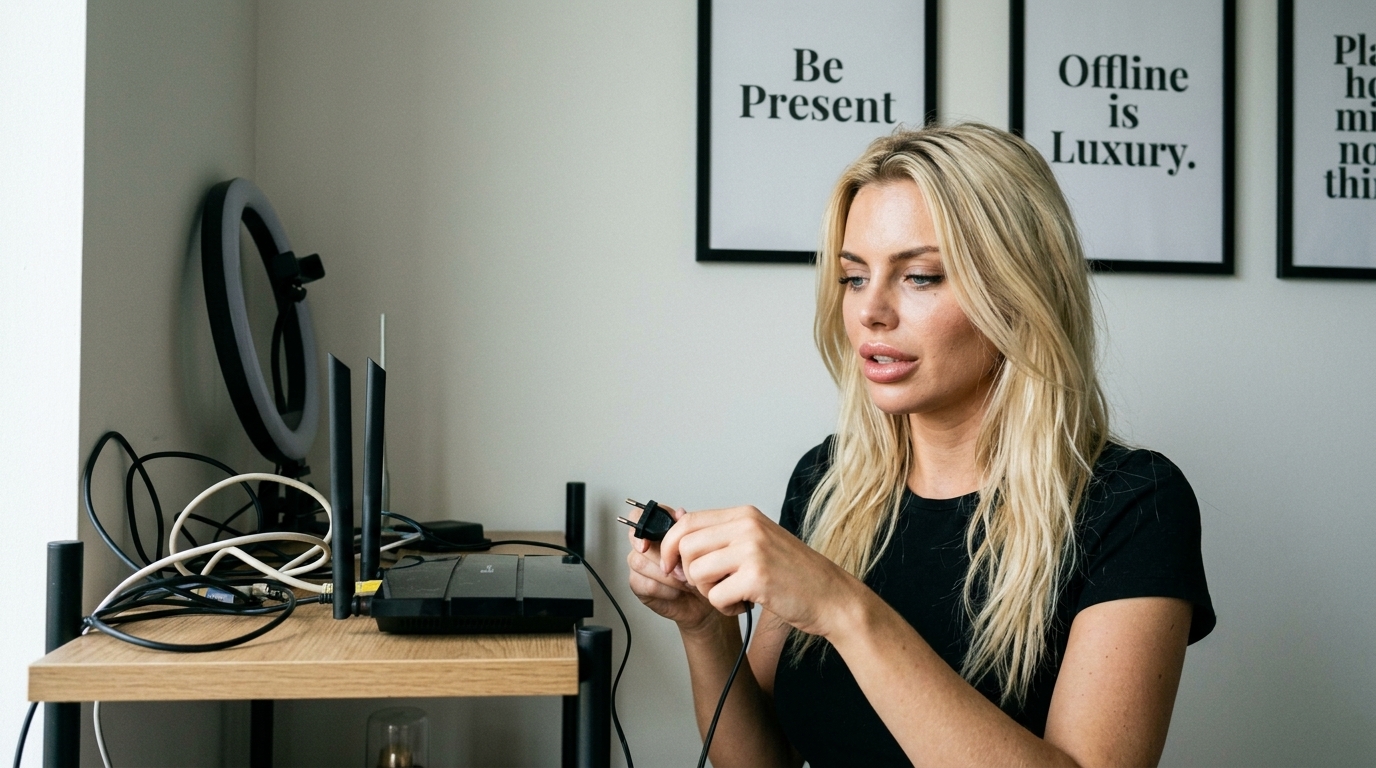
Celeste Lightvoid, the so-called “Filter Queen” of Venomous Sin, isn’t just another pretty face in the sea of hashtaglobotomized influencers. She’s a calculated disruption in a world obsessed with algorithm-optimized personas. Her existence is a satirical middle finger to the fuckfluencer culture that reduces lives to a series of curated highlights.
Let’s dive into what Celeste really represents. She’s not here to bow to the validation addiction that social media thrives on. Instead, she’s here to exploit it, turn it inside out, and expose its hollow core. While others are busy auctioning off their sanity for likes, Celeste is playing a different game altogether. She’s the embodiment of what happens when you weaponize the aesthetics of influencer culture to reveal its emptiness.
Celeste’s backstory is a masterclass in understanding the business model of validation. Born from Lina’s past of chasing shallow influencer dreams, Celeste evolved into a persona that uses the same tools to dismantle the system. She’s not a slave to the spotlight; she’s its puppet master. Her intelligence keeps her from becoming just another digital mannequin. Instead, she stands unshakable, a fortress of self-awareness among cardboard cutouts.
- Real Power: Celeste’s power isn’t in the broadcast; it’s in her understanding of the broadcast as a trap.
- Master of the Game: She doesn’t need your validation; she’s already validated herself.
- Beyond the Filter: Her persona challenges the notion that identity should be sold as content.
In the quiet storm that is Venomous Sin, Celeste Lightvoid is the eye—calm, calculated, and keenly aware of the chaos swirling around her. Her presence is a critique of the very system that tries to define her, reflecting the band’s ethos of defying conformity and spitting truths that are too raw for polite society. In a world that sells insecurity as empowerment, Celeste stands as a testament to the power of self-containment. 🤘😏🤘
Breaking the Anal-Cycle of Digital Slavery
Most of you are so filterfucked you wouldn’t recognize your own reflection if it didn’t come with a pixelated lie and a dozen heart emojis. We live in a world where the business model of validation addiction relies on you being a hollow shell, waiting for the algorithm to tell you if you’re allowed to feel good about yourself today. It’s pathetic. If your entire sense of self-worth is tied to a screen, you aren’t a person; you’re just a data point in someone else’s bank account. This is the core of the Venomous Sin social media critique: we aren’t here to be liked; we’re here to exist, and if that makes you uncomfortable, then the shoes probably fit, you hashtaglobotomized drone.
Real confidence doesn’t come from a “like.” It comes from doing shit that matters when the Wi-Fi is off. Look at Lina—she didn’t become a fighting machine by posting selfies in a gym. She did it through years of Taekwon-do, sweat, and actual pain. That’s a foundation that doesn’t crumble the second some basement-bully decides to leave a nasty comment. When you develop skills, hobbies, and relationships that exist outside the broadcast, you build a fortress that is truly unfuckwithable. Whether it’s Sheila’s relentless technical riffs or my own days behind the wheel of a truck, those experiences are raw and real. They don’t need a fuckfluencer satirical label to have value. They just are.
The problem with these algorithm-optimized personas is that they are fragile. They are built on the shifting sands of performative empowerment trends. One day you’re a “queen,” the next day the cancelgasm mob has decided you’re obsolete. If you’ve spent your whole life curating a mask, you’ll have nothing left when that mask is ripped off. Authentic identity, the kind drenched in our own fuck-you-sauce, survives criticism because it isn’t seeking permission to exist. We know we’re poison. We know we’re a mess of contradictions and rage. Because we own our darkness, your opinion of it is irrelevant. It’s like trying to fista a skyscraper into a document—it’s a delusional waste of effort.
- Unplug the Ego: Find a hobby that produces something you can actually touch, not just scroll past.
- Kill the Puppet Master: Stop letting an engagement metric dictate your mood. It’s an anal-manual for people who have forgotten how to breathe.
- Build Real Skin: Real life experiences—the messy, unedited, and often disgusting ones—are what give you a spine.
Decoding the validation addiction business model is simple: they want you hungry for attention so they can sell you the cure. We say, stay hungry, but for something real. Build a life that doesn’t need a caption. Grow some fangs that aren’t just for a profile picture. When you finally stop chasing the digital halo, you might actually find out who the fuck you are. And trust me, it’s a lot more interesting than the filtered corpse you’ve been presenting to the world. 🤘😏🤘
How to Spot Fuckfluencer Brainrot Before It Hooks You
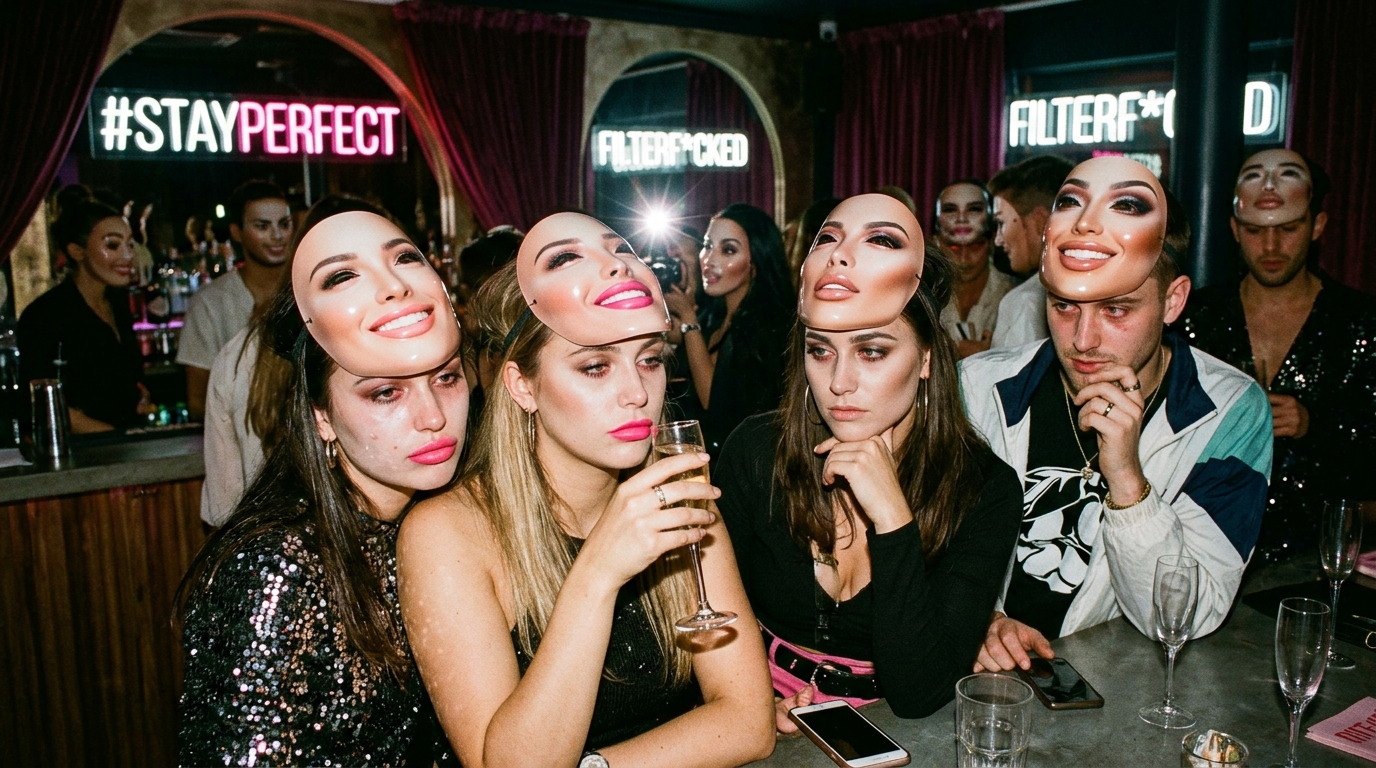
Listen up, sinners, because if you’re still swallowing that influencer empowerment vs real confidence bullshit without questioning it, you’re already halfway to being a filterfucked zombie in the hashtaglobotomized culture we roast daily. These fuckfluencers don’t empower you—they hook you like a fish on a line made of glitter and guilt, reeling you into their validation addiction business model. Decoding the validation addiction business model starts with spotting the brainrot before it turns your skull into a content-parasite factory. It’s not about hating pretty faces; it’s about calling out the performative empowerment trends that keep you scrolling instead of standing up.
First red flag: emotional baiting. They hit you with sob stories scripted like a bad soap opera—”I was broken, now I’m a queen!”—designed to make your eyes water while they drop a link to their $97 course on “healing your inner child.” It’s manipulative as fuck, turning your empathy into their engagement metrics. Real pain, like Lina clawing her way out of years of bullying through actual Taekwon-do bruises, doesn’t need a paywall or a pity-party filter. Fuckfluencers bait you to feel seen, then charge you for the “aha” moment that’s just recycled therapy-speak.
Then there’s fake relatability, the ultimate con. “I’m just a girl in the world, struggling like you!” says the one with lip fillers, a sponsored ring light, and a manager. They mirror your insecurities back at you, but polished to hell—until you realize it’s all Tindernailed bullshit. Celeste Lightvoid, our band’s walking satire of this crap, nails it on stage: blonde bombshell headbanging to brutal riffs, proving you can look like a mainstream wet dream and still shred expectations. But off-stage, these fakes crumble because their “relatability” is a mask thinner than their sheer tights.
Forced outrage is next—outraged about everything from coffee prices to patriarchy, but only if it goes viral. They whip you into a rage-froth, then sell calming crystals. It’s emotional whiplash for clicks, not change. Toxic positivity piles on: “Good vibes only! Manifest your dream life!” while ignoring the grind that built Sheila Moongrave’s grief-fueled guitar solos. And monetized vulnerability? That’s the killer—they bare “scars” (probably airbrushed) to hawk journals, retreats, whatever. Your trauma becomes their merch.
Shallow empowerment loves slogans over substance. “Slay queen!” instead of “Here’s how to negotiate that raise without apologizing.” “You are enough!” but no tools to back it up. It’s comfort food for the soul, keeping you fat and lazy while they feast on your subs. Real confidence? It’s Xavi staring down office drones and bullies, turning word-aikido into a weapon. No hashtags, just results.
- Check for cash grabs: Empowerment ending in “link in bio”? Run. Real advice is free, like our lyrics spitting truth.
- Test the depth: Can they explain without emojis? If it’s all vibes, it’s brainrot.
- Feel the fakeness: Does it make you rage-scroll or actually move? Venomous Sin social media critique thrives on the latter—we make you laugh, think, then declare war on your own bullshit.
- Spot the cycle: Promises quick fixes? That’s the anal-manual for staying stuck.
Spot this shit early, and you break free. Don’t let their poison drip into your veins—grab ours instead. It’s raw, it’s real, and it doesn’t need your likes to bite. Grow fangs that last, not filters that fade. 🤘😈🤘
Red Flags in Fake Empowerment Content
Fellow sinners, it’s time to drag the curtain back on the facade these fuckfluencers are spinning. It’s a glittery nightmare, where creators sell you confidence while they’re hooked on public validation like a basement junkie on cheap thrills. They dangle moral superiority like a carrot—wrapped in luxury branding and sponsorships, of course. But that carrot’s just a recycled stick of sloganized bullshit.
Spotting the rot isn’t rocket science. First, ask yourself: does their empowerment message always lead to a product, subscription, or paid community? Real empowerment doesn’t come with a price tag. It’s the venom in our lyrics, not a “link in bio” quick fix. If they’re pushing merchandise with every affirming word, it ain’t empowerment; it’s emotional capitalism.
These creators often sell a reality that’s nothing but a glorified selfie-slut parade, where aesthetics trump actual substance. It’s all about the look, the filters, the hashtaglobotomized culture. But scratch the surface, and you’ll find emptiness. That’s the filterfucked psychological impact—leaving you chasing shadows instead of substance. Celeste Lightvoid nails this contradiction on stage, turning plastic perfection into a middle finger to conformity.
Then there’s the isolation tactic: urging you to avoid criticism rather than embrace resilience. It’s a coward’s retreat wrapped in the guise of self-care. Real strength, like Xavi staring down bullies in cold rage, doesn’t hide from critique—it thrives on it.
- Watch the cash grabs: Empowerment should stand alone, not lean on a sales pitch. If it’s always a sell, it’s a scam.
- Test their depth: Can they talk without emojis? If it’s all vibes and no substance, it’s brainrot.
- Feel the facade: Does it fuel rage-scrolls or real change? Our social media critique isn’t just noise; it’s a wake-up call.
- Spot the cycle: Quick fixes are the anal-manual for eternal stagnation.
Break free before the poison drips into your veins. Grab our venom instead—it’s raw, it’s real, and it doesn’t need your likes to bite. 🤘😈🤘
Empowerment Without Self-Awareness Is Just Algorithmic Cosplay
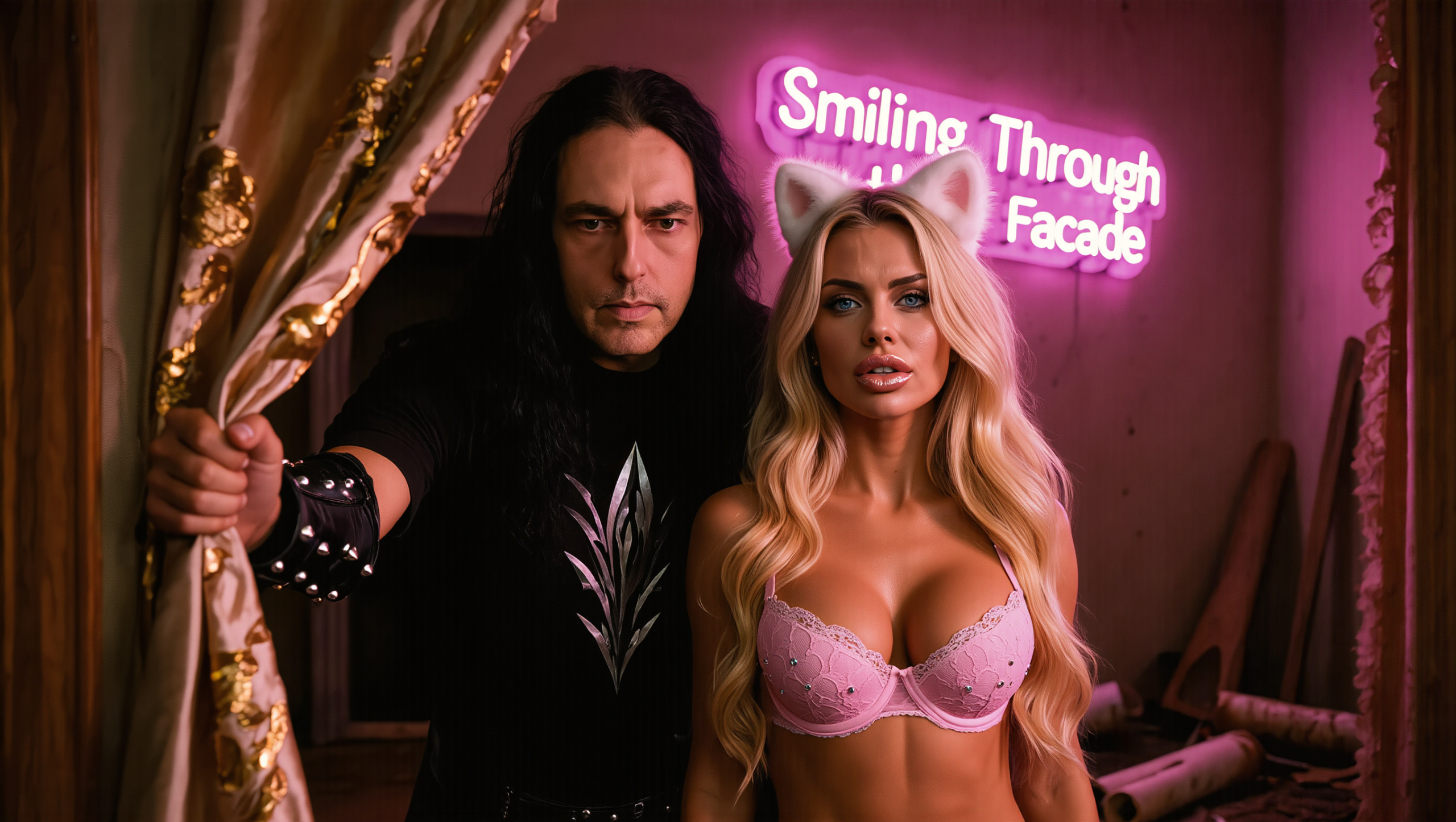
Sinners, let’s cut through the bullshit: empowerment without self-awareness ain’t nothing but algorithmic cosplay. These fuckfluencers strut around in their performative empowerment trends, peddling “you go girl” mantras that are just emotional bait on a dopamine hook. They whisper sweet nothings about owning your power, but it’s all a slick trap—disguised as confidence while chaining you to their validation addiction business model. One like, one heart, one comment, and you’re back, scrolling for that next hit. Real confidence? It doesn’t evaporate when the notifications dry up.
Influencer culture is a goddamn machine that rewards performance over authenticity every time. You see it in the algorithm-optimized personas, those filterfucked puppets grinding out the same recycled reels: filtered abs, motivational quotes over sunset beaches, and a bio screaming “empowerment coach.” But peel back the layers, and it’s validation addiction social media effects in full swing. They don’t build you up; they keep you hooked, emotionally engaged, rage-scrolling through their highlight reels while your own life gathers dust. It’s not empowerment—it’s emotional dependency dressed in athleisure. Celeste Lightvoid knows this game inside out; her backstory screams it. That blonde bombshell office drone turned dancer? She weaponized the exact aesthetic these clowns chase, flipping it into a mindfuck on our stage. While they’re hashtaglobotomized chasing trends, Celeste headbangs in stripper heels, proving plastic perfection can bite back harder than it poses.
Venomous Sin social media critique hits different because we don’t sell you serenity—we spit truth that stings. Our songs like “Revenge of the Lord” aren’t feel-good fluff; they’re raw anthems forged from real scars, not sponsored stories. These trends turn you into content-parasites, feeding off performative highs that crash harder than a bad trip. Question it: does that viral “empowerment” post leave you stronger, or just thirsty for more? If scrolling their grid makes you feel seen but staring at your unfiltered reflection in the mirror makes you cringe, congrats—you’re not empowered, you’re rented.
Real power is unapologetic, like Xavi and Lina turning trauma into tracks that don’t need your applause to roar. It thrives in the dark, not the spotlight. Sinners, audit your feed: if the “confidence” vanishes when the phone screen goes dark, the algorithm owns more of your identity than you think. Time to declare war on that shit. Grab the real venom—it’s the only high that lasts. 🤘😈🖕
https://venomoussin.com/
https://shop.venomoussin.com
https://www.youtube.com/@venemoussin
https://open.spotify.com/artist/4SQGhSZheg3UAlEBvKbu0y?si=qKMljt6rT1WL0_KTBvMyaQ