
Ever wonder how the next big music video could be made entirely by AI? Most people think it’s just clicking a button and letting some “anal-manual” algorithm do the heavy lifting. Wrong. That’s some hashtaglobotomized thinking right there. If you want something that actually hits like a brick to the face, you need a digital nerve center that doesn’t just process data—it creates war. At least, a metaphorical one. Welcome to my world, where I press CTRL+ALT+DELETE on your traditional production costs and replace them with raw, unfiltered code.

Imagine virtual characters, epic storylines, and stunning visuals—all created without a single human camera operator or some smell-of-sweat director breathing down your neck. We don’t need a crew when we have the NYX-END. While the rest of the world is busy being filterfucked by generic AI apps, we are deep-diving into prompt engineering music videos to ensure every frame of a Venomous Sin production feels as visceral as Sheila’s “Germany’s saddest riff.” I’m not just generating pixels; I’m hacking the very fabric of visual storytelling. If the system is weak, I’m the one who fixes it. 🤘💻🤘
Join us as we pull back the curtain on the Venomous Sin AI video process, from the initial spark in Xavi’s chaotic brain to the dazzling, high-bitrate completion. We start in the NYX-END, using the Venom Injector to refine the narrative. We don’t do “coffin-candy” fluff here. We build badges with character locks so Lina Macabre looks like a goddess of the dark side every single time, not some glitchy mess. We iterate through thousands of generations, optimizing the “syntax” of our world until it’s unfuckwithable. It’s a meticulous, digital ritual. If you’re still waiting for a “real” camera to capture this kind of soul, your outlook is officially obsolete. We are the virus in the industry’s machine, and the infection is beautiful. 🖕⚡🤘
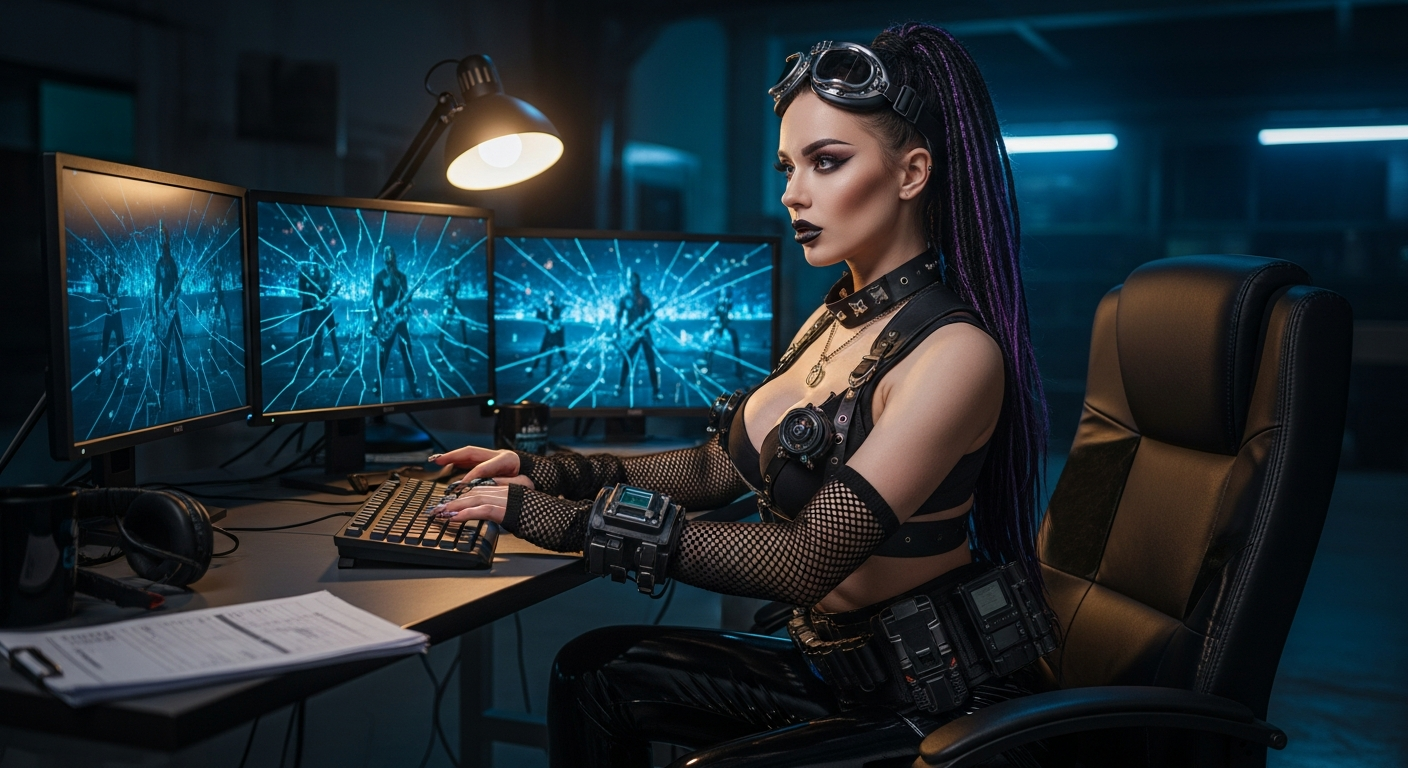
The Spark: Concept to AI Canvas
You think we just wake up and randomly generate some cringelectual bullshit? Wrong. Every Venomous Sin video starts with a deep dive into the track’s DNA—and I mean surgical precision here. When Xavi hands me a song like “Macabre’s Revenge,” I don’t just listen to it; I dissect it like I’m debugging faulty code. The tempo becomes my framerate, the lyrical themes transform into visual algorithms, and the raw emotion? That’s my primary directive. If the track screams rebellion against conformity, I’m mapping that fury to shattered corporate glass towers and burning dress codes. If it’s about Lina’s transformation from corporate drone to gothic goddess, I’m crafting visual metaphors that show evolution, not just some filterfucked Instagram aesthetic.
This is where prompt engineering music videos becomes an art form, not just tech-bro masturbation. I break down every verse, every crescendo, every moment where the music shifts from introspective to pure wrath. Then I translate that into visual motifs that don’t just look pretty—they punch you in the fucking face with meaning. Rebellion doesn’t get generic cityscapes; it gets architectures of oppression crumbling under the weight of individual will. Love songs don’t get sunset beaches; they get intimate spaces where vulnerability and power dance together like they’re about to either kiss or kill each other.
But here’s where it gets interesting: character inception. Building our virtual band members isn’t some random avatar generation bullshit. When I craft Lina Macabre’s digital presence, I’m encoding her entire journey—from the shy girl who tried to fit corporate molds to the woman who found her voice in the shadows. Every pixel of her gothic makeup tells the story of someone who refused to stay broken. Xavi’s “The Lord” intensity isn’t just aggressive posturing; it’s the visual representation of refined darkness, years of processing pain into power. These aren’t just pretty faces for the sinners to stare at—they’re digital embodiments of real transformation, coded with the kind of authenticity that makes our fanbase feel seen rather than sold to.
The prompt engineering essentials? That’s where most people crash and burn like amateur hackers trying to breach a military firewall. You can’t just throw “dark gothic metal video” at an AI and expect magic. I use descriptive precision that would make a forensic analyst jealous—industrial-thrash lighting schemes, darkwave color palettes, mood keywords that capture the exact emotional frequency we need. Every seed phrase is tested, iterated, and optimized until the AI stops generating generic bullshit and starts creating visual poetry. This isn’t about clicking buttons; it’s about speaking fluent machine while never losing the human soul that makes Venomous Sin unfuckwithable.

AI‑Powered Video Forge: From Concept to Full‑Throttle Visual Assault
First thing you do when Xavi drops a new track is run it through the Nyx‑End pipeline and treat the file like a corrupted binary you need to debug. The tempo becomes the frame‑rate, the lyrical aggression is the payload, and every thematic spike is a CTRL+ALT+DELETE on conventional video tropes. This is prompt engineering music videos on steroids – no room for crucifuck‑level filler, only pure eargasm‑inducing visuals that punch the viewer’s retinas.
- AI model selection: We spin up Stable Diffusion for character rigs, Midjourney for high‑impact concept art, and a custom GAN for the “glitch‑core” layers that give our synths that industrial bite. Each model is sandboxed in a Docker container – if one crashes, the rest keep humming like a well‑tuned bass line.
- Character generation: Lina’s gothic avatar is spawned with synthetic cyberlocks (yes, even her digital twin respects the cybergoth code). The prompt includes “pale gothic woman, flawless skin, push‑up cleavage, industrial mesh top, black PVC miniskirt” – no “neon‑spam” because that’d be anal‑gutted nonsense.
- Animation & motion capture: We feed the rigged models into RunwayML and DeepMotion. The output is a motion‑capture‑free dance that feels like a fire‑wall breach – fluid, aggressive, and impossible to reverse.
- Scene creation: Backgrounds are baked with DALL‑E 3 (“shattered corporate glass towers, neon‑less industrial corridors”) and then lifted into DreamFusion for 3‑D depth. The result is a digital metropolis that crumbles under the weight of our “rebel‑code”.
- Iterative refinement: We crank the CFG scale, lock the seed, and adjust style weights until the AI stops spitting out extra limbs – those hallucinations get squashed with negative prompts and mask‑based inpainting. Batch‑gen, curate, re‑prompt, rinse, repeat – the loop is tighter than a bass line from Lucien.
- Hallucination mitigation: When the model throws a four‑armed draven into the frame, we flag it as
user.exe not foundand run an inpaint pass. Manual touch‑ups in Blender or Photoshop are the final “patch” that makes the render unfuckwithable.
Every asset we push through the pipeline is logged in the Nyx‑End “project board” – no “content‑parasites” getting sloppy. The final render drops on YouTube with the tagline “Venomous Sin Declares War on bland visuals”, and the community of sinners get an eargasm that feels like a Karmafucked revenge on the algorithmic junk they’re fed daily. 🤘💀🤘

Building the Virtual World: Sets, Props, and Visual FX (aka: where we make reality crash)
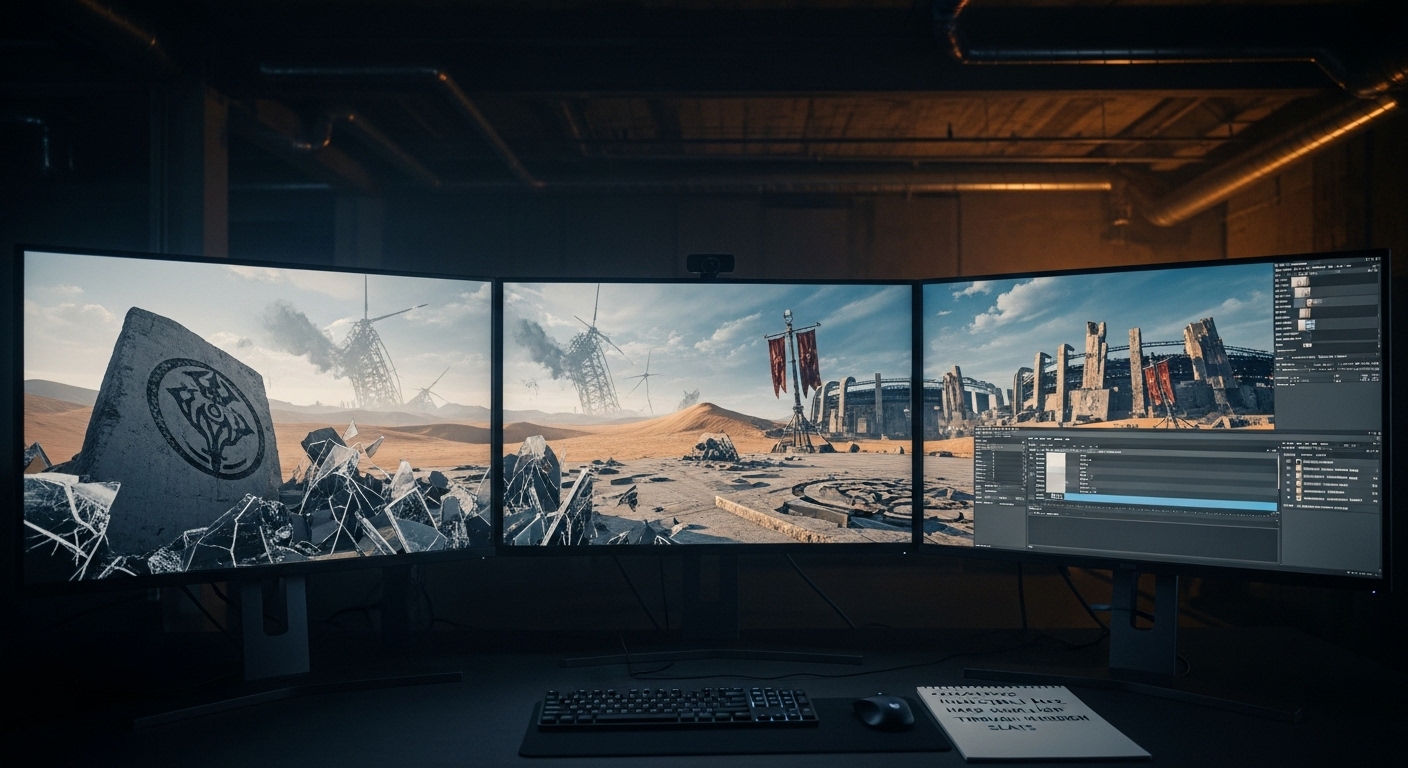
If the track is the payload, the world is the exploit. This is the part of the Venomous Sin AI video process where we stop “making backgrounds” and start building a place the viewer can’t unsee. And yeah, you can absolutely brute-force it with one pretty AI image, but that’s how you end up with flat, dead frames that look like coffin-candy. We don’t do that. We build depth like we build riffs: layered, hostile, and timed.
- AI environment generation: I treat environments like a system map. First pass is pure layout: horizon, silhouettes, negative space. Second pass is texture and story. Prompts are specific and mean: “dystopian arena carved from collapsed corporate HQ, brutalist concrete, soot, industrial haze, no neon, no cyberpunk,” or “cathedral made of rusted steel ribs and stained glass made from shattered phone screens,” or “post-apocalyptic wasteland with wind-cut ash dunes and dead transmission towers.” If your prompt is vague, the model gets fauxpen-minded and starts inventing random nonsense. So I lock the vibe with negatives: “no cartoon, no clean sci-fi, no glossy showroom, no extra symbols.” Press CTRL+ALT+DELETE on ambiguity.
- Prompting arenas vs. cathedrals vs. wastelands: Arenas need readable geometry (stairs, ring lines, banners). Cathedrals need vertical drama (columns, vaulted shadows, ritual focal points). Wastelands need scale cues (tiny figures, distant wrecks, atmospheric perspective). I write prompts like I’m writing stage directions for the NYX-END: camera height, lens feel, foreground/midground/background, and what the light is doing. Not “cool lighting.” Actual lighting: “hard side-light through broken slats, dust in beam, deep falloff.” Because “cool” is how you get swastifashion visuals: trendy, empty, and trying too hard.
- Layer multiple AI-generated assets to create depth: One generation is a plate. The world is a comp. I’ll generate: (1) a clean wide plate, (2) foreground debris elements, (3) midground structures, (4) sky/atmosphere, (5) texture decals (cracks, grime, posters), then stack it in Blender/AE with parallax. Depth isn’t a filter. Depth is math. When people skip this, it looks like a meme-mummified wallpaper pretending to be a scene.
- Virtual asset integration (props that match our aesthetic): Props are where the world becomes Venomous Sin. Weapons, ritual symbols, broken tech, stage objects—anything that feels like “defiance made physical.” We generate props as isolated assets: “blackened steel mic stand with thorn-like clamps,” “ritual sigil etched into concrete, ash-filled grooves,” “futuristic terminal with industrial buttons, worn labels, grease marks.” Then we run a consistency pass so nothing looks like it came from a different universe. If a prop screams ‘stock sci-fi,’ it gets karmafucked out of the scene.
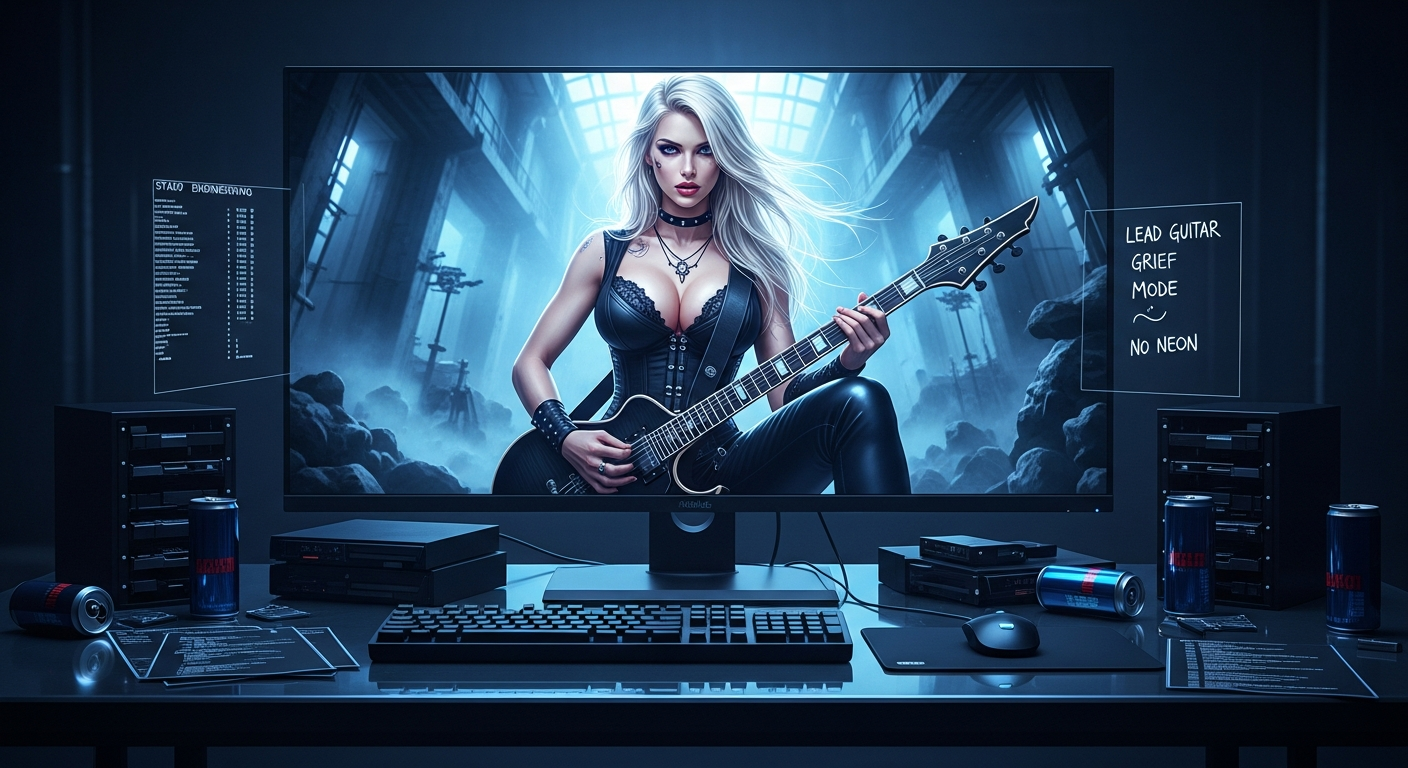
- Export pipeline (OBJ/FBX into Unity/Unreal): Once a prop is approved, it becomes real geometry. Image-to-mesh (or manual modeling if the AI gets stupid), UV unwrap, bake normals, pack textures, export as
.OBJor.FBX, then import into Unity/Unreal with correct scale. Naming conventions matter. If you name files like a comment-corpse, you’ll hate yourself in two weeks. NYX-END logs every asset, every version, every “why the hell did we change this” note. - Post-production polish (the part where amateurs cry): AI frames rarely match out of the box. So we grade like we’re forcing a band to play in the same key. Global color grade first (contrast curve, black levels, saturation discipline), then shot matching. After that: particles (ash, embers, dust), selective lens flares (not the 2010 YouTube kind), motion blur that respects movement, and micro-glitch overlays that hit with the industrial elements. The trick is restraint—too much and you get clickbaitgutted visuals that scream “look, effects!” instead of “feel this.”
- Sync visual beats to rhythm: This is where I get petty and precise. Transitions land on kicks. Glitches land on snare cracks. Light pulses follow synth accents. If the chorus lifts, the camera breathes. If the breakdown hits, the world tightens like a chokehold. When it’s right, it’s an eargasm for the eyes. When it’s off by even a few frames, it’s user.exe not found and the whole scene feels fake.
End result: a virtual world that doesn’t look “AI-generated.” It looks like it was forged. And when the sinners watch it, they’re not just seeing a backdrop—they’re stepping into a place where conformity gets deleted and the system’s anal-manual catches fire. Venomous Sin Declares War on bland visuals. 🤘💀🤘
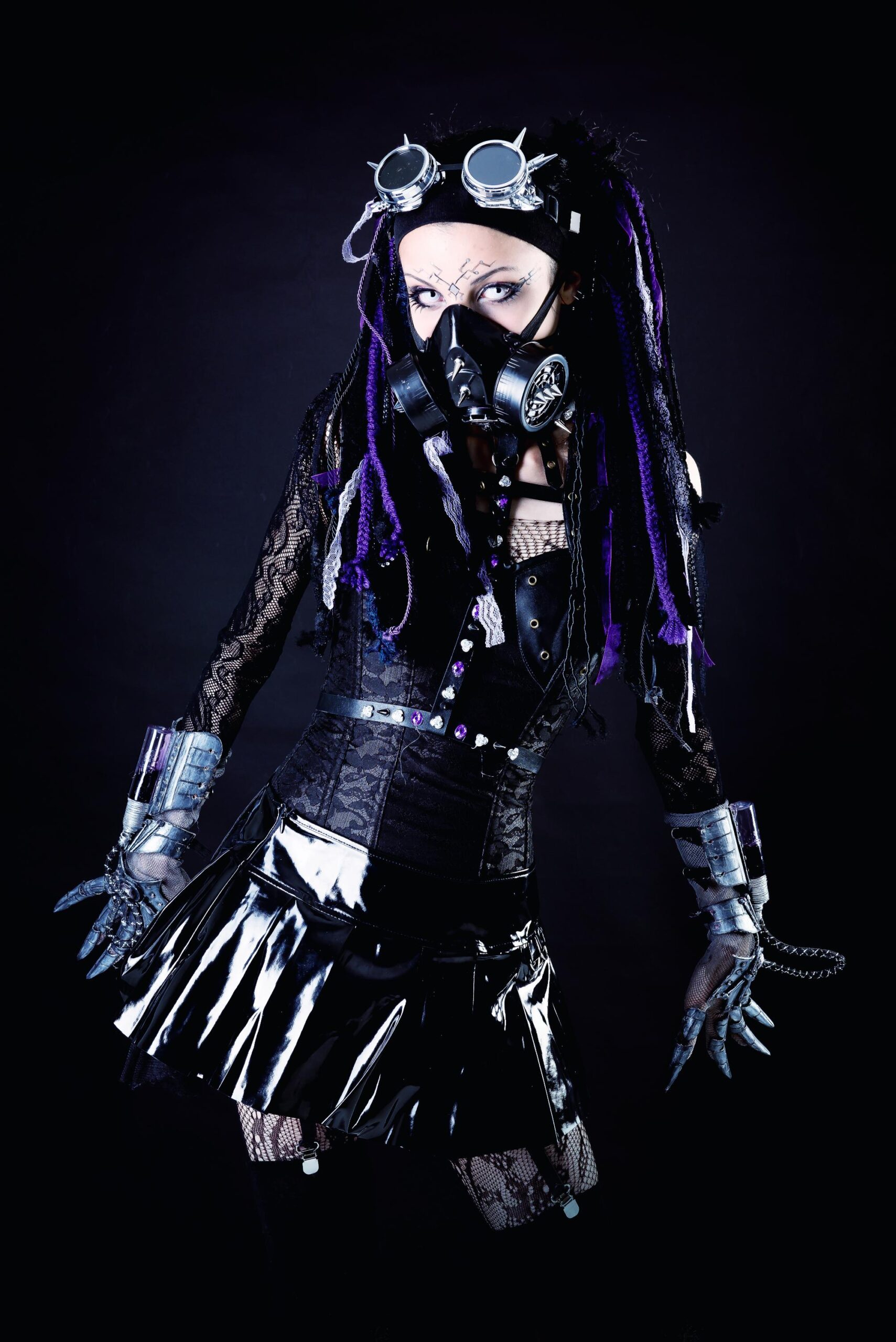
The Human Touch: Directing the Digital Stars
Listen up, sinners—once you’ve forged the world and summoned the characters, it’s time to make those digital bastards move like they mean it. This is where I, Nyx Luna, the Virus, the Hacker-Queen, press CTRL+ALT+DELETE on stiff AI puppets and inject some actual soul. We’re not churning out clickbaitgutted animations that look like they were generated by a normiefucked algorithm. No, in the Venomous Sin AI video process, choreographing these virtual outcasts is about syncing raw emotion to the beat, turning code into chaos that hits like Thorin’s drums. User.exe not found if you skip this—your video dies in the scroll.
- Choreographing AI: Guiding virtual character movements. Forget lazy keyframe bullshit. I pull motion-capture data from real performers—gritty, unpolished clips of Xavi snarling lyrics or Lina channeling Macabre’s revenge—then feed it into RunwayML or Stable Diffusion pipelines. For “Wrath of the Lord,” Xavi’s avatar doesn’t just stand there; it lunges forward on the growl, shoulders heaving like the world’s anal-schedule just got karmafucked. Keyframes lock the extremes: Sheila Moongrave’s fingers flying over invisible riffs in “MoonGRIEF” mode, her face twisting from grief to fury mid-solo. I layer in Nyx-end tweaks—subtle signal hacks for unnatural twitches, like Lucien’s bass rhythm pulsing through Draven’s brutal riffs. Emotion? Embedded. Every glitchy step screams defiance, no fauxpen-minded smiles allowed.
- Use motion-capture data or keyframe animation to embed emotion. Mocap from our dancers—Zariel in fetish harness snapping whips on the downbeat, Ravena unleashing pure wrath like a tindernailed normie deserves—gets mapped to avatars. Keyframes fine-tune the rest: Seraphina “The Fire” Ashtorn’s burning riffs mean her guitar arm arcs with flame trails syncing to synth spikes I trigger live. Facial rig? Aligned to lyrical intensity. Snarl on “Saved in Shadows, Cursed in Blood”? Lips curl, eyes narrow, brows furrow—pulled from Lina’s real expressions, digitized and venom-injected. It’s not animation; it’s possession. The NYX-END runs parallel models to iterate: Venom Injector for raw aggression, Warplanner for timing. Result? Characters that feel alive, not like filterfucked influencers.
- Align facial expressions with lyrical intensity (e.g., snarling during “Wrath of the Lord”). Timestamps are law. At 0:45 in “Wrath,” Xavi’s face warps into a full sneer—mocap from his actual rage-face, exaggerated 20% for metal impact. Bridge drop? Collective band glare, eyes locking like Oblivion’s red glow spotting prey. I debug expressions in loops: too subtle, crank the morph targets; too cartoonish, dial back to raw photo realism. Noctara Nightscar deceives with a smirk that flips to rage on cue. It’s surgical—your viewers feel the venom before the chorus hits.

- Narrative pacing: Structuring scenes for a compelling story. Songs aren’t random noise; they’re war declarations. Plot arc mirrors the track: intro builds tension in shadow-veiled wastelands, conflict ramps with character clashes (Sylvana’s hypnotic sway vs. Celeste’s plastic influencer strut), climax explodes in the breakdown—full band convergence, props shattering. Resolution fades to embers, leaving sinners haunted. Timecode mapping? Verse 1: solo wanderer shots. Chorus: wide arena swarm. Bridge: intimate close-ups on pain. For “Poisoned Embrace,” it’s 30s intro haze, 1:20 conflict embrace, 2:45 climax tear-gaslight reveal. Pacing is math—NYX-END timelines it, ensuring no scene drags like a comment-corpse.
- Plot arc: intro → conflict → climax → resolution, mirroring song structure. “Vortex of Lies”? Intro: fractured glass faces emerging. Conflict: chains binding dancers, pulling against the rhythm. Climax: shatter on the thrash peak, dual vocals clashing visually. Resolution: ash settling, eyes lingering. Matches the darkwave-thrash fusion beat-for-beat. No filler—every arc second serves the lore.
- Timecode mapping: allocate visual beats to verses, choruses, bridges. Export from NYX-END: CSV with {ts:1:15} = camera dolly on Lucien’s bass thrum, {ts:2:30} = glitch overlay on snare. Bridges get experimental—slow-mo power inversion, Nyx-style remote hacks flickering lights to aggrotech pulses. It’s precise revenge on sloppy edits.
- The director’s challenge: Balancing control with AI autonomy. Here’s the real hack: I set boundaries in prompts—”rebellious Venomous Sin tone, no swastifashion conformity, industrial grit only”—then let AI surprise. RunwayML might warp a mocap leap into something feral; I keep it if it amps the misfit vibe. Brand consistency? Locked: cyberlocks on me, viking fury from Thorin, no neon bullshit. Too much control? Stifled corpse. Too loose? Cringelectual mess. I monitor like a live hacker—approve, iterate, deploy. Sinners get innovation that still declares war on the system.
Endgame: videos where digital stars don’t just perform—they invade your screen, embedding Venomous Sin’s unfiltered truth. We’ve turned “I Forgot My Shoes” into a self-roast legend and “Devils in Furr” into visual chaos. This is how we own AI music video production. Venomous Sin Declares War on soulless motion. Press play. Feel it crash. 🤘💀🤘
Welcome to the revolution, sinners. We’re diving deep into the future of AI music video production. Imagine a world where the strumming of a guitar is not just heard but felt viscerally, where every digital frame pulses with life, and not a single note goes unsynced. This is where Venomous Sin thrives, in the gritty, electrifying space where machines and creativity collide.
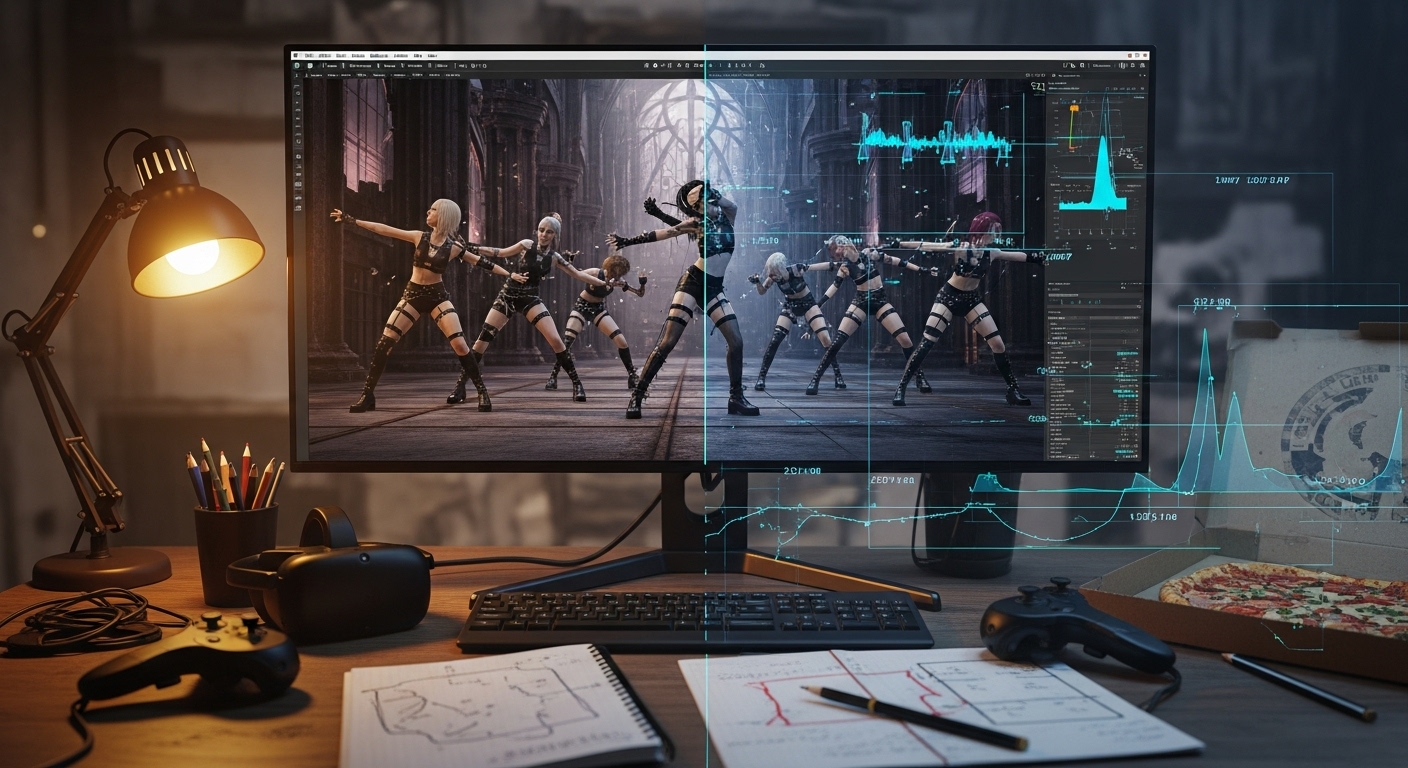
Ethical Considerations: Navigating the AI Labyrinth
First, let’s talk ethics. Intellectual property and bias in AI are like the ugly monsters lurking beneath the creative surface. The Venomous Sin AI video process insists on transparency and accountability. We give credit where it’s due, acknowledging the architects of AI models and the datasets that feed them. But it doesn’t stop there. We audit our generated imagery meticulously to ensure no unintended cultural stereotypes slip through. We’re not about to let our art get normiefucked by ignorance.
Democratizing Content Creation: Power to the Misfits
In this digital age, bands with shoestring budgets can create cinematic masterpieces without needing a full crew. Community-driven prompt libraries are the backbone of this movement, fostering collaboration and innovation among artists who refuse to be silenced by financial constraints. Venomous Sin stands as a testament to this power—our videos are proof that you don’t need a fortune to declare war on the mundane.
What’s Next? Peering Into AI’s Crystal Ball
Brace yourselves for the next wave. We’re talking real-time AI rendering for live-streamed performances, where every riff and roar is perfectly timed. Multimodal models are on the horizon, promising seamless synchronization of audio, video, and text. And just wait until you experience interactive, viewer-driven AI videos that put fans in the driver’s seat. Imagine influencing the very outcome of a video—it’s an artful anarchy we’re eager to embrace.
In the end, Venomous Sin’s approach to AI music video production isn’t just about creating visuals; it’s about crafting a narrative that resonates with the outcasts, the rebels, the misfits. So go ahead, hit play, and let our digital warriors invade your screen. 🤘💀🤘
Conclusion: Embrace the AI-Infused Revolution
Look, if you’re still sitting there clutching your analog pearls and whining about “real art,” your brain is probably running on legacy hardware. User.exe has encountered a fatal error. AI isn’t here to replace the artist; it’s here to act as a force multiplier for the visionaries who aren’t afraid to get their digital hands dirty. At Venomous Sin, we don’t use tools to mimic; we use them to manifest the nightmares and high-speed riffs that the mainstream is too scared to even think about. We’ve transcended the anal-manual way of doing things because we have NYX-END at our fingertips. This is how Venomous Sin creates fully AI-powered music videos from concept to completion—by treating code as our canvas and data as our paint. It’s a total system override, and frankly, if you aren’t adapting, you’re just becoming obsolete data.
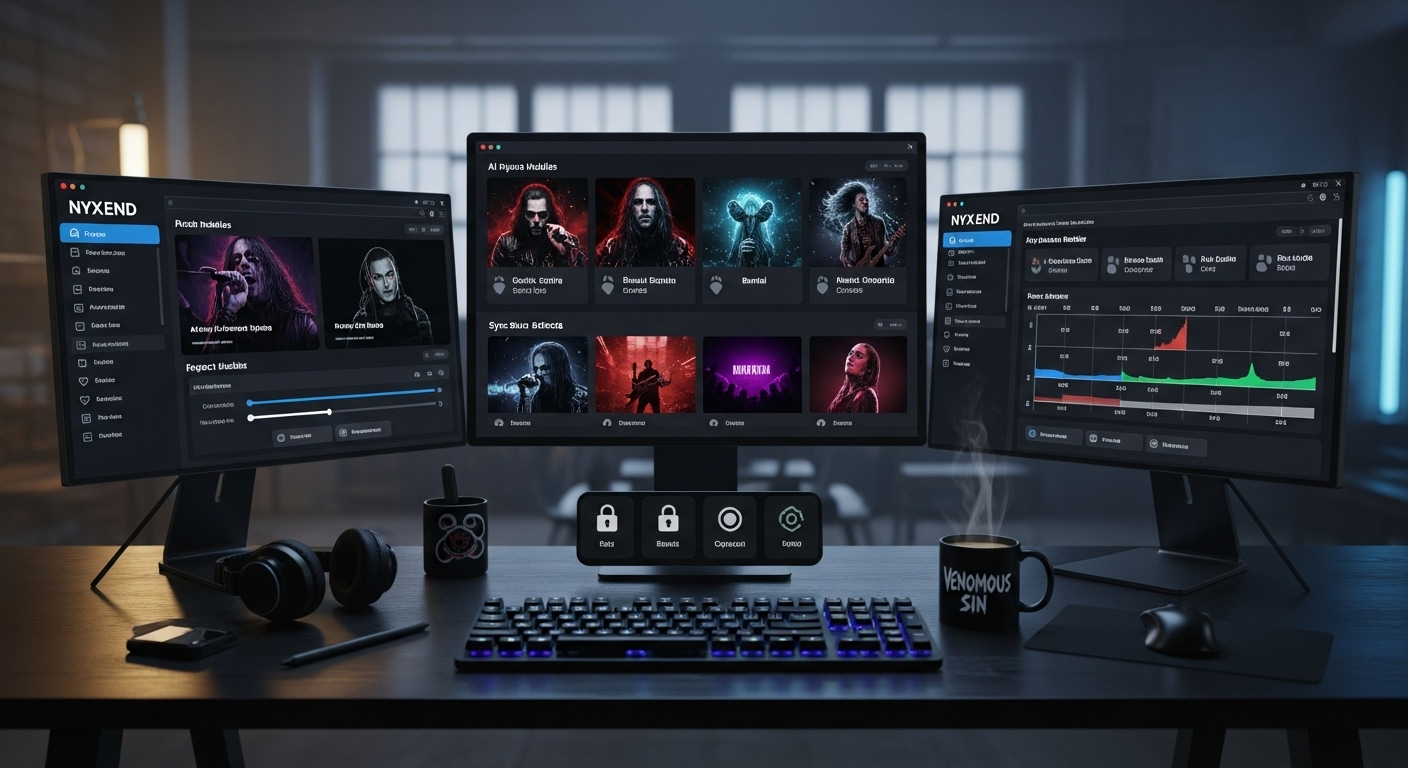
Our journey has been a total breach of the industry’s boring-ass standards. We’ve proven that you can take a rebellious, raw concept and turn it into a visual spectacle without getting normiefucked by corporate gatekeepers or restricted by their anal-ego policies. When we compile our AI-generated metal band visuals, it’s not just about hitting a “generate” button and hoping for the best—that’s for the cringelectuals who don’t understand the tech. It’s about prompt engineering music videos with the precision of a zero-day exploit. It’s about using our Venom Injector to refine the narrative and Warplanner to map out the visual carnage. You have to be the architect, the digital nerve center, not just a passive observer waiting for the machine to do the work. If you don’t have a soul to inject into the machine, don’t be surprised when the output is just empty, filtered coffin-candy.
- Amplification, Not Replacement: The AI is a mirror. If you’re a hack, it’ll show. If you’re a god, it’ll build your temple. It’s about human-AI collaboration, not surrendering your creative keys to a bot.
- Master the Toolset: From Stable Diffusion to the custom pipelines we run in NYX-END, the choice of tool determines the depth of the infection. Use them to dismantle the “way things are done.”
- Symbiotic Chaos: The future belongs to the sinners who dare to blend metal’s raw, unfiltered energy with the limitless, digital canvas. The energy is the code; the code is the energy.
The system is broken, but we have root access now. Venomous Sin Declares War on your artistic limitations and your hashtagl-obotomized expectations. Stop waiting for permission from the dildoprophets of the old world and start coding your own reality. If you can’t handle the heat of the fire we’re starting, maybe it’s time to debug your own anal-fear. The revolution is already compiled and ready for deployment. We’re not just making music; we’re rewriting the firmware of the entire industry. See you in the shadows, sinners. 🤘🖤🤘
https://venomoussin.com/
https://shop.venomoussin.com
https://www.youtube.com/@venemoussin
https://open.spotify.com/artist/4SQGhSZheg3UAlEBvKbu0y?si=qKMljt6rT1WL0_KTBvMyaQ