 Let’s get rectal-practical here. Metal isn’t dying. It’s mutating. It’s shedding skin and growing new fucking limbs. The spine is the same – that raw, defiant, unfuckwithable energy that made you pick up a guitar or scream into a pillow when you were fifteen. But the body is evolving. New scenes are bubbling up from the underground like toxic geysers. New tools, like our own NYX-END system, are letting people like us – who couldn’t play a live show in real life – give our lyrics a voice. New hybrids are being forged in digital crucibles and sweaty basement studios.
What people actually mean when they say “metal is dead” is that *their* metal is dead. Their nostalgia bias has them stuck in a fucking time capsule. They’re waiting for another “Master of Puppets” to drop from the sky, ignoring the fact that the landscape has fractured into a thousand brilliant, niche shards. The underground isn’t some hidden cave anymore; it’s a global network of sinners connected by algorithms and sheer fucking will. Streaming didn’t kill metal; it just removed the gatekeepers. Now you have to actually *look* for what you love, instead of letting some dildoprophet at a record label curate your life.
The benefit of tearing down this anal-tradition of thought? You stop being a content-parasite, mindlessly consuming what the algorithm shoves at you. You learn to hunt. You find the living, breathing modern metal that actually fits your taste – whether it’s the industrial-aggrotech fusion we hammer out, the blackgaze sweeping across Europe, or the thrash-revival tearing up South America. The genre isn’t a monolith; it’s a fucking ecosystem. And ecosystems thrive on change, not on fossilized opinions.
So next time you hear that tired-ass phrase, remember: the only thing that’s dead is the perspective of the person saying it. The music is more alive than ever. It’s just waiting for you to dig past the headlines and find it 🤘😏🤘.

What People Really Mean When They Say “Metal Is Dead”
Every time someone says “metal is dead,” what they’re really handing you is a bundle of personal frustrations disguised as objective truth. It sounds dramatic, intellectual even, but most of the time it’s just nostalgia wearing corpse paint and pretending to be analysis. The phrase survives because it’s emotionally convenient. It’s easier to declare an entire genre dead than admit you stopped digging for new music fifteen years ago.
The psychological trap is brutal because it feels legitimate. The bands that raised you become welded into your nervous system. Maybe it was Slayer, In Flames, Type O Negative, Children of Bodom, Fear Factory, Emperor, whatever the hell cracked your skull open at sixteen. Those records didn’t just entertain you. They arrived during identity formation. First heartbreak. First rage. First rebellion against your anal-manual upbringing. So now every new band gets compared against memories that were chemically enhanced by youth itself. Of course modern releases feel different. They didn’t raise you. They met you after life already kicked your teeth in.
Want a painful self-test? Open your playlist. If ninety percent of it comes from the same decade, you are not tracking modern metal evolution. You are tracking emotional comfort. That’s not evil. We all do it. But don’t confuse your own listening habits with the health of an entire genre.
Another reason this tired funeral speech keeps crawling back from the grave is visibility bias. Metal isn’t built around Top 40 validation anymore, and honestly, good fucking riddance. Charts measure radio cycles, playlist politics, and what advertisers think sounds safe enough to play between perfume commercials. Underground metal scenes measure something completely different:
- Tour attendance
- Bandcamp releases
- Festival growth
- Subgenre experimentation
- Dedicated fan communities
- Global niche scenes connecting online
That ecosystem is alive as hell. You just won’t see it sitting next to corporate pop on daytime television. Metal has always thrived in corners. Small venues. Discord servers. Independent labels. Weirdos building scenes from pure obsession. The underground exists partly because people inside it don’t want to become hashtag-haloed entertainment sludge for mass-market approval. Subculture identity matters. That friction matters.
And then we arrive at the gatekeeping bullshit. The moment someone says “metal stopped being metal after…” you can practically hear the museum doors locking shut. If metal is only valid when it sounds exactly like one era, one production style, one regional movement, then congratulations — you didn’t preserve a genre. You taxidermied it.
Purity tests shrink music until it suffocates itself. Metal genre hybridization is not some infection killing authenticity. It’s literally how the genre survived every decade. Thrash mutated from heavy metal. Industrial fused machines into aggression. Metalcore exploded because hardcore collided with metal. Blackgaze exists because someone decided atmosphere and distortion could fuck each other creatively. Even AI in metal music is part of this same evolutionary pressure. People like us use systems like NYX-END because technology finally lets outsiders give shape to ideas they carried for years without needing a million-dollar studio or conservatory training.
You can still have standards without becoming a gatekeeping cringelectual screaming “poser” at everyone who experiments. There’s a difference between protecting quality and worshipping stagnation. One keeps the genre sharp. The other turns people into bitter comment-corpses haunting YouTube sections like failed prophets of a past that already had its moment.
Metal was never supposed to stay comfortable. The entire spirit of it was rebellion against comfort in the first place. So when somebody declares the genre dead because kids today mix synths, industrial noise, blackened riffs, AI workflows, deathcore breakdowns, goth aesthetics, or electronic textures into the chaos… maybe the problem isn’t the genre. Maybe the problem is they stopped evolving while the music kept moving 🤘🔥🤘
Metal Isn’t Dead — It’s Diversified (The Genre Tree Got More Branches)
If you’re looking for “proof” that metal is alive, stop searching for one giant mainstream lane where everyone agrees on the same five headliners. That monoculture era is over, and honestly, it deserved to die. The center didn’t collapse because metal got weak — it fractured because it got too fertile. Now you’ve got a hundred micro-scenes growing in parallel: local venues where the same fifty lunatics keep the lights on, and online ecosystems where a band from a basement in Malmö can collide with a producer in São Paulo and a vocalist in Warsaw. That’s modern metal evolution in practice: not one throne, but a swarm.
This is why the “metal is dead” crowd always sounds like they’re mourning the loss of a shopping mall. They don’t miss the music. They miss the convenience. One magazine. One festival poster. One pipeline of validation. But the moment metal stopped needing permission from gatekeepers and label suits, it became harder to track — and easier to create. More entry points. More weird combinations. Less control from the same old certifucked industry middlemen who want everything to be safe, predictable, and easy to sell between energy drink ads.
And let’s talk about the word people love to weaponize: “betrayal.” Hybridization isn’t betrayal. It’s the oldest survival mechanism metal has. Metal has always absorbed whatever made it sharper. Punk speed didn’t dilute metal — it helped forge thrash. Hardcore didn’t “ruin” metal — it taught it new ways to hit. Industrial texture didn’t weaken aggression — it gave it teeth made of steel. Electronic rhythm didn’t turn metal into dance music — it gave it a new spine when guitar culture got stuck sniffing its own nostalgia. The whole idea that metal genre hybridization is a modern infection is pure museum-brain. That’s not devotion, that’s being normiefucked by your own rulebook.
If you want a way to judge hybrids without turning into a gatekeeping dildoprophet, use the basics that never stopped mattering:
- Riff authority: does the riff feel like it owns the room, even if it’s processed, down-tuned, or layered with synths?
- Rhythm weight: does the groove hit with physical force, or is it just busy noise pretending to be heavy?
- Vocal intent: are the vocals serving the emotion and the threat, or are they just doing a genre cosplay?
- Songwriting tension: does the track build pressure, release it, and make you want the next hit — or does it loop like coffin-candy?
Because “heavy” isn’t one sound anymore. Heavy used to mean “guitars like this, drums like that, production like this decade.” Now heaviness is emotion, texture, and contrast. It’s low-end design that feels like it’s rearranging your organs. It’s rhythmic density — the way a pattern locks in and refuses to let you breathe. It’s dynamic drops where the silence before the impact is part of the violence. It’s atmosphere that makes the room feel colder. It’s lyrics that don’t just posture, but actually bleed. Sometimes the guitars aren’t doing the exact 80s/90s thing — and yet the song still crushes, because the intent is heavy.
That’s the part the nostalgia crowd misses: heaviness was never a specific preset. It was a reaction. A refusal. A pressure release. And now it has more tools than ever — including machines. We built NYX-END because we got tired of begging systems to understand what we meant. Same spirit, new weapons. Metal didn’t die. It multiplied. The genre tree didn’t rot — it grew branches sharp enough to cut the hands trying to prune it.

The Underground Never Died — You Just Stopped Digging
If you think the soul of metal evaporated because it’s not plastered on every billboard, you’ve been normiefucked by the mainstream illusion. Metal isn’t a product you buy off a shelf while sipping a latte; it’s a pulse you find when you’re willing to get your hands dirty. The modern metal evolution didn’t move to the penthouse; it went further into the concrete. In this era, attention isn’t something handed out by a dildoprophet at a major label—it’s earned in the trenches. Real music thrives where the gatekeepers have no jurisdiction, and if you can’t hear it, it’s because you’ve let your discovery habits rot under the weight of a corporate algorithm.
The lifeblood of this scene is a localized pipeline that eventually screams globally. It starts in sweat-soaked rehearsal rooms where nobody cares about your hashtag-haloed social media presence. It moves to the local dive bar where the floor is sticky and the riffs are anal-heavy. From there, it’s DIY releases and the beautiful chaos of online discovery—not the kind dictated by a “For You” page, but the kind found in the dark corners of Bandcamp or through a link shared by a fellow sinner who actually gives a shit. This is how underground metal scenes survive. They don’t need permission to exist. They just need you to show up, buy the damn shirt directly from the band, and realize that paying for music is a revolutionary act when the rest of the world wants it for free.
Forget the charts. Charts are for filtercunts and pop stars who need validation from a spreadsheet. In metal, the real “life signs” are tour posters and merch bundles. Our economy is built on sweat and cotton, not streams that pay a fraction of a cent. If a band can pack a basement in Malmö or a club in Berlin, they are more alive than any certifucked industry plant with a million fake plays. You measure vitality by the venues that stay open, the promoters who risk their own cash, and the sinners who refuse to let the fire go out. 🤘🔥🤘
The real killer of our culture isn’t a lack of talent—it’s passive listening. When you let an algorithm pick your next track, you aren’t a fan; you’re a content-parasite. You’re being hashtaglobotomized into accepting whatever “safe” metal the machine thinks won’t offend your neighbors. Break the cycle. Go on a human-curated deep dive. Hunt down label catalogs. Use your own brain instead of being a zoom-zombie drifting through a sea of coffin-candy. The underground is screaming right beneath your feet, but you have to be willing to dig. 🖕😠🤘

Streaming & Algorithms: The Double‑Edged Axe
Streaming opened the floodgates and suddenly every sinner could press “play” on a track from a basement in Malmö to a studio in Berlin. The myth that metal died because it vanished from billboards is normiefucked – the scene didn’t go quiet, it just stopped waiting for a corporate dildoprophet to hand out playlists. The reality? Algorithms are built to keep you glued to the screen, not to nurture culture. They shove you the same safe‑lit riffs you’ve heard a million times, feeding you a diet of anal‑politeness that squeezes the soul out of discovery.
If you’re tired of being a content‑parasite that lets the platform babysit your taste, it’s time to yank the leash. Start digging by searching for subgenre + region on Bandcamp, YouTube, or even the Nyx‑end’s own AI catalog. Follow the labels that champion the grind, the producers who stitch together the chaotic tapestries of doom‑core, black‑metal, and industrial‑thrash, and keep an eye on feature credits – that’s where the real architects hide. A quick
- 🔎 Search “post‑industrial black metal Sweden” or “technical deathcore Norway”
- 📂 Subscribe to niche label feeds (e.g., Dark Grief Records, Obsidian Forge)
- 👥 Follow the producers and engineers behind the mix – they’re the ghost‑writers of the scene
- 🧩 Track feature credits on streaming services; a guest solo often leads you to a whole new crew
and you’ll break free from the algorithm’s echo chamber.
The “death of metal” narrative is half‑truth, half‑economics. Payouts from streams are a fraction of a cent, pushing bands to chase merch, Patreon‑style subscriptions, and direct‑to‑fan bundles. But you don’t need to be a billionaire to keep the fire alive. Buying a single track, dropping a tip in the band’s tip‑jar, pre‑ordering a limited‑run vinyl, or sharing a song with a proper shout‑out (explain why it matters) are all concrete ways to feed the beast. Every purchase is a tiny act of rebellion against the certifucked industry that thinks a million streams equal a living wage. 🤘🔥🤘
The new gatekeepers aren’t label execs in smoky offices – they’re platform algorithms and fleeting attention cycles. Short‑form TikTok reels reward instant hype, while true metal thrives on depth, atmosphere, and the grind of rehearsal rooms. Bands can adapt without becoming clickbaitgutted clowns by sharing the process: raw riff breakdowns, behind‑the‑scenes rehearsal clips, and annotated lyric videos that explain the pain behind the scream. Show the grind, the sweat, the midnight mixing sessions – that’s the content that converts casual listeners into loyal sinners who actually buy the shirt, the cassette, the ticket.
In short, streaming gave us reach, but the algorithm wants us docile. Fight back with intentional digging, support that isn’t tied to a billion‑play count, and raw, unfiltered process videos. Let the platforms try to matte us down – we’ll just crank the amps louder. 🖕😠🤘
Metal Is Dead vs. Metal Changed: A Taste‑Calibration Guide
Enough with the normiefucked chatter that metal died because its billboard numbers are a ghost. The scene is alive, just wrapped in a new coat of digital dust. If you’re a sinner who feels the old‑school bite slipping through your earbuds, it’s time to stop being a content‑parasite and start hunting the real feral riffs that still roar in the underground.
First, ask yourself: what part of the old grind are you missing? Is it the razor‑sharp riffcraft that used to blast your skull, the raw aggression that made your heart pound, or the flood of emotion that made you scream until your throat bled? Metal didn’t vanish; it mutated, and the mutation is waiting in the shadows of every subgenre you haven’t yet explored.
If You Miss Riffs
Modern riffcraft lives in the veins of bands that treat motifs like a blacksmith hammers steel—building tension, releasing it, and then twisting it into something you can’t predict. Look for albums where a single melodic fragment is dissected, re‑assembled, and tossed between crushing rhythms. This isn’t about speed; it’s about the architecture of the hook.
- 🔎 Queue full‑album listens on Bandcamp or the Nyx‑end’s AI catalog, focusing on titles that scream “technical” or “progressive”.
- 📂 Write down each recurring motif and note how it evolves from verse to chorus – the evolution is the new riff‑first language.
- 🧠 Replay the breakdowns on loop, isolate the guitar tracks (if you can) and feel the tension curves like a coiled spring.
If You Miss Aggression
Aggression isn’t just thrash‑fast anymore. It can be a cold industrial stomp that rattles your spine, a hardcore‑adjacent blast that punches through the din, or an atmospheric blackened wave that smothers you in frost. Identify which flavor makes your veins ignite. Is it the mechanical grind of synth‑driven drums, the guttural roar of a death‑core breakdown, or the relentless blast beats that feel like a war machine?
- 🖕 Pinpoint tracks that make your headset vibrate—those are your aggression anchors.
- 📂 Build a playlist grouped by “industrial stomp”, “thrash bite”, “blackened intensity”, and “hardcore fury”.
- 🤘 Dive into the production credits; the producer behind the wall of noise often carries the aggression blueprint.

If You Miss Emotion
Metal’s emotional spectrum has exploded. It’s no longer just rage or nihilism; it’s introspection, vulnerability, satire, even twisted humor. Track the vocal delivery as tightly as you track the guitar tone—lyrics are now a primary instrument, not an afterthought. The new wave of metal can make you weep, laugh, or feel a cold smile creep across your face while the guitars melt your skull.
- 💥 Write down lyric excerpts that hit you hard and replay the vocal take to catch the subtle inflections.
- 📂 Search for “post‑industrial black metal Sweden” or “melodic doom satire” to find bands that blend feeling with ferocity.
- 🤘 Follow the bands that post raw vocal takes on TikTok reels—those moments strip away the studio polish and reveal pure emotion.
When you start mapping what you miss onto what’s out there, you’ll see that metal didn’t die; it simply diversified. The metal subgenres diversification is your new map, and every hidden riff, aggressive pulse, or emotional thread you uncover is a battle flag. Venomous Sin Declares War on the complacent algorithms—join us, dive deep, and let the metal you crave rise from the ashes of the old narrative. 🤘🔥🤘
The Evolution Nobody Wants to Admit: Tech, AI, and New Ways to Create Metal
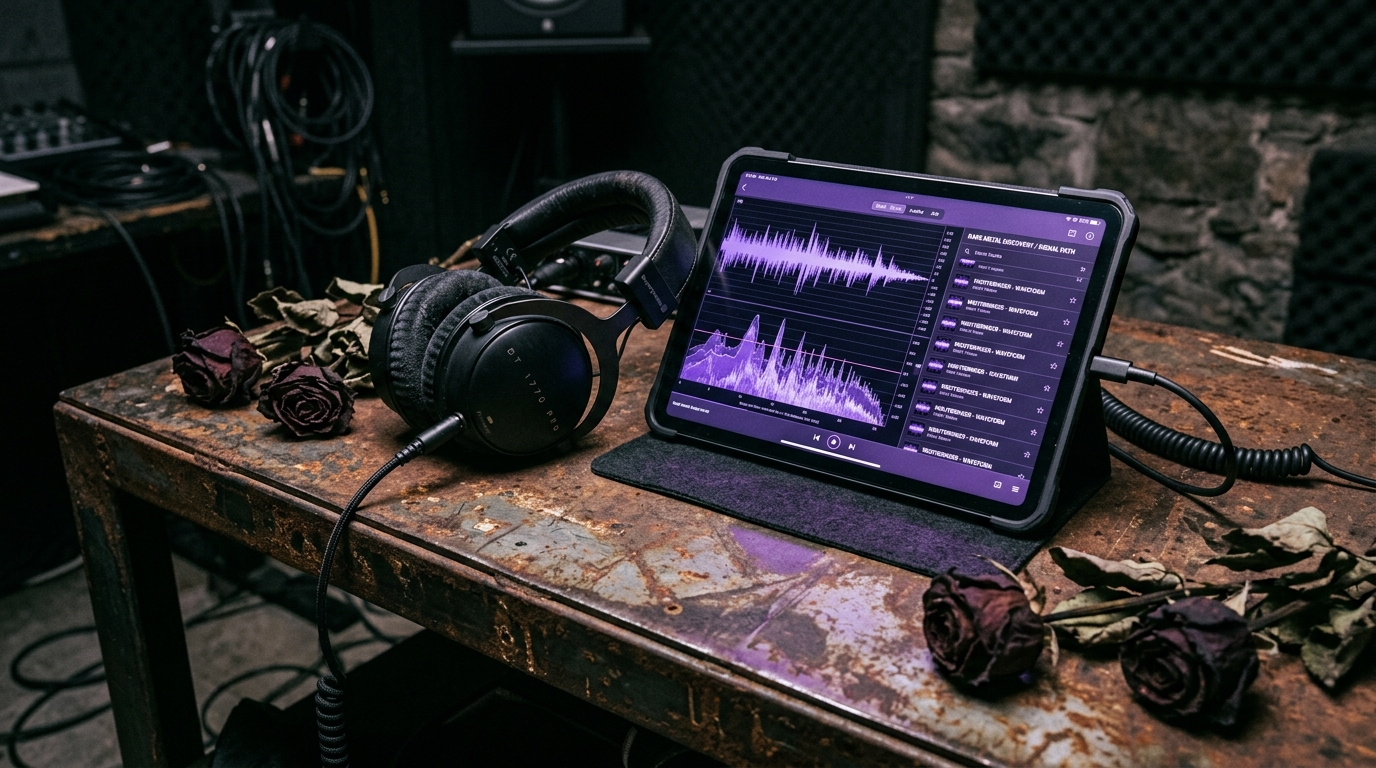
Let’s kill the bullshit upfront: tools don’t kill metal. Gatekeeping does. The moment some cringelectual starts acting like “real” metal only counts if it was recorded on a rusty tape deck in a freezing basement by three exhausted dudes with broken gear, the whole conversation turns anal-manual as fuck. Metal was never sacred because of the equipment. It was sacred because somebody had something burning in their chest and found a way to make it roar. The machine is not the enemy. The soulless copy-paste mindset is.
Modern metal is as much sound design as performance now, and that’s not a downgrade. That’s evolution. Tight editing, layered guitars, drum production, synth integration, vocal stacking, low-end sculpting, texture, atmosphere, impact control—this is craft. This is the battlefield. A killer metal track today can hit like a hammer because every second has been shaped with intent. If the kick lands like a fist, if the guitars feel like a wall but still have movement, if the synths creep under the skin instead of smothering the song, then somebody knew exactly what they were doing.
And yeah, polish can fool people who only listen with nostalgia bias. Some hear clarity and scream “fake” because they’ve confused dirt with honesty. That’s just dumb. Real production isn’t about making everything sterile. It’s about making the emotion readable. You can hear the difference between a track that’s carefully built and a track that’s just been flattened into lifeless goo. Quality production still breathes. It still bites. It just doesn’t sound like it was recorded through a toilet pipe, which apparently some people treat like a holy relic.
AI in metal gets the same lazy treatment from basement-bullies who panic the second anything changes. But AI is not a replacement for soul. It’s another instrument in the war against conformity. Used right, it can help give lyrics a voice, generate ideas, push visual worlds forward, and smash through the boring old barriers that used to keep outsiders locked out. That’s exactly why Venomous Sin exists. Not to cosplay “industry legitimacy,” not to beg for permission, not to play dress-up for the dildoprophet class of tasteless gatekeepers. We built a project that lets the writing breathe, lets the concept expand, lets the rage and the absurdity and the emotion exist in full color. The Nyxend is part of that process because creation is creation, no matter which tool carries the flame.
And let’s be crystal clear: Venomous Sin Declares War is metaphorical defiance against conformity, not a literal call to arms. It’s a statement. A middle finger. A refusal to kneel to the tiny-minded idiots who think art has to ask permission before it exists. AI-assisted metal should be judged like any other metal: by songwriting intent, emotional coherence, originality, and consistency. Does the song say something? Does it move? Does it feel like a real creative decision, or does it just vomit random noise because someone wanted content with no spine? That’s the real test. Not whether a machine touched the process. Whether the result has blood in it.
The new DIY is bigger than recording in your bedroom. You can build a whole band-world without waiting for approval from labels, scenes, influencers, or any other fucking anal-manners committee. Visuals, characters, lore, releases, lore-heavy albums, weird concepts, satirical songs, emotional songs, grotesque songs, tender songs—you can forge all of it yourself. That’s the beauty of the underground today. You don’t need to fit the mold. You need vision, drive, and the nerve to press publish before your inner censor starts whining like a scared little fucking normiefucked parasite.
If you’ve got riffs, write them. If you’ve got lyrics, release them. If you’ve got an idea for a world, build it. Start the project. Share the demo. Join the scene. Make the thing. Metal has never belonged to the polite. It belongs to the people willing to create when nobody hands them a key. That’s how the underground keeps mutating, how metal genre hybridization keeps pushing forward, and how new voices stop waiting for the system to validate their existence. The future is already happening in garages, bedrooms, Discord chats, raw uploads, and AI-assisted creative labs. Might as well be yours too. 🤘💀🤘
- ✋😏👉 Listen for arrangement choices, not just volume, because real modern metal is built in layers.
- ✋🧐👉 Judge AI-assisted tracks by emotional consistency and songwriting intent, not by some fake purity test.
- 🤘🔥🤘 Treat production as part of the instrument, because the mix can carry as much force as the riff.
- 🖕😠🤘 Ignore the gatekeepers who confuse nostalgia with truth and polish with fraud.
- 🤘🖤🤘 Build your own world if nobody hands you one, because permission is overrated as hell.

Genre Hybridization: The Underground’s Mutant Children Are Taking Over
Here’s the thing about metal’s evolution that really grinds our gears: the people who scream “not real metal” at anything with a synth or a drum machine are the same fuckers who’d have called Reign in Blood “not real metal” if it dropped today. Why? Because it’s fast, it’s polished, and it doesn’t sound like it was recorded in a cave by a pack of wolves. The underground has always been a breeding ground for mutants—bands that refused to stay in their lane, that stole from punk, from industrial, from goth, from electronic music, and made something new. The only difference now is that the mutants are multiplying faster, and the purists are having a full-blown feargasm over it.
Let’s talk about the scene’s bastard children—the ones that don’t fit neatly into the “thrash,” “death,” or “black” boxes because they’re too busy crossbreeding. Bands like Health throwing industrial noise into metal’s face. Acts like Igorrr blending baroque music with breakcore and black metal like some kind of deranged alchemist. Or even projects like ours—Venomous Sin—where the riffs hit like a hammer, but the synths and digital textures aren’t just “added,” they’re part of the fucking skeleton. This isn’t dilution. It’s metal genre hybridization in action, and it’s the most exciting thing happening in the scene right now. The underground isn’t dying; it’s metastasizing. It’s growing new limbs, new sounds, new ways to piss off the people who think metal stopped evolving in 1992.
And let’s be real: the streaming era didn’t kill metal discovery—it supercharged it. Back in the day, you had to rely on some tape-trading dude in a denim vest to hand you the next big thing. Now? You can stumble onto a band from Indonesia blending dangdut with black metal at 2 AM because the algorithm finally did something right. The problem isn’t access; it’s the content-parasites who treat music like background noise for their gym sessions. They don’t dig. They don’t listen. They just consume, complain, and move on. Meanwhile, the real underground— the weirdos, the hybrids, the bands that sound like they were raised on a diet of Streetcleaner and Aphex Twin—are thriving in the cracks. You just have to be willing to crawl into the dark with them.
Here’s the kicker: the bands that last are the ones that don’t give a shit about genre purity. They take what they need and leave the rest. They use tech, they use AI, they use whatever the hell gets the job done, because the job isn’t “sounding like 1986.” The job is making something that feels alive. So when some anal-traditionalist starts whining about “real metal,” ask them this: What’s more metal than refusing to follow the rules? What’s more metal than building your own sound, your own world, your own fucking legion of sinners who get it? The underground was never about worshipping the past. It was about burning the past down and dancing in the ashes. And right now? The fire’s spreading faster than ever. 🤘🔥🤘
- ✋🧐👉 Stop treating subgenres like borders. The best metal has always been a fucking collision.
- 🤘💀👉 If a band uses synths, samples, or AI and it still rips your face off, maybe the problem isn’t the tools—it’s your nostalgia bias.
- 🖕😠🤘 The underground isn’t a museum. It’s a lab. Experiment or get left behind.
- 🤘🕷️🤘 Hybridization isn’t betrayal. It’s survival. And survival sounds fucking glorious.
- ✋😏👉 Streaming didn’t kill metal discovery—it just exposed the lazy listeners. Dig deeper.
Metal Isn’t Dead — Your Discovery Habits Might Be
Metal isn’t dying. It’s mutating, splitting, recombining, and coming back meaner every time some terminally online gatekeeper declares it “over.” That’s the whole joke, really. The sound never stopped moving — the listeners did. Modern metal evolution isn’t some tidy corporate timeline where one era ends and the next politely files in. It’s a wrecking ball. It pulls from everywhere, steals what works, burns what doesn’t, and keeps marching with blood on its boots. That’s why metal subgenres diversification keeps happening whether the purists like it or not. The scene doesn’t survive by staying frozen in amber like some museum relic for basement-bullies to masturbate over. It survives because it refuses to be polite, refuses to be static, and refuses to ask for permission.
The real problem is that a lot of people don’t actually discover music anymore. They just repeat headlines, recite old opinions, and let nostalgia bias do the thinking for them. They want the same band, the same tone, the same production trick, the same miserable little comfort blanket forever. Then they call anything new “fake” like that word still means something. It’s pure anal-manual behavior: if it doesn’t fit the outdated rulebook, they reject it before even listening. That’s not loyalty to metal. That’s fear dressed up as taste. And fear is a pathetic little thing when it’s trying to cosplay as wisdom.
Underground metal scenes have always been the opposite of that bullshit. They don’t wait for permission, and they sure as hell don’t care if some content-parasite thinks the arrangement is too weird, too digital, too melodic, too industrial, too goth, too electronic, too whatever. The underground is where genres get wrecked and rebuilt by people who still give a damn. That’s where metal genre hybridization actually lives, not in some fake think-piece from a crank trying to sell purity like it’s a real product. One band drags in synths. Another drags in machine beats. Another tears in darkwave, aggrotech, thrash, blackened atmosphere, or industrial pulse and turns the whole thing into a new beast. That’s not dilution. That’s evolution with teeth.
And if you still think streaming is the villain, you’re looking in the wrong graveyard. Streaming impact on metal is not the death of discovery — it’s the exposure of lazy listening. The algorithms didn’t kill curiosity. They just stopped hiding how many people never had any. You can find a scene in another country, a band with wild ideas, an album that sounds like it was forged in a furnace you’ve never stood near, and a hybrid that should not work but absolutely fucking does. The discovery is there. The question is whether you’re actually digging or just skimming like a lazy little clickbaitgutted zombie.
That’s why the real move is simple: stop repeating old headlines and start exploring scenes, albums, and hybrids with intent. Listen like you mean it. Follow the strange one-off project. Chase the record that makes you uncomfortable before it makes sense. Give time to the bands that don’t behave like obedient genre pets. That’s how metal stays alive — not by begging to be preserved, but by being rebuilt by people who still have something real to say. Venomous Sin gets that. We were built on defiance, individuality, and emotional expression, not conformity, because that’s the pulse that keeps metal breathing when the rest of the world wants it tame. Venomous Sin Declares War on conformity, and the war is still very much a metaphor. The point is to stay human, stay raw, and keep making noise that feels alive. 🤘🔥🤘
- 🤘🧠🤘 Stop confusing nostalgia with taste. If you only love what you already know, you’re not discovering shit.
- ✋😏👉 Go hunt underground metal scenes on purpose. The good stuff is usually hiding where the lazy listeners never go.
- 🖕😠🤘 If a hybrid band makes you mad before you even finish one track, your metal nostalgia bias is doing the driving.
- 🤘⚡🤘 Metal genre hybridization isn’t a trend. It’s how the scene survives the idiots trying to freeze it in place.
- ✋🧐👉 Listen deeper, not louder. The next mutation is probably already out there waiting for you to stop acting like a faceless fuck.
https://venomoussin.com/
https://shop.venomoussin.com
https://www.youtube.com/@venemoussin
https://open.spotify.com/artist/4SQGhSZheg3UAlEBvKbu0y?si=qKMljt6rT1WL0_KTBvMyaQ