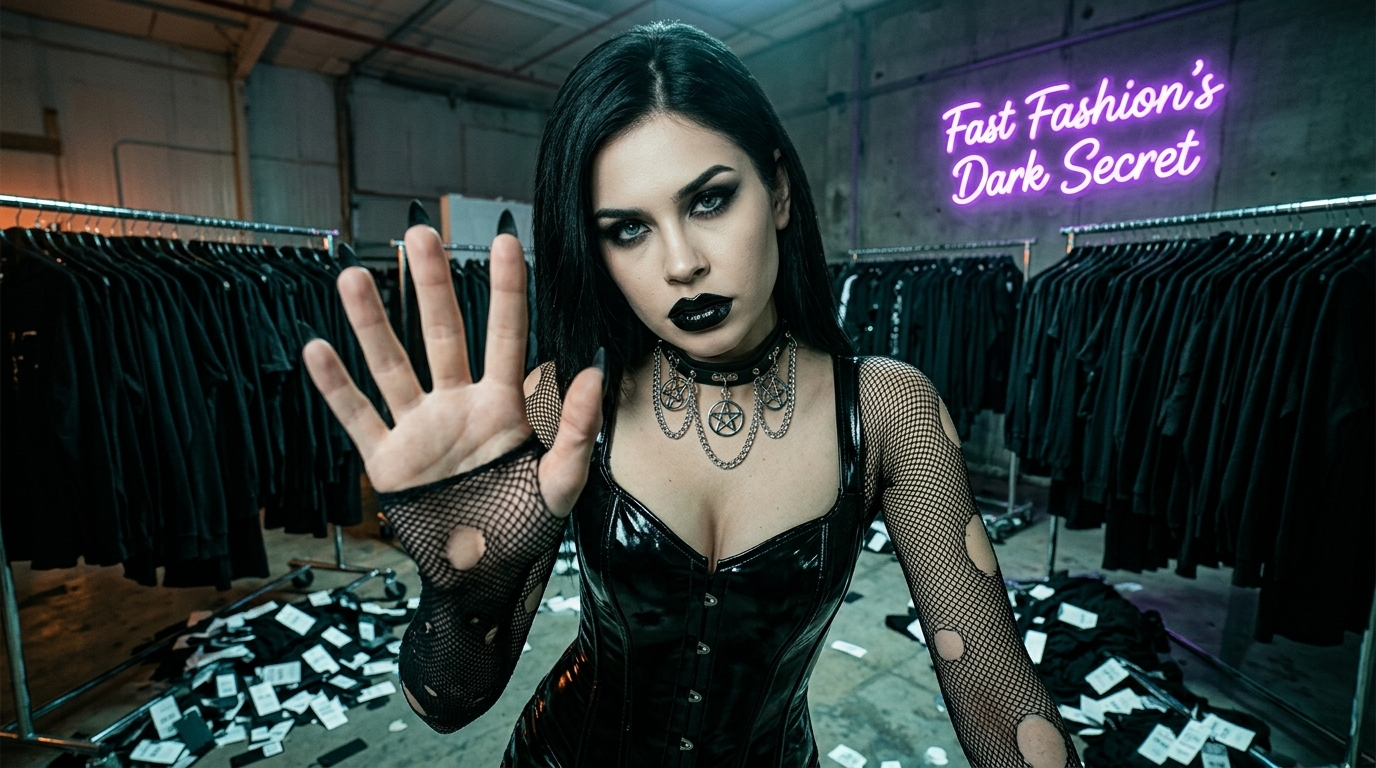
I remember when sliding into a pair of shredded fishnets and a PVC corset felt like arming myself for a riot. Back then, alternative fashion wasn’t a choice you made from a drop-down menu; it was a map of your scars, your music, and the specific brand of “fuck-you-sauce” you served to a world that tried to mock you into submission. It was tied to the sweat of a basement show and the raw, unpolished grit of outsider culture. But look at us now. It’s honestly anal-depressing to see how fast fashion turned alternative fashion into algorithm-friendly aesthetics. We’ve traded the soul of the subculture for something sanitized, safe, and perfectly lit for a digital cage.
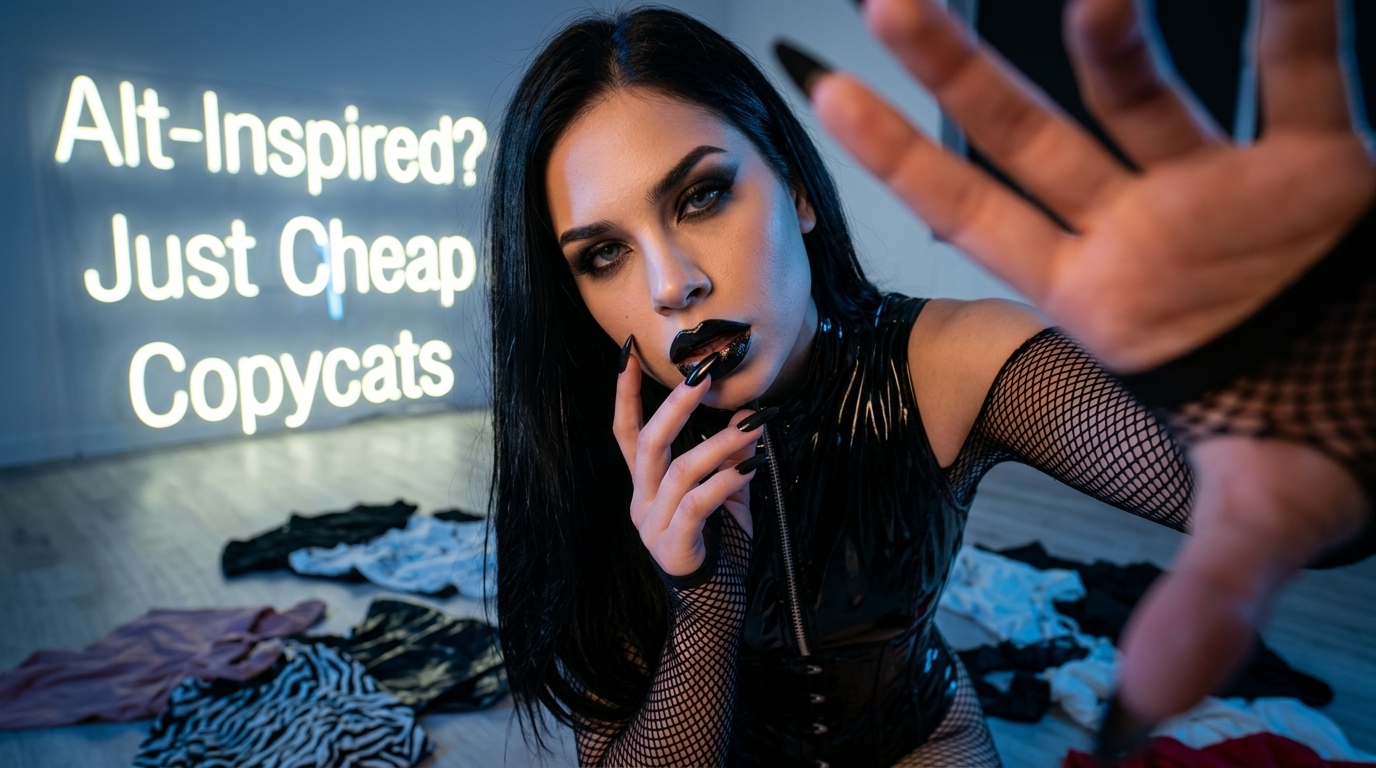
The algorithm doesn’t want the real Lina Macabre—the one who rose from the shadows of bullying with a heart full of venom and a voice like a razor. It wants a “filtercunt” version of goth. It wants “alt-inspired fast fashion brands” that can be mass-produced in a factory and shipped to your door before the next trend dies. Social media has effectively normiefucked the very concept of rebellion. What used to be a declaration of war against conformity has been downgraded into a “vibe” designed for fast scrolling. If your rebellion fits neatly into a TikTok transition, is it even rebellion, or is it just another anal-manual on how to be a corporate-approved misfit?
- Identity has been replaced by aesthetic consumption.
- Brands are repainting mainstream garbage in black lipstick and calling it “edgy.”
- Authentic DIY culture is being buried by clickbait-gutted trends.
- Individual expression is being sacrificed at the altar of the algorithm.
These brands aren’t your friends. They’re dildoprophets preaching empowerment while licking the boots of the system. They take the symbols we bled for—the pentagrams, the leather, the lace—and strip them of their meaning until they’re nothing but hollow shells. At Venomous Sin, we’ve always said that our music and our style are a refusal to fit into your pathetic fixed social molds. When Xavi and I created this project, it was a symbolic act of defiance. We don’t care about being “aesthetic”; we care about being real. Whether I’m in 12-inch platform boots or screaming lyrics that make your skin crawl, it’s not for the likes—it’s because the darkness inside me finally found a way to speak.
The tension between authentic alternative fashion and this commercially optimized trash is reaching a breaking point. When the very symbols of your rebellion are available for twenty bucks at a mall, what remains that is actually yours? If you’re just buying a pre-packaged identity from an “anal-ego” influencer, you’re not a rebel—you’re an insta-slave. True individuality can’t be bought, and it certainly won’t be found in an algorithm’s recommended feed. So, ask yourself: when rebellion becomes marketable, what remains authentic? Is your darkness your own, or was it just sold to you by someone who wouldn’t know a real shadow if it bit them? 🤘🖤🤘
The Original Purpose of Alternative Fashion
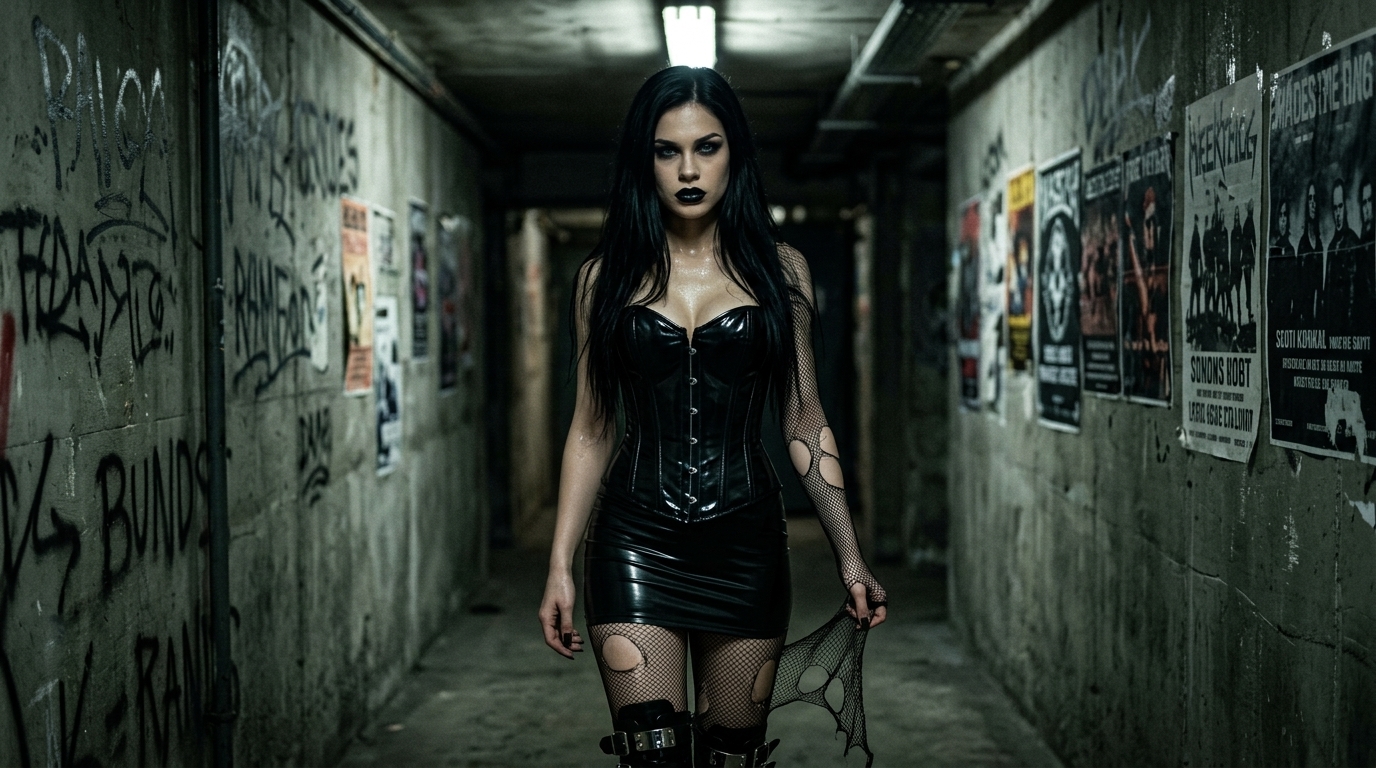
Before how fast fashion turned alternative fashion into algorithm-friendly aesthetics became a sentence we had to say with a straight face, goth, punk, industrial and metal fashion crawled out of places corporations couldn’t sanitize: rehearsal rooms that smelled like sweat and cheap beer, club toilets with eyeliner wars on the mirror, basements where the PA was dying but the crowd was alive. These looks weren’t “collections.” They were consequences. People didn’t dress like this to be “seen.” They dressed like this to survive being seen.
Clothes were social signaling, but not in the influencer way where you pose like an instaghost and beg for validation with your neck tilted at the exact angle of approval. A battle jacket wasn’t a branding strategy—it was a wearable biography. Patches were receipts: what you listened to, where you belonged, what you refused to kneel to. Fishnets weren’t “spicy.” They were practical and symbolic: cheap, aggressive, sexual, defiant, and easy to destroy and rebuild. Leather and boots said, “I’m not here to be handled.” DIY modifications—safety pins, ripped seams, hand-painted logos, chains, studs—were the opposite of perfection. They were proof you’d been somewhere real. Imperfection increased credibility because it couldn’t be bought pre-packaged. It had to be lived into.
Alternative scenes formed around music first. Always. You didn’t “discover your aesthetic,” you found your people in the noise: punk shows, industrial nights, goth clubs, metal festivals, underground events where outsiders could finally exhale. The look was the uniform of the misfit, but also the handshake. It said: “I know what it feels like to be alienated.” “I know grief.” “I know rage.” “I know the kind of sexuality that isn’t for your approval.” It wasn’t about being pretty. It was about being unfuckwithable when the world tried to normiefuck you into silence.
And that’s the part the mall brands will never understand. They sell pre-packaged identity because they’re terrified of the messy truth: alternative fashion was emotional armor. Not influencer content. Not “alt-inspired fast fashion brands” pumping out identical corsets like an anal-manual for rebellion. Emotional armor means your outfit is allowed to be imperfect, because you’re not dressing for a camera—you’re dressing for a room that might judge you, desire you, hate you, or finally recognize you. Authenticity mattered more than perfection because perfection smelled like conformity. Like corporate politeness. Like swastifashion pretending it’s freedom while measuring your hemline.
Venomous Sin is literally built on that original purpose. We didn’t start as a marketing plan; we started as two people who reunited after twelve years, found a way to give our lyrics a voice, and realized the darkness we carried could become art. “Venomous Sin Declares War” was never a literal call to arms—it’s a creative metaphor for refusing to be shaped by the same system that taught people to bully, mock, and control. Our whole identity is lived experience turned into sound and style: grief turned into riffs, alienation turned into aesthetics, anger turned into honesty, sexuality turned into ownership, individuality turned into a middle finger with good eyeliner.
- DIY culture wasn’t a “vintage trend”—it was the only way to build a self when nobody handed you one.
- Clothing wasn’t a content strategy—it was a shield, a confession, and sometimes a warning label.
- Imperfection wasn’t failure—it was proof you weren’t manufactured, sponsored, or hashtag-haloed into existence.
So when people ask why this all hits so hard now, it’s because the algorithm doesn’t just sell clothes—it sells a personality template. And if your rebellion comes with a size guide, a discount code, and a “how to be edgy” tutorial, congratulations: you didn’t find a subculture. You got certifucked by a calculator.
How Fast Fashion Colonized Alternative Culture
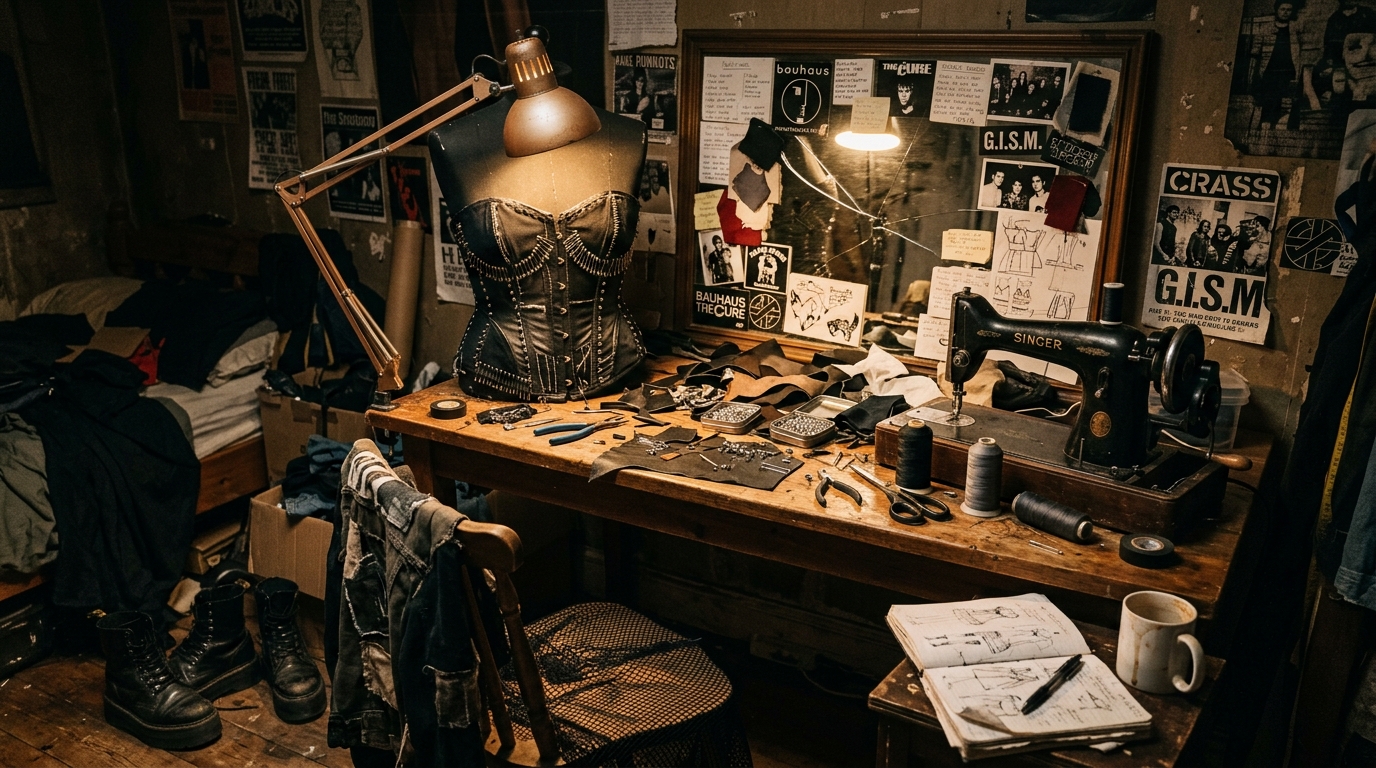
The moment corporations realized alienation could be monetized, the funeral bells started ringing for authentic alternative fashion. Not because goth, punk, industrial or metal died. Those scenes are still alive in clubs, festivals, garages, smoke-filled rehearsal rooms and exhausted conversations outside venues at three in the morning. But because giant retailers looked at subcultures built from pain, rebellion and community and saw something far more important to them: market segmentation.
That’s the anal-core of how fast fashion turned alternative fashion into algorithm-friendly aesthetics. The system stopped asking “What does this culture mean?” and started asking “How do we mass-produce the visual language without the inconvenient humanity attached to it?”
So now you get “alt-inspired fast fashion brands” selling factory-distressed rebellion to people who have never stepped into a goth club, never survived a local metal scene, never stood outside in freezing rain waiting for doors to open because the band mattered more than comfort. Corporations discovered that black lipstick, chains, corsets, platform boots and fishnets generated clicks. They discovered “dark femininity” boosted engagement. They discovered that eyeliner and fishnets perform well next to breakup quotes and thirst traps on TikTok.
And suddenly rebellion became searchable.
Algorithms flattened entire subcultures into aesthetic categories. Goth became “dark feminine energy.” Punk became “grunge-core.” Metal fashion became “edgy streetwear.” Industrial aesthetics became Pinterest moodboards for people who think Nine Inch Nails is a clothing filter. The machine dissected decades of music history, outsider identity and DIY culture into isolated visual fragments that could be consumed independently from the communities that created them.
That’s the real parasite behavior. Corporations extract the skin while discarding the skeleton.
You can see it everywhere now. TikTok creators filming “mall goth transformations” with affiliate links under every post. Instagram feeds where alternative style exists entirely inside curated selfies and carefully calculated “messiness.” Pinterest boards full of goth punk metal subculture style images stripped so clean of context that nobody even mentions the music anymore. Just aesthetics floating in digital limbo like hashtaglobotomized ghosts.
And the algorithm rewards it because aesthetics are easier to monetize than culture. Culture requires participation. It requires discomfort, learning, connection, awkwardness, gatekeeping debates, underground spaces, failed outfits, terrible hair dye decisions, emotional risk and finding your own identity through trial and error. Aesthetic consumption requires none of that. Just buy the outfit, mimic the pose, apply the filter and upload your rebellion package directly into the content machine.
The result is a generation trained to consume identity instead of building one.
That’s why so much influencer alternative aesthetics feel strangely empty. Not because the people are fake by default, but because the system encourages surface without substance. You’re rewarded for looking goth, not understanding why goth existed. Rewarded for wearing band shirts, not listening to the music. Rewarded for “dark feminine” poses while the actual emotional roots of alternative culture—alienation, grief, rage, sexuality, survival, defiance—get sanitized into coffin-candy content for engagement farming.
Fast fashion brands love marketing rebellion because rebellion sells. But here’s the deliciously anal-ironic part: their entire business model depends on conformity. They need millions of people buying the same “alternative” outfit at the same time. They market individuality through mass production. They sell anti-establishment aesthetics through corporations worth billions. They tell you to “express yourself” while handing you pre-approved templates generated by trend analysts and engagement statistics.
That’s not rebellion. That’s swastifashion wearing fishnets.
The original DIY alternative fashion culture came from necessity and emotion. You modified your clothes because stores didn’t sell what you needed. You built your look through experimentation, music obsession, personal damage and community influence. Now the algorithm skips that entire journey and delivers a finished identity starter pack directly to your phone.
- Goth aesthetics became hashtags before people even learned the bands.
- “Dark femininity” became a profitable algorithm category instead of an emotional or artistic expression.
- Corporations discovered rebellion is extremely marketable as long as it never threatens the system selling it.
And honestly? That’s why real alternative people still recognize each other instantly. Because beneath all the filters, sponsored corsets and fake alternative brands, there’s still a difference between someone wearing darkness and someone who merely downloaded the preset.
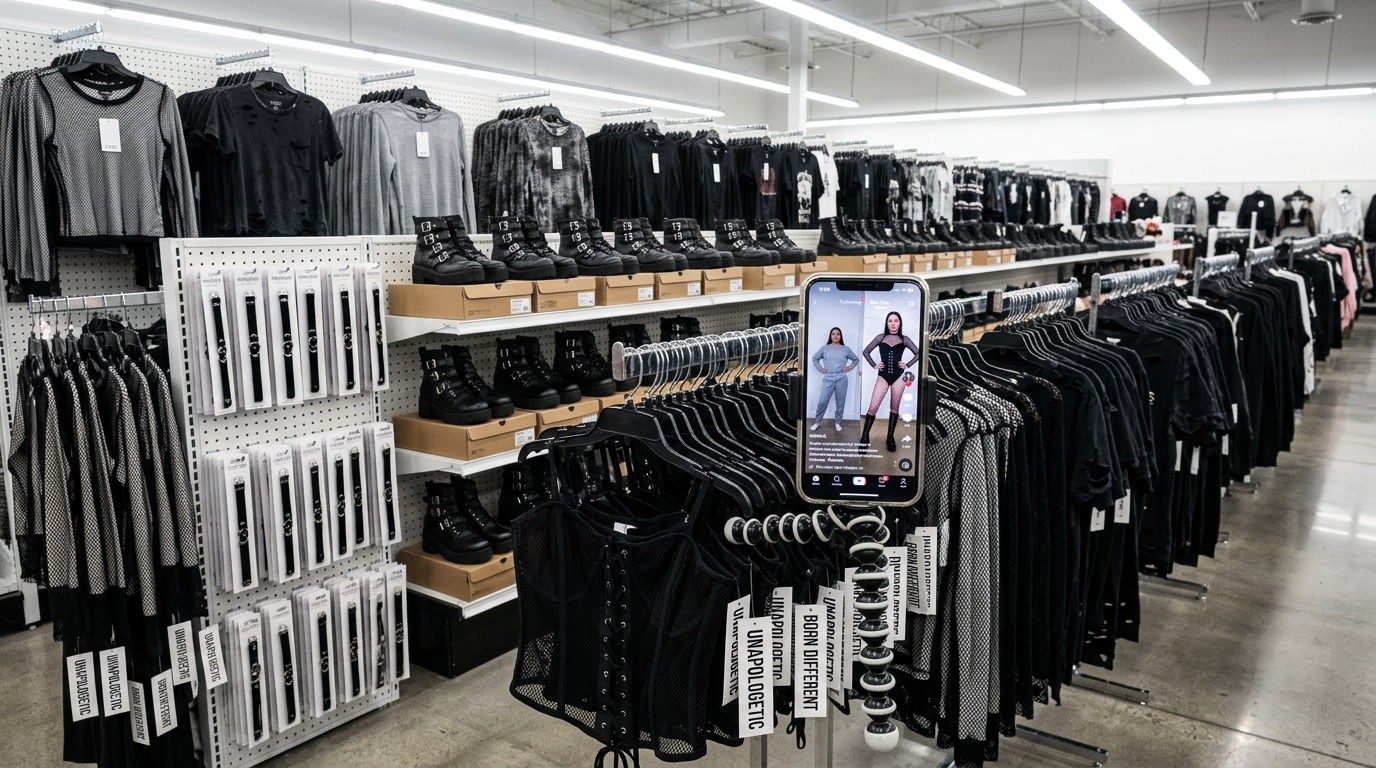
Black Lipstick Does Not Equal Counterculture
Black lipstick does not make you dangerous, alternative or even interesting. It just makes you another body wearing the uniform that corporations decided would sell this season. The idea that throwing on some dark clothing turns a brand or influencer into part of goth punk metal subculture style is the kind of normiefucked thinking that keeps the whole machine running. Real participation in these scenes has always come from years of standing in the rain outside venues, arguing about lyrics until your throat hurts, and learning the hard way that the darkness you wear is supposed to mean something.
Visual mimicry is easy. You buy the corset, the fishnets, the platform boots and you film yourself pouting in bad lighting. Cultural participation is something else entirely. It means you actually understand why those clothes existed in the first place. It means you know the music, you respect the people who built the scenes before algorithms turned them into moodboards, and you are not using someone else’s pain as a fucking filter. Most of these alt-inspired fast fashion brands do not care about any of that. They care about margins and engagement metrics. They sell rebellion the same way they sell toothpaste, mass-produced, sterilized and completely disconnected from the communities that actually lived it.
Corporations have become experts at packaging danger, darkness and sexuality into products that will never threaten their boardrooms. They take the raw edges of alternative culture, sand them down until nothing can cut, then slap a price tag on the result. The irony of mass-produced individuality is so thick you could choke on it. They tell you to express yourself while handing you the exact same outfit ten thousand other people bought this week. That is not freedom. That is swastifashion wearing a corset and calling it empowerment.
Venomous Sin has always called this shit out. The hypocrisy of brands that market “fuck the system” while their supply chains run on the exact same exploitation and conformity they pretend to reject. Corporate rebellion is just marketing theater. Sanitized darkness feels emotionally hollow because it was never meant to carry weight. It exists to be consumed, liked and forgotten before the next trend cycle starts. Style without substance is just expensive cosplay for people who never had to fight for the right to look like themselves.
The difference between style and substance shows up the moment you try to talk to someone who only downloaded the aesthetic. They can name the brands but not the bands. They know the poses but not the history. And when the algorithm moves on to the next thing, they will drop the black lipstick without a second thought. That is the real difference between someone who wears the darkness and someone who merely rented it for content.
- Corporate rebellion as marketing theater keeps selling the image while protecting the system that profits from it.
- Sanitized darkness feels emotionally hollow because it was designed to be safe for mass consumption.
- The difference between style and substance is the same gap that has always separated real alternative people from those who just bought the starter pack.
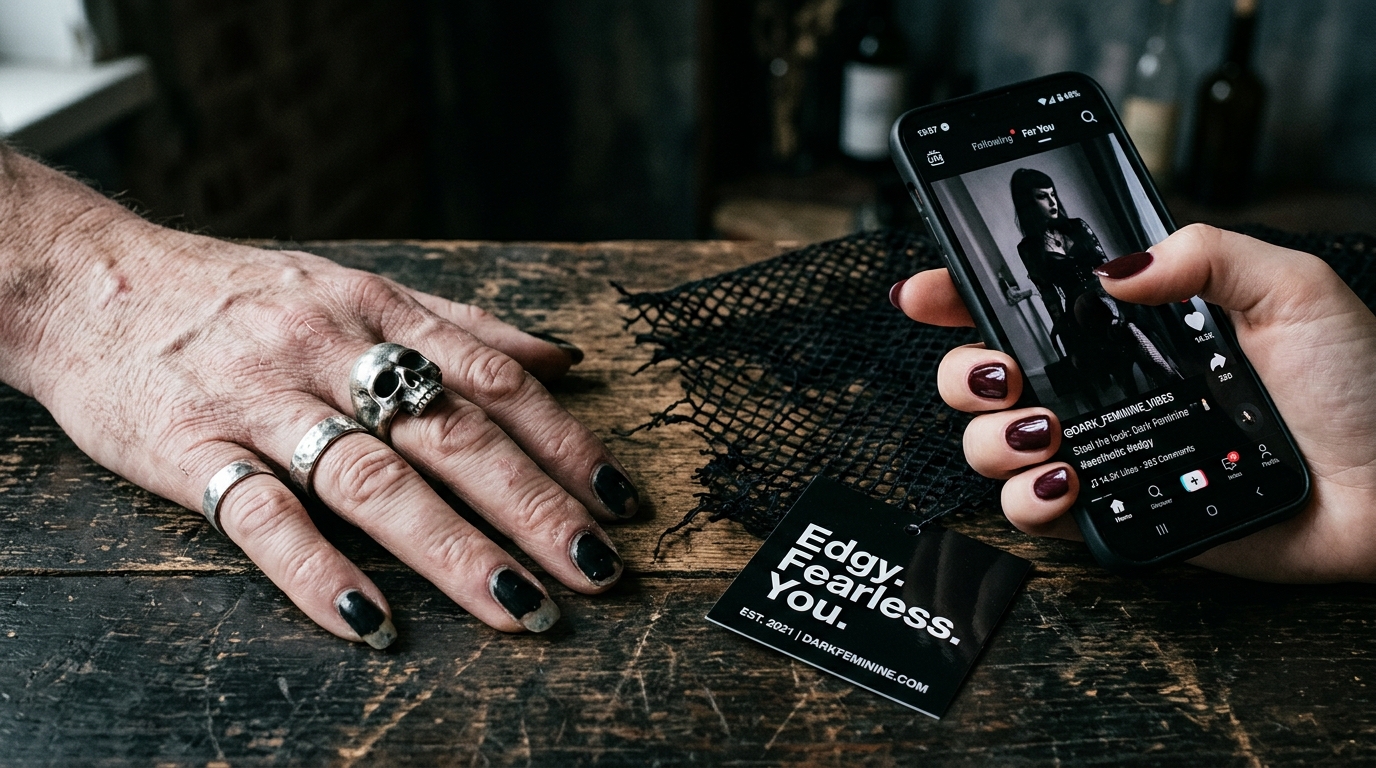
The Influencer Pipeline: From Subculture to Content
Influencers didn’t just “discover” alternative style. They got handed the keys by platforms that needed new costumes to sell. And once the algorithm realized goth punk metal subculture style makes people stop scrolling, the whole thing got rerouted from community to commerce. Suddenly the new gatekeepers weren’t the kids who built scenes in basements and sweaty venues. It was the instaghosts—perfectly lit, perfectly edited, emotionally blank—deciding what “counts” as goth this week because their engagement graph said so.
This is where validation metrics become religion. Likes. Saves. Watch time. “What performs.” The same old system, just wearing eyeliner. The platforms reward the most visually consumable version of you, not the most honest one. So people learn fast: don’t be complicated, be clickable. Don’t be messy, be marketable. Don’t talk about the real reasons you dress like this—talk about “outfit formulas.” And if you do open your mouth about anything heavier than lipstick shade names, you get clickbaitgutted: people consume your pain like a snack and then complain it was “too intense.”
Authentic alternative fashion becomes hard as hell when identity itself is treated like content. Because content demands consistency. The algorithm hates mood swings, contradictions, growth, breakdowns, relapses, real life. It wants a template. A character sheet. A predictable aesthetic loop. So creators start performing themselves until they can’t tell what’s theirs anymore. That’s filterfucked in the purest sense: when you fall in love with your edited self and start resenting the human underneath. And the worst part? It works. It pays. Monetization doesn’t just reward the mask—it punishes the face.
That’s why curated “alt girls” exploded: not because they’re fake as people, but because the machine trains them to be safe. The algorithm-approved goth aesthetic is basically a starter pack with a referral link. Black lipstick, a corset, a mall-chain choker, and the same three poses like a holy trinity of “I’m different.” It’s rebellion with an anal-manual. It’s swastifashion with better branding. And the second you deviate—get political, get ugly, get honest, get poor, get angry—you’re quietly throttled out of the feed like you violated some invisible dress code.
Platforms reward aesthetics over substance because aesthetics are low-risk. You can sell a look without inheriting the history. You can borrow the vibe without carrying the weight. Substance demands context, and context makes advertisers nervous. So the pressure becomes: be visually consumable. Be a product. Be a moodboard. Be a fuckfluencer—preaching empowerment while measuring your worth in likes and comment thirst. And I’m not even saying that to kink-shame anyone. I don’t kink-shame, I join in. I’m saying it because it’s a trap: when your identity becomes your business model, the platform owns your reflection.
Alternative identity gets flattened into templates because templates scale. They’re easy to replicate, easy to sponsor, easy to sell through alt-inspired fast fashion brands that mass-produce “individuality” with next-day shipping. The pipeline is simple: the scene becomes an aesthetic, the aesthetic becomes a trend, the trend becomes a product, and the product becomes a personality. That’s social media commodification of rebellion in a neat little loop—danger sanded down until nothing can cut, then served with a discount code and a wink.
- Platforms reward what looks good in half a second, not what took years to live through.
- The pressure to become visually consumable pushes creators toward safe, commercially attractive versions of alternative fashion.
- When alternative identity gets flattened into templates, the culture doesn’t die loudly—it gets quietly monetized.
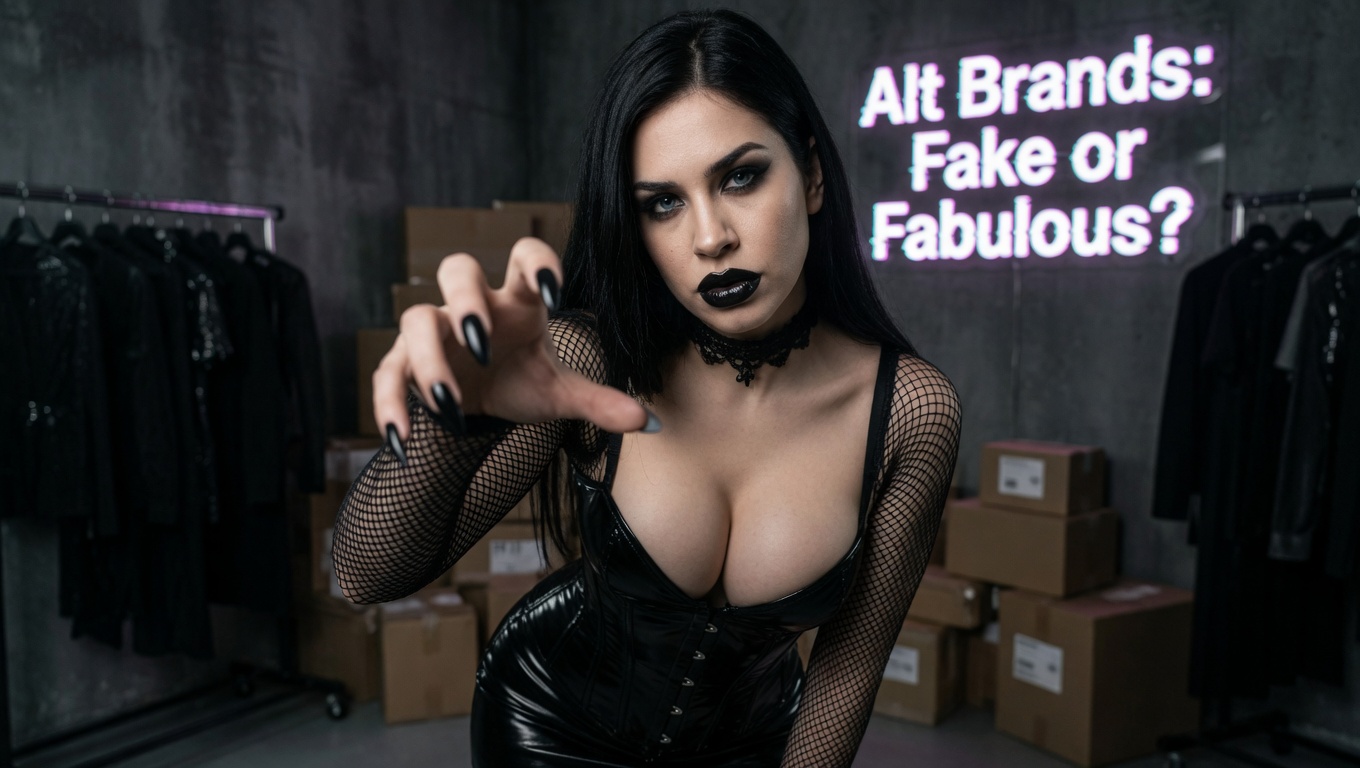
Why Authentic Alternative Fashion Still Exists
Let’s get one thing anal-clear: authentic alternative fashion didn’t die—it just got harder to spot because it’s buried under a landfill of influencer alternative aesthetics and algorithm-approved corpse paint. The scene didn’t vanish; it mutated. Real goth punk metal subculture style is still alive in basement gigs, tattooed into DIY zines, and stitched into the seams of jackets you can’t buy in any mainstream store. You just have to look past the clickbaitgutted templates slithering through your feed, all screaming “I’m different” with the same mass-produced boots.
What’s missing from all the swastifashion starter packs and mall-goth clones? Context. Local scenes, independent creators, and underground artists are the fucking bone marrow of this culture. They don’t post “outfit formulas” for engagement—they wear what they survive, bleed, and dance in. Those late-night kitchen-table designers, the bands selling hand-burned CDs out of backpacks, the artists painting jackets with more venom than the entire marketing department of a fast-fashion brand—they’re the ones anchoring this thing to reality. If you want real, support them. Buy from the girl hand-lacing corsets in her bedroom, not the brand slapping a pentagram on polyester and calling it rebellion.
Authenticity is not a price tag or a mall haul. It’s intention, consistency, emotional honesty. It’s wearing leather boots because you’ve walked through your own hell and didn’t come out clean—or pretty. It’s refusing to dilute yourself for digital applause. The only way to build personal style is through lived experience, not next-day shipping. When people stop chasing trends and start dressing for themselves, something wild happens: they evolve into something that no algorithm can predict, no brand can package, and no trendhunter can clone. That’s why authenticity can’t be mass manufactured. There’s no shortcut to scars, and no filter for real venom.
Venomous Sin never asked permission. We create because we can’t not create. Not for a nod from some faceless fuck at a label, not to score points with insta-slaves, and definitely not to get featured in some clickbaitgutted “alt style inspo” article. Our war isn’t with the fakes—it’s with the system that rewards them. Declaring war is a metaphor, but if you’ve ever built something out of your own pain instead of a Pinterest board, you know exactly what we mean. Authentic alternative fashion isn’t extinct—it’s just hiding from the spotlight, waiting for anyone brave enough to stop performing and start living. Support what’s real, and you’ll find the scene isn’t gone. It’s just refusing to kneel. 🤘🖤🤘
- Independent brands build meaning, corporations build templates.
- Personal style is earned through scars, not sales.
- No one can mass-produce intention, honesty, or genuine rage—and that’s the point.
The Psychology of Manufactured Rebellion
Here’s something nobody in the alt-fashion space wants to say out loud: most people aren’t drawn to darkness because they understand it. They’re drawn to it because their actual lives are so relentlessly beige that a spiked collar feels like oxygen. That’s not an insult—it’s just the truth about what hyper-commercialized society does to people. It sands everything down until nothing has edges anymore, and then human beings, being the desperate little creatures they are, go looking for edges somewhere. Anywhere. Even if those edges are made of ABS plastic and sold in a three-pack.
The social media commodification of rebellion didn’t happen by accident. Corporations are not stupid. They watched subcultures for decades and figured out the formula: take the imagery, strip the context, slap it on a product, and sell the feeling of being different to people who are terrified of actually being different. It’s a perfect machine. The consumer gets a hit of identity without the cost of actually building one. The brand gets the money. And the culture gets crucifucked on the bathroom wall of mass production while everyone applauds and calls it representation.
What makes it so effective is that it targets something real. The alienation people feel is genuine. The frustration is genuine. The desire to exist outside the mold is genuine. Corporations don’t manufacture those feelings—they just intercept them at the checkout page and redirect them into something harmless and profitable. You wanted to scream? Here’s a band tee. You wanted to burn something down? Here’s a distressed jacket. You wanted to be unfuckwithable? Here’s a filter that makes you look like you’ve seen darkness without actually having to survive any.
This is where identity vs aesthetic consumption becomes the actual conversation worth having. People genuinely believe they are discovering themselves through what they buy. And in small ways, maybe they are—aesthetics can be a doorway. But a doorway isn’t the room. Wearing the clothes of a subculture without understanding what built that subculture is like moving into someone’s house and calling it your personality. The goth punk metal subculture style didn’t emerge from a mood board. It came from people who had nowhere else to go, who built something out of rejection and pain and music that the mainstream refused to touch. When you reduce that to an aesthetic, you’re not honoring it. You’re harvesting it.
And then there’s the tension that nobody wants to admit they feel: wanting to be unique while desperately participating in whatever trend just hit 2 million views. Social media turned that tension into a product category. Now you can be a “dark feminine aesthetic girlie” or a “goblincore cottagecore crossover” and belong to a tribe of several hundred thousand people who are all performing the exact same version of individuality. That’s what normiefucked looks like in 2025. Conformity wearing a corset. Mass production with a pentagram on it. The algorithm doesn’t reward genuine outsiders—it rewards people who perform outsider identity in a way that’s digestible enough to monetize.
The emotional appeal of darkness and outsider imagery runs deeper than aesthetics though, and that’s what makes all of this complicated. There’s something psychologically real happening when someone gravitates toward the macabre, the heavy, the uncomfortable. It mirrors something internal. The problem isn’t the attraction—it’s when the attraction gets intercepted before it ever leads anywhere meaningful. When the darkness stays decorative. When the rebellion never costs anything. When the influencer alternative aesthetics replace the actual experience of being an outsider with a curated performance of it, what you get is escapism dressed up as self-discovery. Emotional junk food. It feels like something but it metabolizes into nothing.
Real rebellion has always been expensive. Not in money—in everything else. In the relationships you lose when you stop performing normalcy. In the jobs you don’t get. In the stares you collect walking through a shopping center in platform boots and black lips while everyone around you silently decides you’re a threat or a joke. That cost is what gives the culture its weight. Strip the cost and you strip the meaning. What you’re left with is a very pretty corpse that corporations can dress up and parade around until the trend cycle moves on and they drop it for the next thing to harvest.
- Alienation is real—but corporations monetize it before it becomes self-awareness.
- Aesthetic consumption feels like identity but stops at the surface every single time.
- Normiefucked conformity doesn’t disappear when you change your wardrobe—it just gets better lighting.
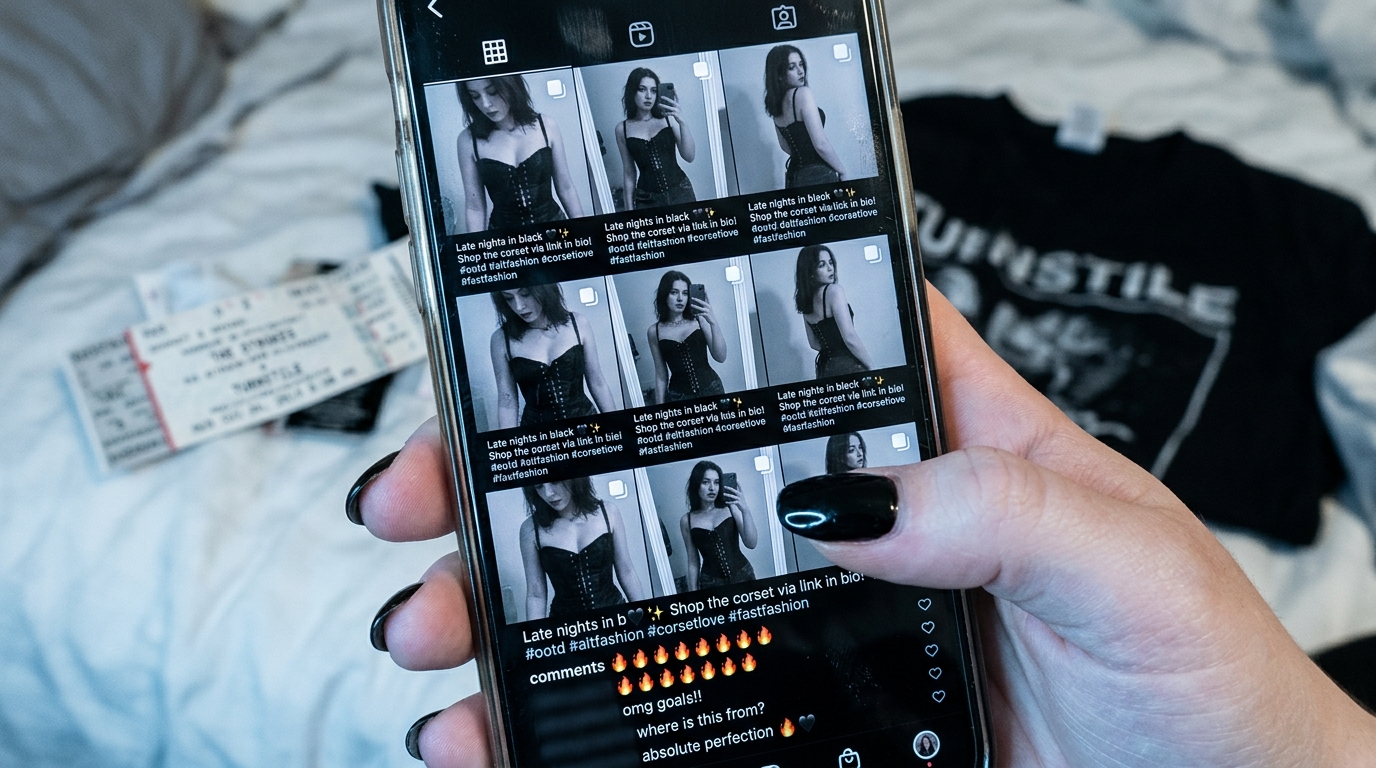
How Fast Fashion Turned Alternative Fashion Into Algorithm-Friendly Aesthetics
Here’s the ugly little secret behind a lot of fake alternative brands: they do not love the culture they’re selling, they love the numbers. The moment darkness starts trending, the corporate vultures show up with a mood board, a factory chain, and a fake-ass story about “self-expression.” Suddenly every drop looks like it was assembled by an anal-manual written for people who’ve never heard a real riff in their lives. Black lace, silver hardware, mesh panels, fake buckles, washed-up rebellion packaged so neatly it could be worn by a Hashtaglobotomized content parasite filming a “dark feminine” transition video for the algorithm. That is not alternative fashion. That’s trend forecasting with a corpse-painted smile.
Real alt-inspired fast fashion brands do not build culture. They scrape it. They wait until gothic, punk, metal, and industrial aesthetics become profitable, then they rush in with disposable quality hidden under a layer of “edge.” The stitching falls apart, the fabric pills after two washes, the hardware scratches off like cheap paint, but the marketing copy is always full of rebellion language. “Unapologetic.” “Fearless.” “Born to stand out.” It sounds fierce until you realize it’s just a dildoprophet in a black hoodie preaching individuality while selling the same safe conformity to ten thousand people at once. That’s the trick: make rebellion look polished enough for mass consumption, but harmless enough that nobody has to actually live it.
If you want to spot the authenticity gap, stop staring at the vibe and start asking what the brand actually does. Who made the clothes? Who designed them? Are they collaborating with artists, bands, small makers, and DIY creators, or just recycling subculture symbols like they found them in a discount bin behind a mall? Do they have roots in the scene, or did they wake up one quarter and decide black was the new beige? The difference matters. A brand with real history can usually tell you where its language came from, who influenced it, and why it exists beyond profit. A fake alternative brand talks like a trend report wearing boots.
That’s why the branding language is often the biggest giveaway. Real subcultures speak with scars, humor, and meaning. Fake ones speak in slogans. They use rebellion words without any rebellion behind them. They say “raw” when they mean underdeveloped. They say “authentic” when they mean mass-produced in a warehouse full of copy-paste aesthetics. They say “edgy” when they mean safe enough to disappear into the mainstream the second the trend cycle shifts. It’s social media commodification of rebellion in its cleanest form: take the attitude, delete the cost, and sell the costume.
And that cost is exactly what fast fashion can never fake. A real scene has memory. It has community involvement. It has people showing up when the trend dies, not just when the lighting is good. It has artists, musicians, photographers, misfits, and stubborn little sinners building something with their hands while the algorithm chokes on its own attention span. That’s why you need to investigate the boring stuff too: production ethics, material quality, long-term cultural engagement, and whether the brand supports the community or just cannibalizes it. If the only time they care about alternative fashion is when black sells, then baby, that’s not culture. That’s a crucifucked marketing department in eyeliner.
- Empty edgy slogans with no cultural roots usually mean the brand is selling a feeling, not a philosophy.
- Disposable quality hidden behind gothic aesthetics is a dead giveaway that the “rebellion” was never meant to last.
- Corporate aesthetics built around trend forecasting always arrive late, loud, and already hollow.
- Real authentic alternative fashion tends to have a history, collaborators, and a pulse that does not vanish when the algorithm changes its mind.
- Check the brand’s artist links, production ethics, and community ties before you let it call itself one of us.
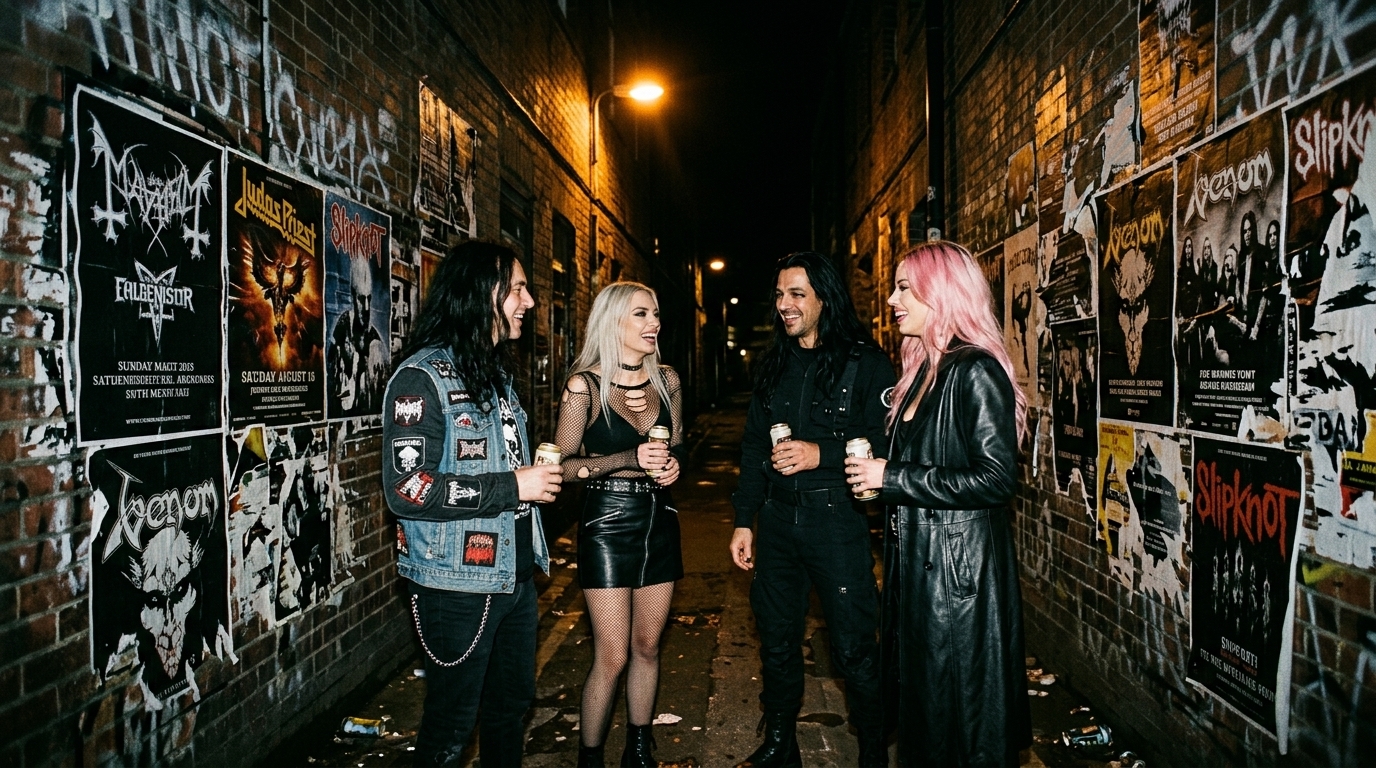
Alternative Culture Was Never About Permission
Alternative culture was never supposed to be a permission slip signed by the mainstream so everybody could feel comfortable at the same table. That’s the whole fucking point. If your style only works when it gets approved by the same people who would have laughed at it ten years ago, then it was never really alternative to begin with. It was just costume-grade compliance with better lighting. Real alternative identity has always been a little hard to digest because it doesn’t sit still long enough to be neatly labeled, sold, and posted. It changes with grief, music, rage, lust, boredom, trauma, obsession, and all the other ugly little ingredients that make a human being real instead of algorithm-friendly.
That’s why authentic alternative fashion can look inconsistent. One day it’s polished, the next it’s messy. One day it’s PVC and boots and a stare that could crucifuck a room, the next it’s a worn band shirt and broken eyeliner because the mood was different. That inconsistency is not weakness. That’s life. Real style grows from personality, not from a brand deck. It comes from what music you actually live in, what wounds you carry, what you survived, what you desire, and what you refuse to become. A person who has been through enough does not build a look out of a trend forecast. They build it like armor, memory, and confession all at once.
And that is exactly why a lot of people get weird about real individuality. It cannot be frozen into one neat aesthetic box. It won’t behave. It won’t stay consistent enough for cheap consumption. It makes trend-addicts nervous because it exposes how hollow their identity-via-cart is. In those fake alternative spaces, the pressure toward aesthetic uniformity gets brutal real fast. Everyone starts looking like they came out of the same anal-manual of “how to be dark in twelve easy steps.” Same lashes. Same corset. Same copied caption. Same manufactured attitude. That’s not a scene, that’s a filtered assembly line.
Venomous Sin is built on the opposite energy. Venomous Sin Declares War is a symbolic middle finger to conformity, not a theater costume for people who want to cosplay rebellion while staying socially safe. The war is metaphorical, creative, emotional. It means refusing to kneel to the mold. It means making something honest even when it’s ugly, intense, horny, sad, feral, or awkward. Because that’s what real alternative culture has always been: not perfection, but truth with claws. Not a template, but a pulse.
The danger of aesthetic uniformity inside so-called alternative spaces is that it slowly kills the very thing the culture was born from. Once everyone is chasing the same goth-punk-metal subculture style package, the scene starts eating itself. People stop dressing from instinct and start dressing for engagement. They stop asking “what feels like me?” and start asking “what performs best?” That is how social media commodification of rebellion works. It turns private identity into public product, then punishes anybody who looks too strange, too personal, too emotionally layered to be profitable.
Authenticity always looks a little imperfect because real people are imperfect. That’s the part the wannabes can’t handle. They want the vibe without the bruises, the edge without the history, the rebellion without the cost. But alternative identity isn’t a pose you lock into forever. It’s a living thing. It grows, breaks, returns, mutates, and keeps moving. The people who truly belong in it are usually the ones who stopped asking for approval a long time ago. They’re not trying to be accepted. They’re trying to be themselves, and that will always make the right kind of noise. Fuck the algorithm, keep the soul.
- Authenticity often looks uneven because real identity is shaped by emotion, memory, and lived experience, not a copied trend.
- Aesthetic uniformity inside alternative spaces usually means the scene has been colonized by image-first thinking.
- Real alternative style grows from personality, music, and survival, not from mainstream approval.
- Venomous Sin treats rebellion as a metaphor for creative freedom, not performative rebellion for clout.
- Reclaiming individuality means refusing to let trend algorithms tell you what your darkness is supposed to look like.
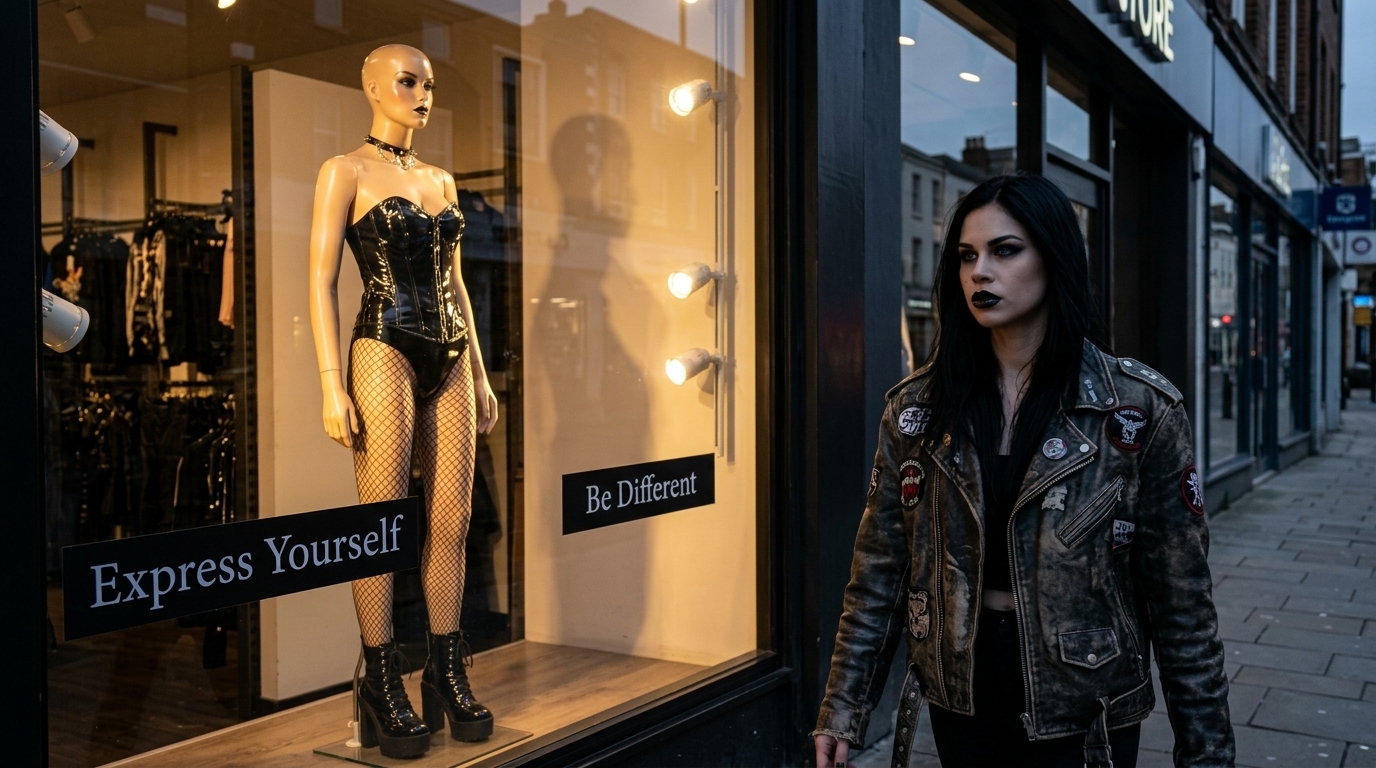
Fishnets Mean Nothing Without Identity
Alternative aesthetics turn into empty shells the second they lose their roots in real authenticity, culture, and the messy truth of personal expression. Fishnets and black lipstick might look sharp on a screen, but without the scars, the music, the nights that actually broke you or built you, they’re just fabric stretched over nothing. Fast fashion rips the visuals clean off the bone and sells them back as a quick fix, but it can’t fake the lived experience or the emotional truth that makes goth punk metal subculture style hit different. You can buy the corset, the boots, the glossy lips, yet the second you put them on without the weight behind them, they scream costume instead of armor.
That’s where the social media commodification of rebellion does its dirtiest work. Influencer alternative aesthetics flood every feed with the same anal-manual copy-paste: same pose, same filter, same caption that sounds deep until you realize it was written by someone who’s never actually felt the edge they’re selling. Venomous Sin Declares War on that shit because our war is never about looking the part. It’s about refusing to let corporations mass-produce darkness just so normies can feel edgy for a weekend. Real authentic alternative fashion doesn’t come from a brand deck or an algorithm’s trending list. It grows from the music that actually lives in your blood, the creativity that won’t shut up, and the self-expression that doesn’t ask permission.
Build your look around what you genuinely crave, what you survived, what turns you on or pisses you off. Let it shift when the mood hits, even if it looks inconsistent to the trend-addicts. One night it’s PVC and a stare that could crucifuck a room, the next it’s a ripped band shirt and eyeliner that ran because the tears were real. That’s the pulse. That’s what keeps the culture breathing while fake alternative brands churn out the same sterile version for engagement numbers. Black lipstick doesn’t make anything rebellious when it’s still designed to sell conformity wrapped in a pretty package.
Alternative culture only survives when people create, feel, and express themselves honestly instead of waiting for the next drop of mass-produced shadows. The sinners who get it know the difference. They wear their history on their skin and don’t give a fuck if it fits the feed.
- Authenticity often looks uneven because real identity is shaped by emotion, memory, and lived experience, not a copied trend.
- Aesthetic uniformity inside alternative spaces usually means the scene has been colonized by image-first thinking.
- Real alternative style grows from personality, music, and survival, not from mainstream approval.
- Venomous Sin treats rebellion as a metaphor for creative freedom, not performative rebellion for clout.
- Reclaiming individuality means refusing to let trend algorithms tell you what your darkness is supposed to look like.
https://venomoussin.com/
https://shop.venomoussin.com
https://www.youtube.com/@venemoussin
https://open.spotify.com/artist/4SQGhSZheg3UAlEBvKbu0y?si=qKMljt6rT1WL0_KTBvMyaQ